
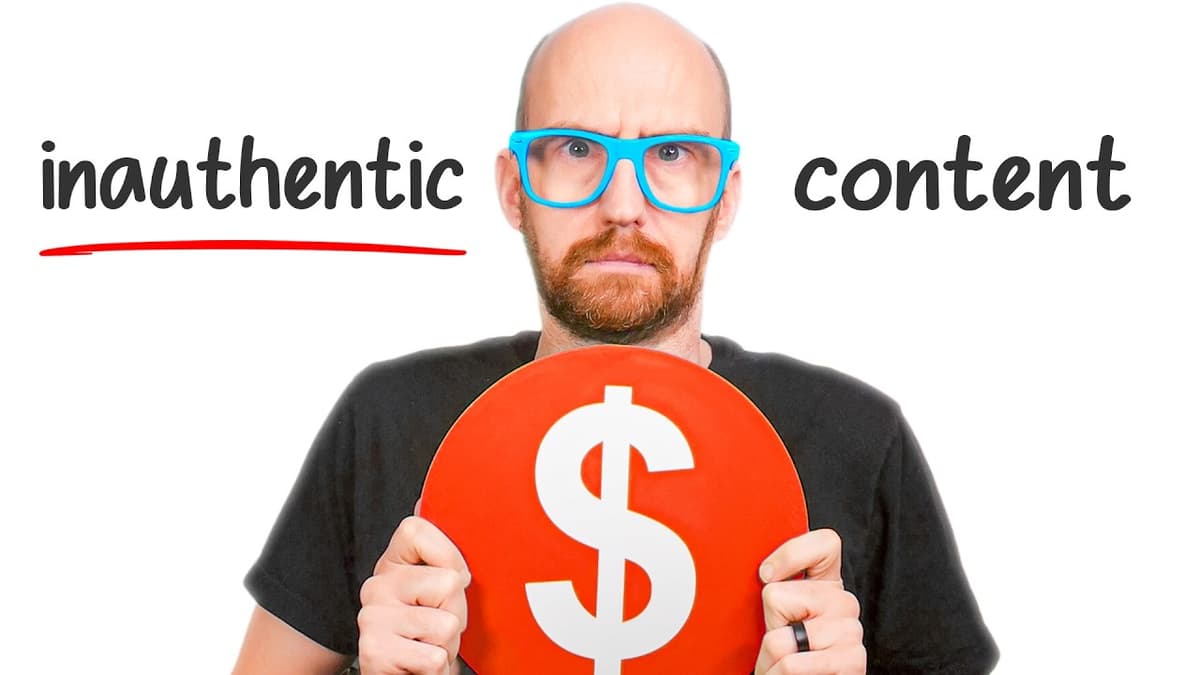
Demonetized YouTube Channels - the Inauthentic Content Trap
The video dissects YouTube’s current demonetization surge, focusing on the “inauthentic content” trap that penalizes creators who rely on borrowed IP, repetitive formats, or AI‑generated personas. Rob identifies three primary triggers: (1) building a channel on material you don’t own without true transformation; (2) mass‑produced, formulaic videos that appear as content farms; and (3) synthetic avatars that lack a verifiable human behind them. He notes YouTube’s policy pages are deliberately vague, allowing copyright owners to pull revenue and automated systems to flag “empty‑calorie” content. Examples include a 200‑k‑subscriber channel using Nintendo and Disney clips that was demonetized, an original 3‑D animation channel flagged despite a day‑long production per video, and an AI‑driven health advice channel featuring a fake doctor that was shadow‑banned. The creator’s own appeal success is highlighted. The takeaway for creators is to run three pre‑upload checks—ownership, value, authenticity—and to be prepared to appeal. Adhering to these guidelines protects revenue streams and aligns channels with YouTube’s push for genuine, viewer‑centric content.

How Much YouTube Pays for 1,000 Subs
The video dissects the often‑misunderstood earnings landscape on YouTube, focusing on what creators actually make once they hit the 1,000‑subscriber and 4,000‑hour thresholds. It clarifies the distinction between CPM (advertiser cost) and RPM (creator revenue), explains the two‑step monetization process,...

How to Get Your First 100 Subscribers on YouTube in 2026
The video tackles the perennial challenge of reaching the first 100 YouTube subscribers in 2026, citing internal platform data that shows roughly 25,000 of the 400,000 new channels launched this year have cracked the milestone within three months. It frames...

This Is Why Your Shorts FAIL📉❌
The video breaks down a simple retention graph that explains why many YouTube Shorts never go viral, emphasizing that viewer drop‑off in the first few seconds is the decisive factor. Data compiled by creator strategist Patty Galloway shows each dot as...

YouTube's Biggest Ban Triggers (Don't Make These Mistakes)
The video serves as a rapid‑fire guide warning creators about the “biggest ban triggers” on YouTube, outlining behaviors that the platform’s automated systems and policy teams treat as violations. It walks through seven common missteps: participating in subscriber‑for‑subscriber schemes, posting identical...