
Recent Posts
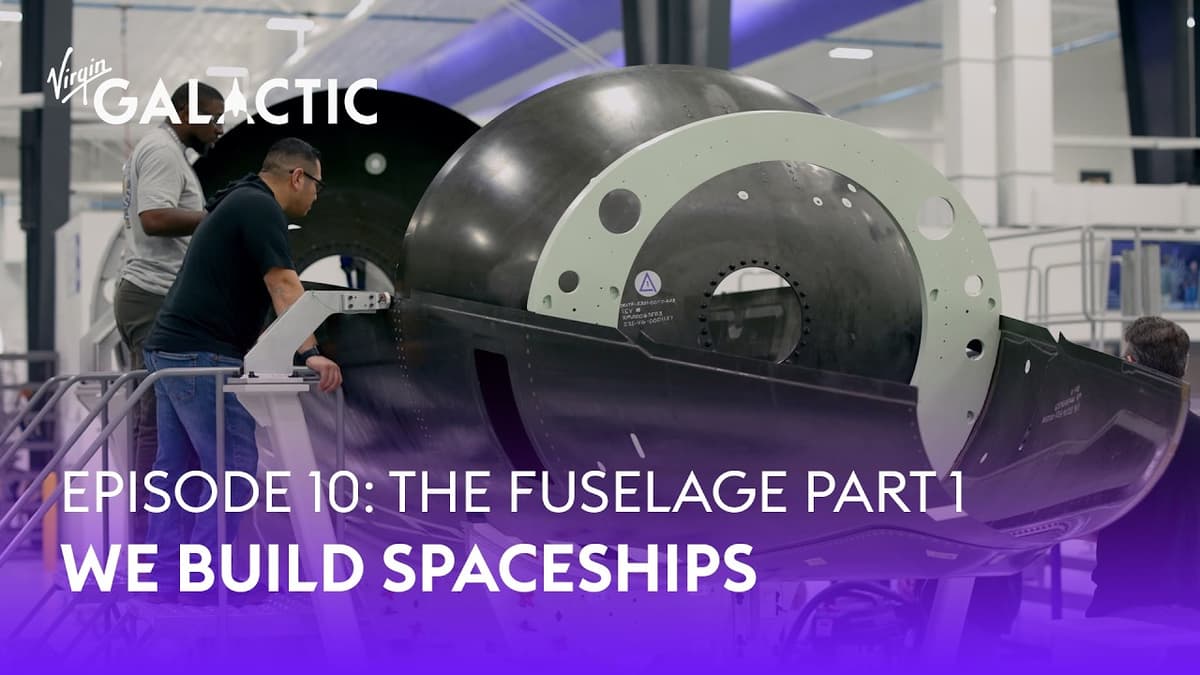
Video•Feb 11, 2026
We Build SpaceShips: The Fuselage Part 1
The video walks viewers through the construction of a spacecraft fuselage, highlighting its three major sections – forward fuselage, oxidizer tank, and aft fuselage – and explaining how each contributes to the vehicle’s overall architecture. It details the structural backbone: two dome‑shaped pressure bulkheads that seal the cabin, a series of three ring frames that reinforce the skin, and precisely machined attachment points that bear the entire vehicle’s weight. The design must absorb loads from launch, orbital flight, and atmospheric re‑entry, so high‑temperature, high‑strength alloys and continuous, joint‑free frames are used. The narrator emphasizes the modular build process, noting that the crew station is assembled on a separate tool and then “plugged” into the forward bulkhead. He also cites the tolerance of “10,000 of an inch” for the attachment points, underscoring the engineering rigor. Safety engineers collaborate closely with manufacturers to drill fastener locations and install window frames, lighting, cameras, and hand‑grabs for passenger comfort. By exposing the meticulous engineering and user‑focused interior design, the video illustrates how commercial space operators are bridging aerospace rigor with hospitality. The approach promises safer, more reliable spacecraft while delivering a compelling experience for future space tourists and researchers.
By Virgin Galactic
Video•Feb 10, 2026
We Build SpaceShips Episode 10 Drops Feb 11!
Virgin Galactic’s president, Mike Moses, introduced episode 10 of the "We Build SpaceShips" series, highlighting the company’s rapid progress over the past few months. The video walks viewers through the latest milestones, including the completion of major sub‑assemblies that now resemble...
By Virgin Galactic
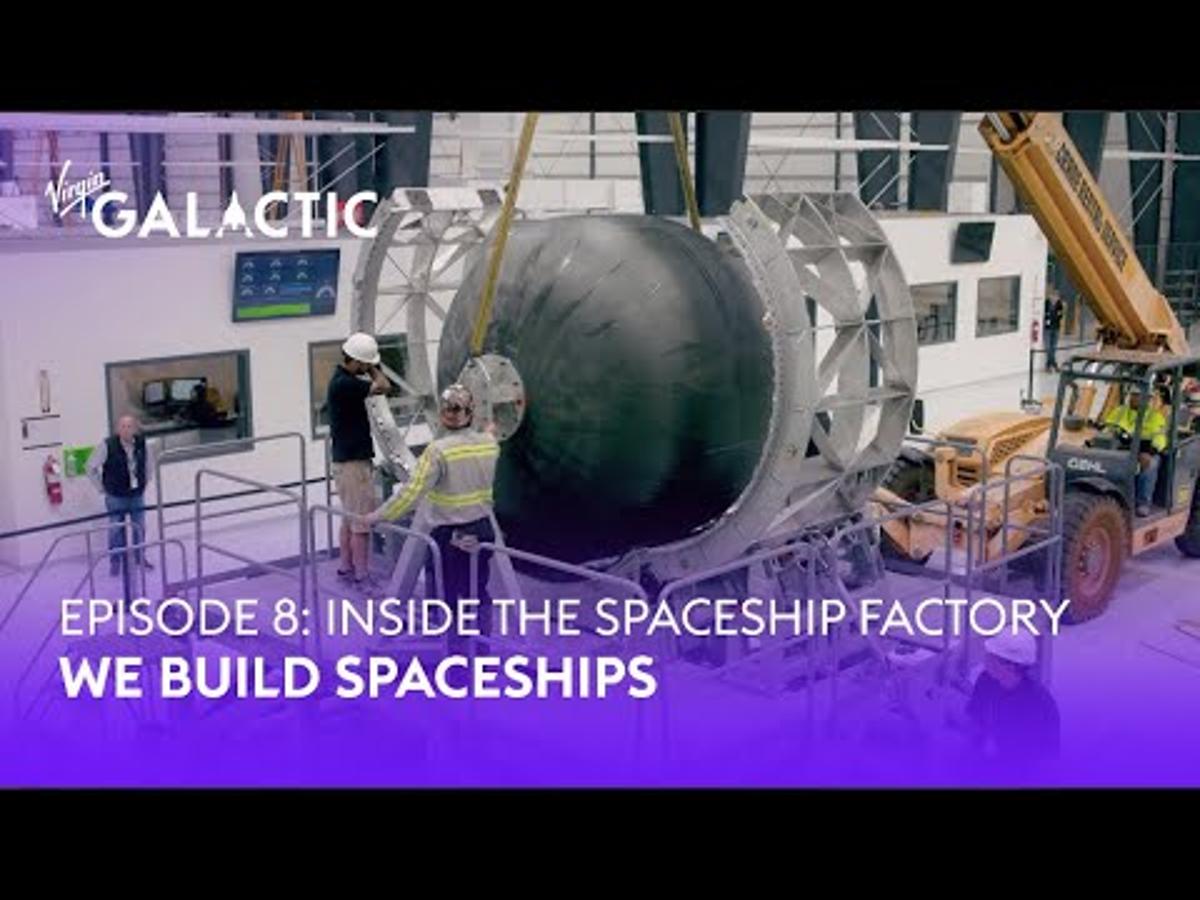
Video•Dec 16, 2025
We Build Spaceships: Inside the Spaceship Factory
Inside Virgin Galactic’s newly opened spaceship factory, director of manufacturing engineering Joe Minerys walks viewers through the end‑to‑end assembly of the company’s sub‑orbital vehicle. The video showcases a tightly choreographed shop floor where composite fuselage skins, avionics, landing‑gear mechanisms and...
By Virgin Galactic