
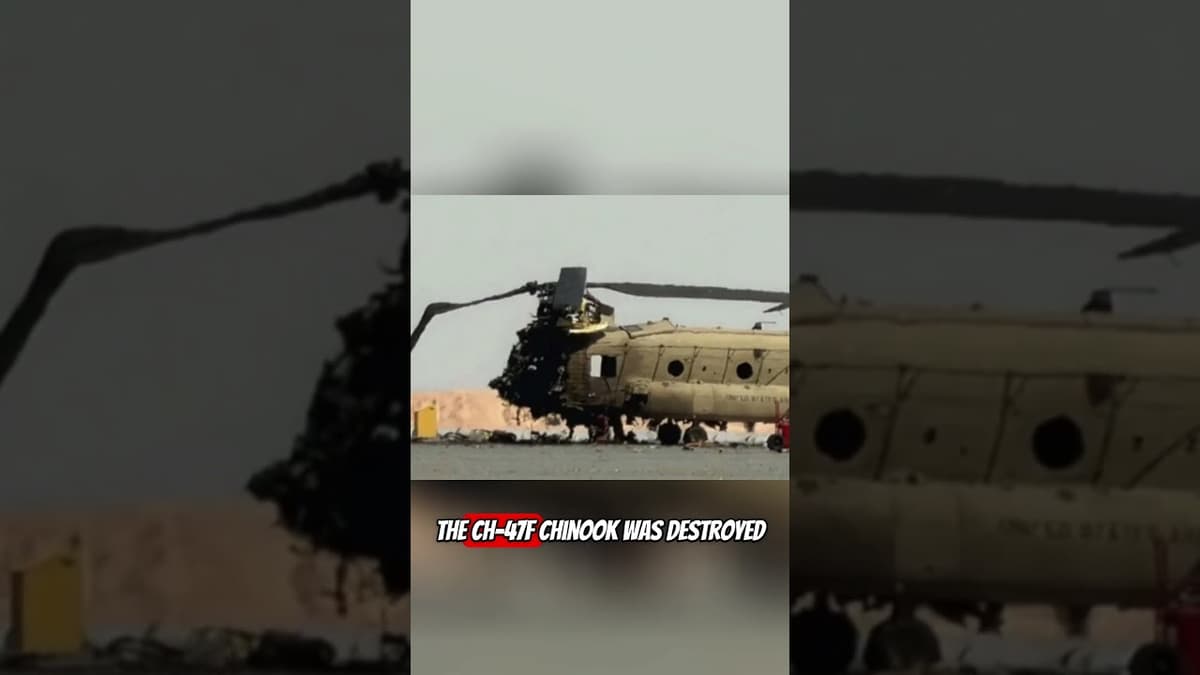
Iranian F-5 Attack: Camp Buehring Radar Gap Exposed
The video dissects the Iranian strike on Camp Buehring, where F‑5 fighter‑bombers exploited a low‑altitude radar blind spot to deliver dumb bombs on a helicopter hangar. The assault was part of a coordinated, multi‑platform, multi‑axis attack that also featured supersonic F‑4s and a Shahad‑136 loitering drone, overwhelming the base’s air‑defense network. Key data points include the destruction of a CH‑47F Chinook by the drone, the bombing of the hangar, and satellite imagery confirming extensive damage to shelters and equipment. Open‑source estimates place the total loss at roughly $1.9 billion, underscoring the material cost of the breach. Analyst Wrigleman’s substack quote frames the event as “three systemic failures converging”: a radar coverage gap optimized for high‑altitude threats, a saturation attack designed to outpace human decision cycles, and an intelligence lapse that gave Iran a precise picture of U.S. defensive architecture. The incident forces a reassessment of U.S. forward‑deployed air‑defense posture, highlighting the need for low‑altitude radar layers, faster decision‑making tools, and improved threat modeling against asymmetric, multi‑domain attacks.

F-35 Mystery: Why Stealth Missiles Evaded Advanced Sensors?
The video examines a puzzling incident in which an F‑35 reportedly was struck by a missile that its 360‑degree electro‑optical/infrared (EOIR) warning system failed to register. The pilot argues that the jet’s passive sensor suite—high‑resolution infrared cameras and electro‑optical detectors—should spot...

There's a Lot of Iron Flowing Into The Middle East
U.S. Air Force combat aircraft are flowing into the Middle East in an unusual concentration, including multiple F-15E Strike Eagle squadrons and a recent 50-aircraft package that included F-22s and 24 F-16 Block 50/52 jets. The deployed F-16s are configured...