
World Bank
Creator
0 followers
Global development and macro trend coverage; regular policy/program updates.
Recent Posts
Video•Jan 29, 2026
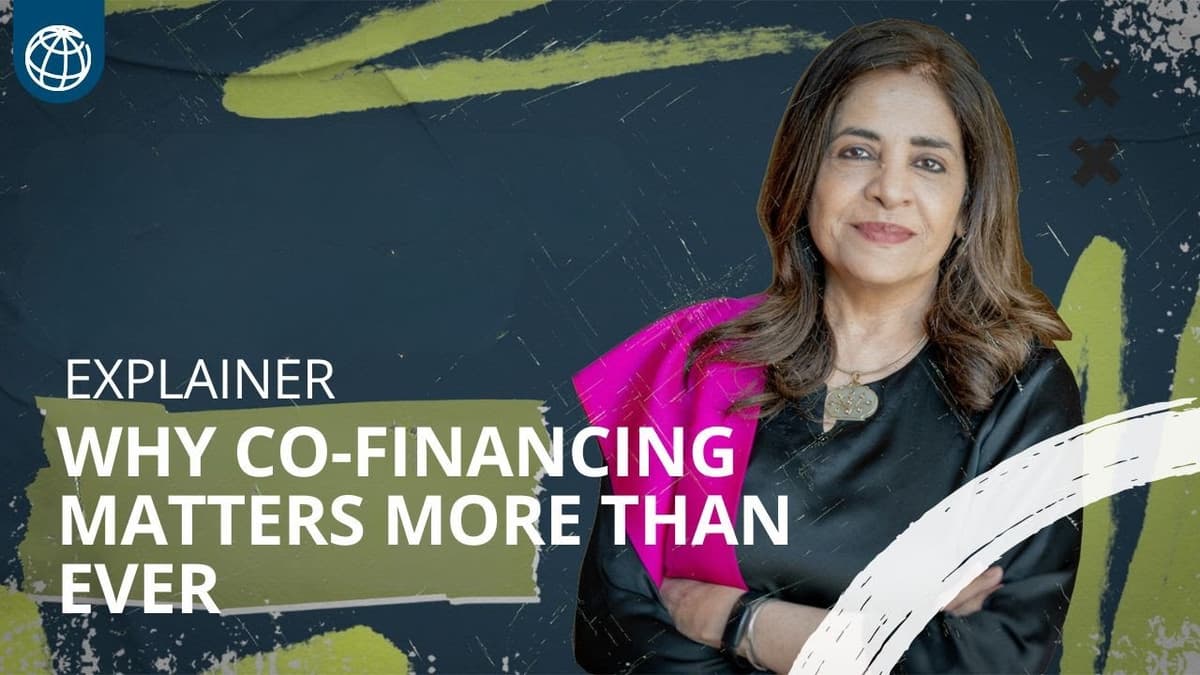
Co-Financing for Impact: Why Partnerships Matter More Than Ever
The video features Srimathi Sridhar of the World Bank discussing co‑financing with Maitreyi Bordia Das, Director for Trust Funds and Partner Relations, highlighting how pooling development finance is becoming critical as resources tighten. Co‑financing allows multiple donors to fund a single project jointly, cutting transaction overhead and delivering greater efficiency, transparency and predictability. In the current climate of scarce concessional capital, such collaboration reduces fragmented financing and eases the burden on sovereign borrowers, especially those lacking technical capacity. Das cites the Indonesia Health Systems project as a flagship example, where the Asian Infrastructure Investment Bank, Asian Development Bank and the World Bank combined resources to upgrade infrastructure and reform health services, delivering measurable outcomes. She likens the approach to building a road together rather than in isolated segments. For development practitioners and policymakers, embracing co‑financing can unlock larger, more coordinated investments, mitigate funding gaps, and accelerate progress toward Sustainable Development Goals despite fiscal constraints. The model signals a shift toward collaborative financing architectures that could reshape aid delivery worldwide.
By World Bank
Video•Jan 26, 2026
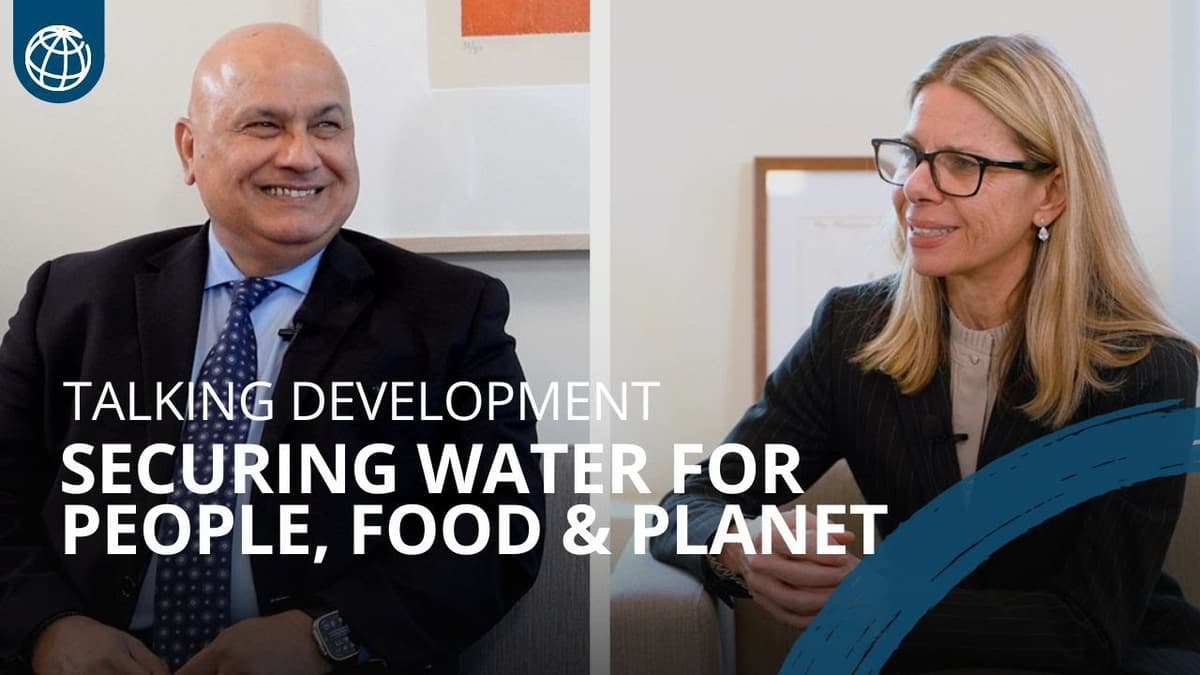
Talking Development | Securing Water for People, Food & the Planet
The World Bank Group unveiled a comprehensive water strategy aimed at tackling a global water crisis that sees more than 200 billion cubic meters of freshwater lost each year—enough to secure water for 280 million people. The plan is built around three...
By World Bank