World Science Festival
World Science Festival’s channel presents thought‑provoking discussions and interviews with leading scientists on cutting‑edge topics – from the weirdness of quantum physics to the mysteries of the cosmos – in an accessible dialogue format ([www.worldsciencefestival.com](https://www.worldsciencefestival.com/video/playlists/popular-videos/#:~:text=Popular%20Videos%20Play%20Series%20Black,New%20Era%20of%20Astronomy%20Begins)).
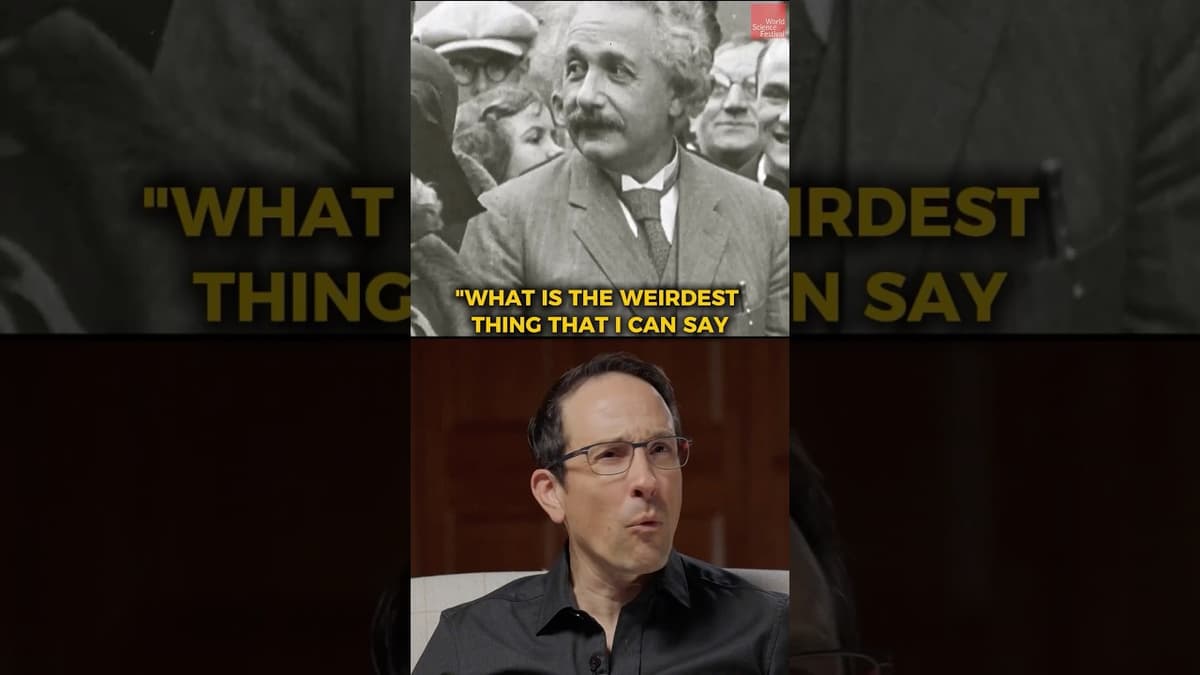
Where Does Raphael Bousso Place Entanglement in the Space of Quantum Weirdnesses? #entanglement
In a recent talk, physicist Raphael Bousso explores where entanglement belongs in the hierarchy of quantum “weirdness,” arguing that its strangeness is central to the most puzzling aspects of quantum theory. He emphasizes that the habit of pushing theories to their limits—asking what the most extreme, counter‑intuitive prediction of quantum mechanics might be—has historically yielded entire fields such as quantum information theory and quantum computing. The discussion links back to Einstein’s 1930s doubts and the later 1970s cohort who feared superluminal signaling, only to discover that quantum mechanics inherently respects special relativity. Bousso quotes, “It doesn’t matter whether you’re right or wrong about the presumed answer; it’s the questions you ask,” and notes, “Quantum mechanics already knows about special relativity.” These remarks illustrate how skeptical challenges can clarify foundational principles. The takeaway for industry is clear: the same curiosity‑driven mindset that resolved early paradoxes now underpins the rapid development of quantum technologies, suggesting that continued investment in foundational research will translate into competitive advantages in computing, cryptography, and materials science.
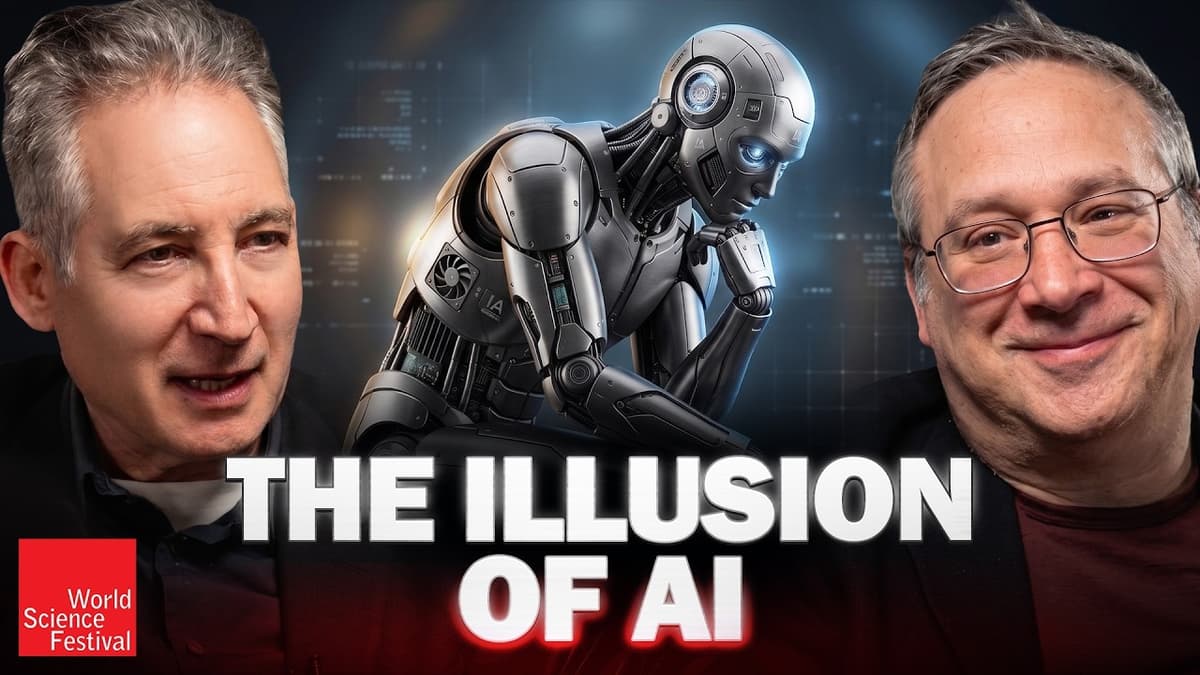
The Uncomfortable Truth About AI “Reasoning” | World Science Festival
The World Science Festival conversation spotlights Gary Marcus’s critique of today’s AI hype, focusing on why large language models (LLMs) still fall short of genuine reasoning and artificial general intelligence (AGI). Marcus argues that the industry’s reliance on ever‑larger datasets...
Are Near Death Experiences Proof that Consciousness Is Not Created Within the Brain? #consciousness
The video examines whether near‑death experiences (NDEs) and other anomalous phenomena constitute evidence that consciousness exists independently of the brain. The speaker cites medically documented cases where patients, clinically dead with no detectable brain activity, later recount vivid details—such as a...
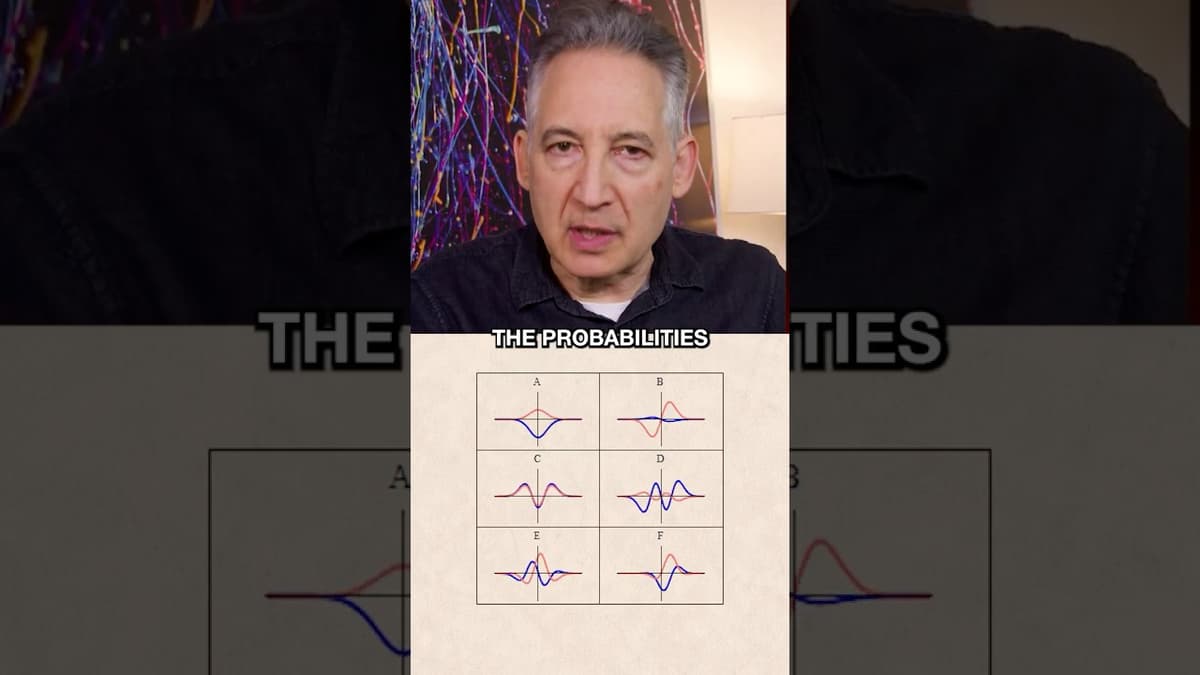
Is the Wave Function the Most Insightful Way to Formulate Quantum Mechanics?
The video tackles a long‑standing controversy in quantum theory: whether the wave function or the Heisenberg observable framework provides the most insightful formulation. The speaker argues that while the Schrödinger picture correctly predicts experimental outcomes, it obscures the mechanism that...
Why Did Niels Bohr Give up on Reality?
The video examines Niels Bohr’s pivotal role in the early development of quantum mechanics and his philosophical shift away from probing the nature of reality. Initially, Bohr interrogated the new quantum description, asking what truly "was happening" at the microscopic...
What Is Quantum Mechanics Really Telling Us? | World Science Festival
The World Science Festival conversation pits David Deutsch against the legacy of quantum mechanics’ “interpretations,” arguing that the theory’s true message is deterministic, not probabilistic. Deutsch and the host contend that the word “interpretation” masks competing theories, especially the Everettian...
The Odds You Exist Are Basically Zero
The video muses on the astronomical improbability of any individual’s existence, tracing a chain from the Big Bang through countless quantum events to the present‑day person. It argues that each quantum transition and every generational link carries an astronomically low probability,...
Is AI Already Conscious? #briangreene #AI #artificialintelligence
The video explores whether artificial intelligence can be considered conscious, questioning if any existing systems exhibit subjective experience. The speaker argues that some current AI may already display rudimentary forms of consciousness, and that as systems become more complex, the probability...
Can AI Match Human Creativity?
The video explores whether artificial intelligence can truly replicate the creative spark that distinguishes humans, using Beethoven’s Ninth Symphony as a benchmark of artistic brilliance. Speakers argue that while humanity’s most celebrated creations are rare, creativity exists on a continuum; AI...
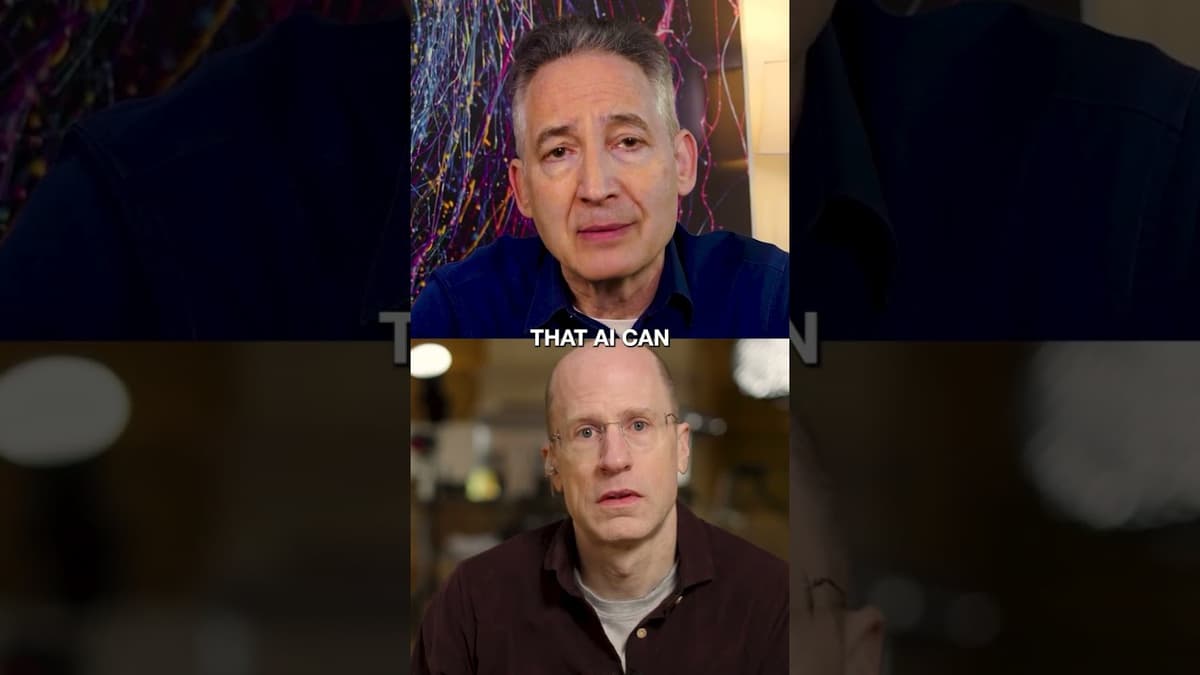
Everyone Talks About AI’s Potential. But Are We Ignoring the Danger that Comes with It?
The video explores whether existing AI systems exhibit any degree of consciousness and how that intersects with creativity and existential risk. The speaker argues that some AI may already have rudimentary subjective experience, noting that digital minds evolve faster than biological...

What Can Moon and Mars Exploration Teach Us About Our Future?
The video outlines how lunar and Martian missions are converging to shape humanity’s future in space, highlighting NASA’s Artemis program and ongoing rover operations on Mars. Artemis targets the Moon’s South Pole, where permanently shadowed craters contain water ice that could...

Have We Solved the Quantum Measurement Problem? #quantum #briangreene
The video tackles whether the quantum measurement problem has been solved, focusing on how a measurement translates a microscopic quantum system into a macroscopic readout. The speaker argues that coupling the system to a measuring device and its surrounding environment induces...
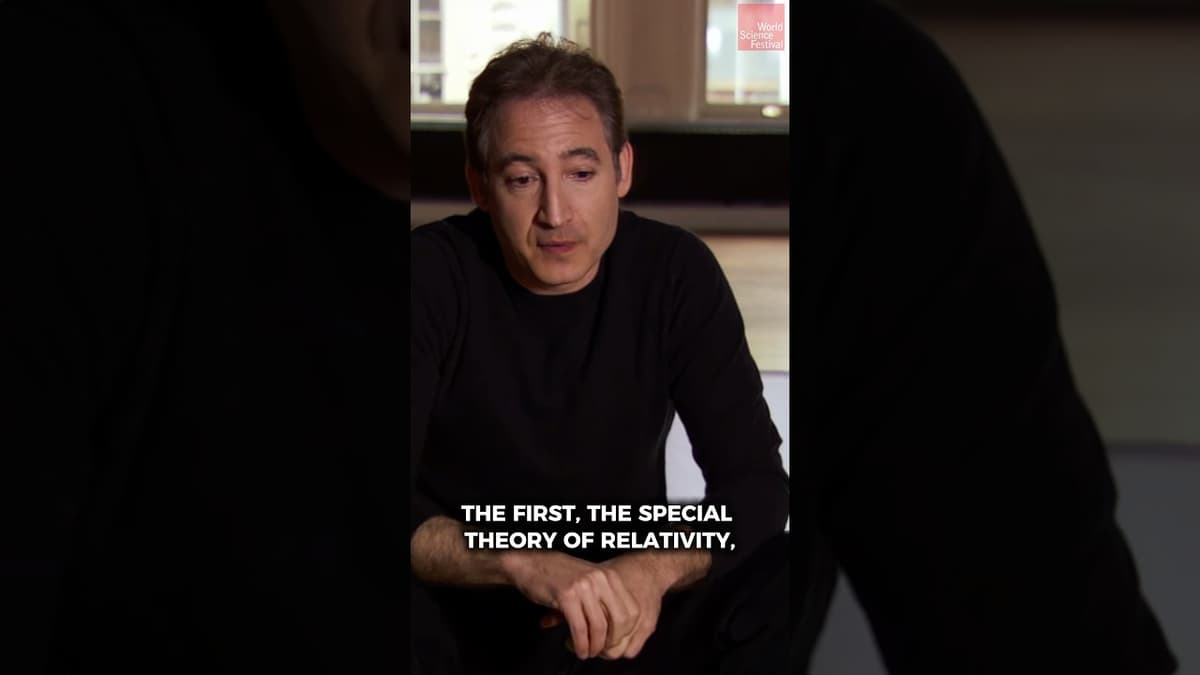
When Space and Time Changed Forever. #einstein #briangreene #specialrelativity
The video recounts Albert Einstein’s 1905 breakthrough, the special theory of relativity, which overturned Isaac Newton’s centuries‑old conception of space as a fixed stage and time as a universal clock. Einstein argued that measurements of time and distance depend on the...