
Video•Mar 7, 2026
Nanoparticles, Genome Therapy & Antibodies - The Zhou Research Lab at Yale School of Medicine
The Zhou Research Lab at Yale School of Medicine is a biomedical‑engineering group that builds platform technologies for delivering therapeutics to the brain. Its work spans three distinct avenues: engineered nanoparticles for crossing the blood‑brain barrier, a novel “step‑engineering” approach that delivers gelatinous gene‑therapy vectors for neuro‑genetic disorders, and a new class of cell‑penetrating antibodies aimed at diseases such as Parkinson’s and Huntington’s. The lab emphasizes technology over biology, leveraging established biological methods while innovating on delivery mechanisms. Nanoparticles are being optimized for brain‑cancer and stroke applications, step‑engineering is positioned as the only global effort targeting gelatinous gene therapy, and antibody engineering seeks intracellular access to treat neurodegenerative conditions. All three platforms are slated for clinical translation, with nanoparticle trials expected within two years and antibody candidates moving toward near‑term clinical use. Collaboration is central to the lab’s strategy. Partnerships with physicians—such as Dr. *** for oncology, Professor James Hansen for antibody work, and Kevin *** for stroke research—provide the clinical insight needed to move discoveries from bench to bedside. The team explicitly avoids reinventing biological assays, focusing instead on engineering breakthroughs that can be rapidly deployed in clinical settings. If successful, these technologies could reshape treatment paradigms for a range of neurological diseases, offering targeted delivery that overcomes the brain’s protective barriers. The lab’s translational focus promises to accelerate the pipeline from academic research to FDA‑approved therapies, potentially delivering new options for patients with limited current treatments.
By Yale Medicine
Video•Mar 4, 2026
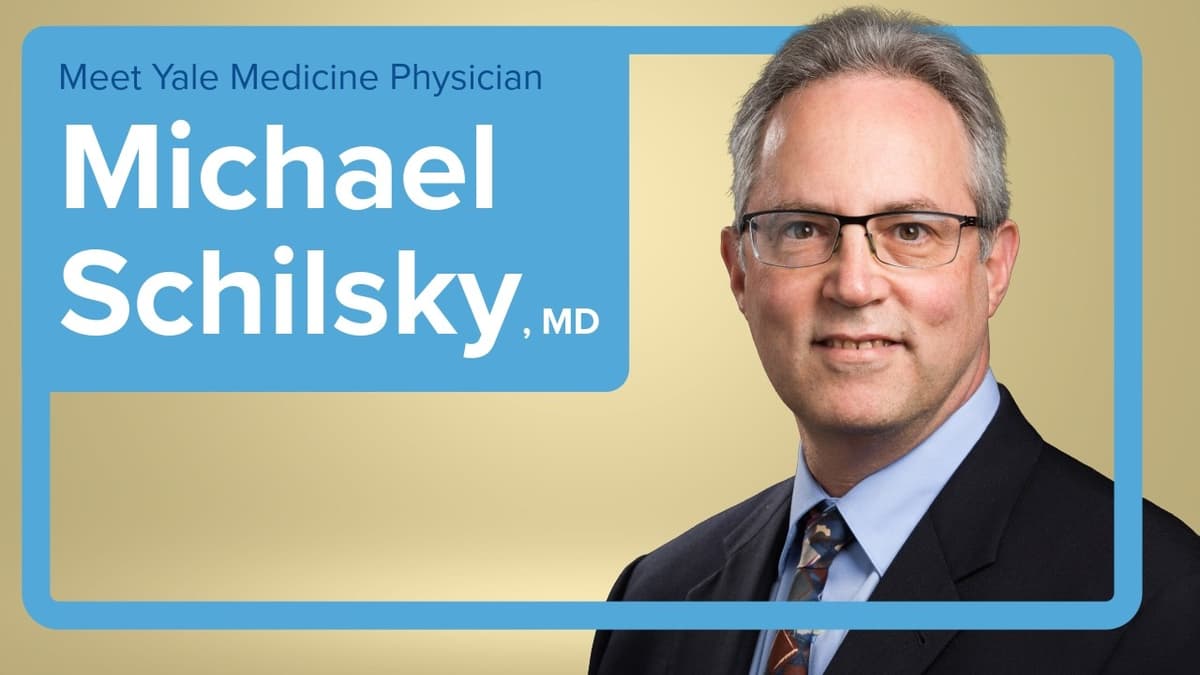
Meet Hepatologist Michael Schilsky, MD
The video features hepatologist Michael Schilsky, MD, outlining how liver transplantation has progressed from a pioneering procedure in the 1970s to a routine component of modern hepatology. He explains that transplants now address both severe acute liver failure and, more...
By Yale Medicine

Video•Mar 4, 2026
Meet Transplant Surgeon Hiroshi Sogawa, MD, MBA, CPE, FACS
In a recent interview, transplant surgeon Hiroshi Sogawa, MD, MBA, CPE, FACS, outlines his center’s approach to liver transplantation, emphasizing a robust living‑donor program and a shift toward minimally invasive techniques. Sogawa explains that the living‑donor pathway is designed to streamline...
By Yale Medicine

Video•Feb 28, 2026
High-Throughput Screening, CRISPR & Immunotherapy - The Sidi Chen Lab at Yale School of Medicine
The Sidi Chen laboratory at Yale School of Medicine is leveraging high‑throughput CRISPR screening to map every gene that influences immune‑cell behavior in cancer settings. By perturbing the full complement of ~20,000 human genes in vivo, the team seeks to pinpoint...
By Yale Medicine