

CazéTV Evolves From Creator Platform to Broadcaster
Most commentary around #CazéTV acquiring #LaLiga rights in Brazil from #ESPN focuses on “#YouTube beating legacy TV” — which misses the more important strategic shift by #LiveMode: When CazéTV launched in 2022, it was positioned as an incremental layer within a broader evolution of sports rights distribution: rights owners experimenting with creator-led, free-to-view digital distribution to (1) reach younger audiences and (2) create incremental competition in a relatively uncompetitive Brazilian rights market. At the time, CazéTV was largely perceived as complementary to incumbents. Why this needed to change: With sponsorship-funded free-to-view distribution alone unlikely to sustainably support tier-one sports rights economics, LiveMode has gradually evolved CazéTV into something structurally much closer to a traditional broadcaster. The key development: B2B distribution revenues. Through carriage/retransmission agreements with platforms such as Disney+ and Prime Video, CazéTV now monetizes not only through advertising and sponsorship, but increasingly through wholesale platform distribution economics tied to subscriber reach. That materially changes both perception and valuation. • 🥊 Competitive positioning: Rights owners increasingly evaluate CazéTV less as a digital add-on and more as a fully-fledged bidder for exclusive premium rights — competing directly with incumbents in a zero-sum auction environment. • 💰 Sustainable revenue model: Ironically, the model now resembles U.S. broadcast networks such as #ABC, #FOX, #NBC and #CBS: technically free-to-air, but generating substantial economics from retransmission/carriage fees in addition to advertising revenue. Arguably one of the most resilient models in today’s fragmented and subscription-fatigued consumer video marketplace. The unintended consequence for rights owners, however, may be reduced — rather than increased — competitive tension. Because CazéTV content is also distributed via Disney+, ESPN can lose exclusivity to LaLiga while Disney still retains effective consumer access to the product within its ecosystem. For many subscribers, the user experience barely changes. In other words: the market may have replaced an incumbent rights holder without meaningfully disrupting the incumbent distributor. If accurate, a significant portion of Disney’s avoided rights cost (~$30M annually, excluding production) could flow directly to operating profit, while preserving subscriber retention.

Women’s Leagues Multiply Rights Revenue, Risk Over‑splitting Partners
Some food for thought provided by @HowieLongShort and team: Some best-in-class women’s sports properties such as the #WNBA multiplied their media rights income recently, but needed to spread themselves (too) thin across multiple broadcasters ( #Amazon #ESPN #NBCU #EWScripps #Paramount )...

AI‑Driven Content Strategies at ANGACOM Cologne
It’s first time @ANGA_COM in 📍Cologne for me, but 📆 schedule is busy, 🏟️ line-up looks good, and 🤝 many people are around. Let me know if you’re around at any one of the events below — or want to...
Unified Tech, Law, and Innovation Needed to Stop Live Piracy
Looking for an informed discussion navigating the intersection of 🔒 security technology stack, 🧑⚖️ legal frameworks and enforcement, as well as 📲 product innovation, here we go: In „Streaming Security at Scale: Protecting Live Sports Broadcasts,“ we are covering why an...
ESPN's Tiny Revenue Gains Mask Massive Rights Costs
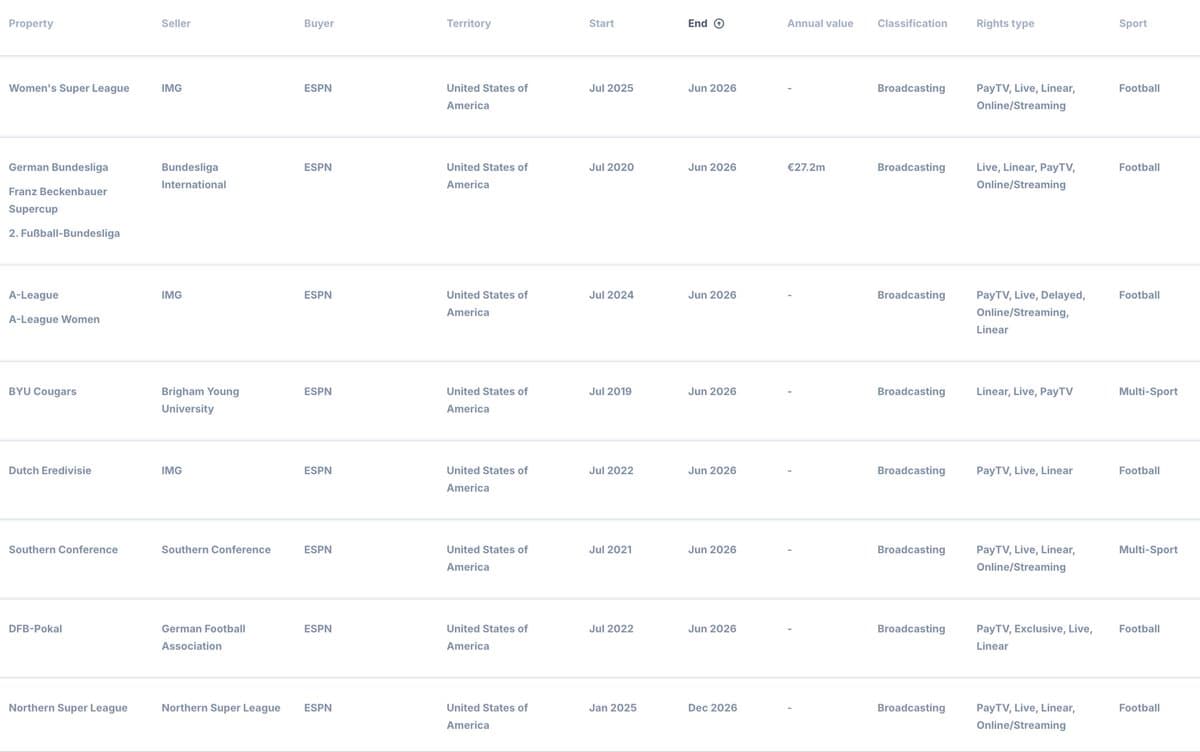
⬆️ On the top-line: #ESPN paid significant equity (10% @ $30 billion valuation) to squeak out minimal top-line revenue growth in its first consolidated quarterly earnings reports (Q2/FY2026): reporting $4.6 billion I n revenue for its sports division, solely crediting...

YouTube Faces Inevitable Consolidation Amid Ad Reach Pressures
𝗠𝗲𝗱𝗶𝗮 𝗰𝗼𝗻𝘀𝗼𝗹𝗶𝗱𝗮𝘁𝗶𝗼𝗻 𝗵𝗮𝘀 𝗯𝗲𝗲𝗻 𝗶𝗻𝗲𝘃𝗶𝘁𝗮𝗯𝗹𝗲, and since #YouTube is self-proclaimed 📺 “Television”*, consolidation might also be coming to the world’s most-consumed “TV network” (as per data from #Nielsen’s The Gauge) — including but not limited to the following two structural...
YouTube's Multi‑View Shift: Server‑Side Delivery Solves Core Barrier
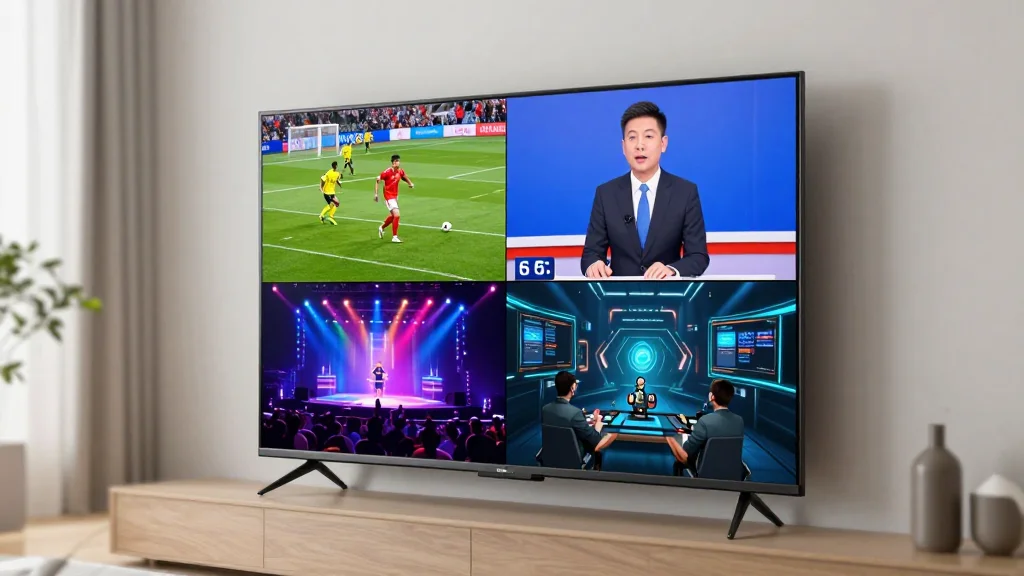
News coverage/analysis of YouTube announcing custom multi-view options has been very light on the actual innovation: User experience/control/choice may have been further improved, but the engineering milestone underneath has been the enabler. The basics were already covered in the YouTube...
FAST Complements, but Won’t Replace Paywalled Live Sports
There’s nuance to “FAST’s booming popularity” and live sports economics IMHO — so let’s summarize the nuances before unpacking them further below: • FAST is best understood today as a complementary distribution and monetization layer, but not a replacement for premium...
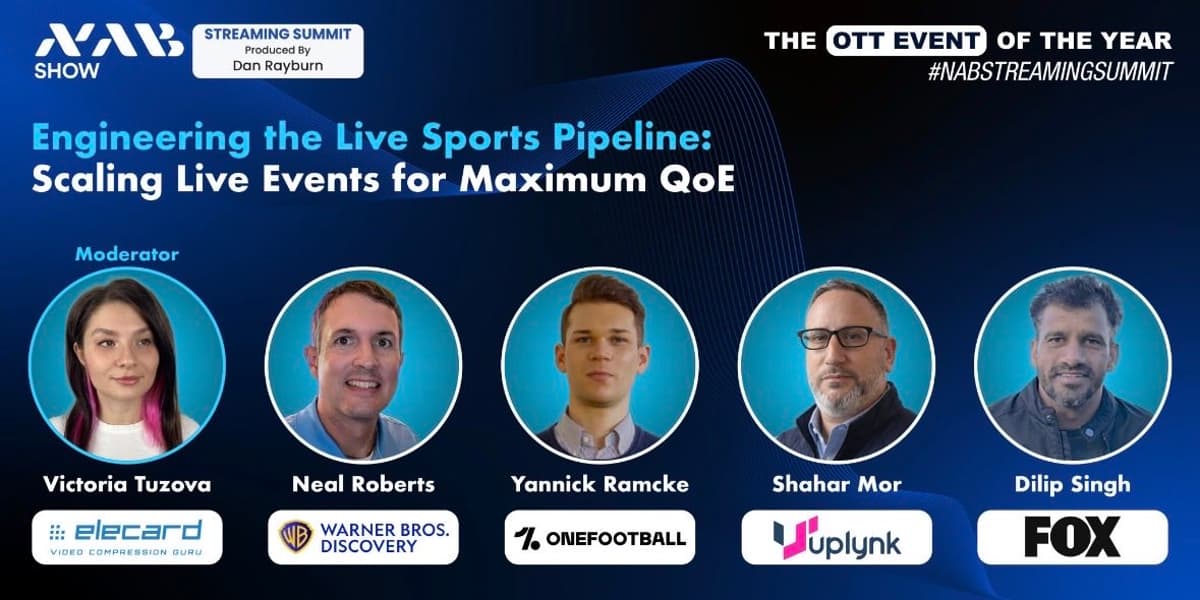
Connecting at NAB Show Vegas & New York Events
I’m about to head to the 🇺🇸 United States for a few days, let me know if you are around #NABShow in 🎰 Las Vegas or based in 🗽 New York. There are a few things lined up, including but...

NFL's Billion‑Dollar Media Demands Spark Backlash, FIFA Diversifies Revenue
🆙 Episode #44 of The Bundle is now available. The monthly walk-through with @UnffclPrtnr and @MurrayBarnett, trading facts, insights, and opinions at the intersection of #sports, #streaming, and #media — this time including but not limited to: • 🏈 NFL's media...
Streaming Reach Matches TV, Audience Grows Faster Than Subscriptions
The traditional reach-versus-revenue trade-off between 📺 linear TV and 📲 OTT streaming may only apply to broadcast television anymore: As linear cable/satellite TV shrinks and streaming expands, their reach expectations have largely converged for the most-scaled pure-play streamers. Especially with Prime...