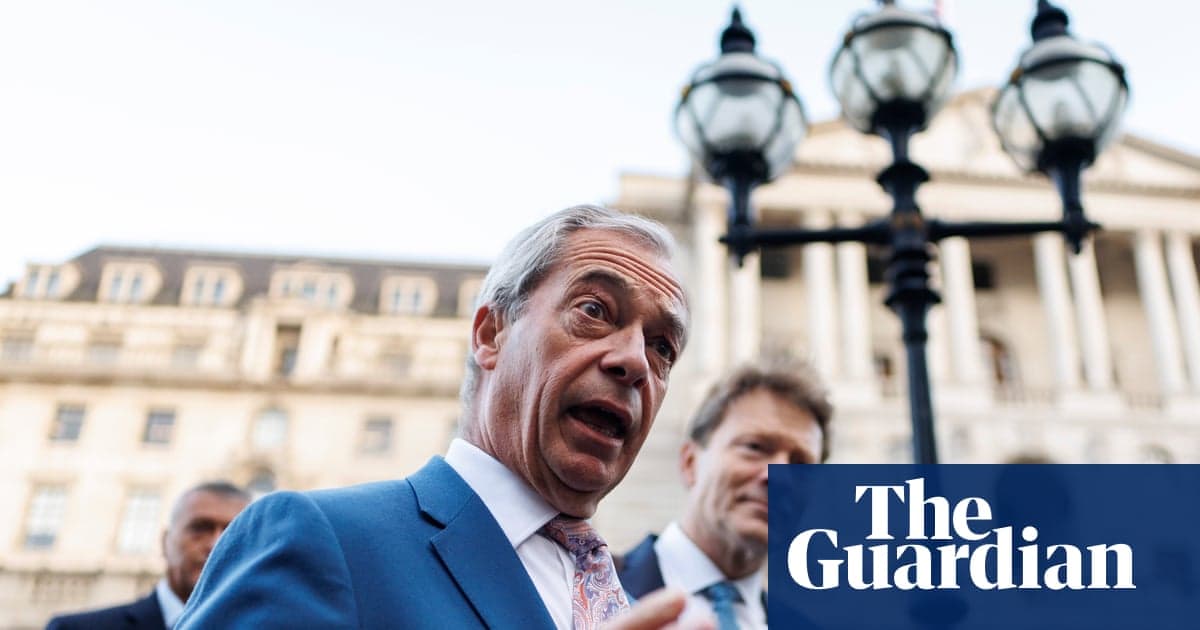
Farage Trying to Block ‘Britcoin’ Plans that Could Be Costly for Billionaire Donor
Companies Mentioned
Why It Matters
If Britcoin proceeds, it could reshape the UK’s crypto market, threaten stable‑coin revenues, and raise concerns about political influence over monetary policy.
Key Takeaways
- •Farage met BoE governor to oppose Britcoin plan.
- •Donor Harborne contributed £25 million, profits ~£1 billion annually.
- •Britcoin could cut demand for Tether stablecoins.
- •Labour chair urges regulator investigation of Farage’s lobbying.
- •BoE declined FOI request on Farage‑Bailey meeting.
Pulse Analysis
The Bank of England’s "Britcoin" proposal is part of a global push by central banks to issue digital versions of sovereign currency. Proponents argue a state‑run digital pound could improve payment efficiency, reduce cash‑handling costs, and enhance monetary policy transmission. Critics, however, warn that a centrally issued token may embed digital‑ID requirements, potentially eroding financial privacy and stifling innovation in the burgeoning crypto ecosystem. Nigel Farage’s public denouncement of the plan taps into a broader libertarian narrative that frames state‑issued digital money as an overreach of governmental power.
Behind Farage’s rhetoric lies a substantial financial stake. Christopher Harborne, a tech entrepreneur and major donor to Reform UK, has poured roughly £25 million (about $32 million) into the party and holds a 12 % share in Tether, the world’s leading stable‑coin issuer. Tether’s profits are estimated at around £1 billion a year (≈$1.3 billion). A widely adopted Britcoin could siphon liquidity away from private stablecoins, compressing Tether’s market share and revenue. This conflict of interest underscores how private crypto fortunes can intersect with public policy debates, especially as regulators grapple with balancing innovation against systemic risk.
The political fallout adds another layer of complexity. Labour’s Anna Turley has urged the Financial Conduct Authority to investigate Farage’s lobbying, while the Bank of England refused a freedom‑of‑information request on the meeting, citing the need for frank advice. Transparency concerns are amplified by the involvement of industry groups like the Digital Currencies Governance Group, which have previously lobbied on behalf of stable‑coin interests. As the UK finalises its crypto‑asset regulatory framework, the Britcoin saga illustrates the delicate interplay between sovereign monetary ambitions, private crypto capital, and democratic oversight.
Farage trying to block ‘Britcoin’ plans that could be costly for billionaire donor
Comments
Want to join the conversation?
Loading comments...