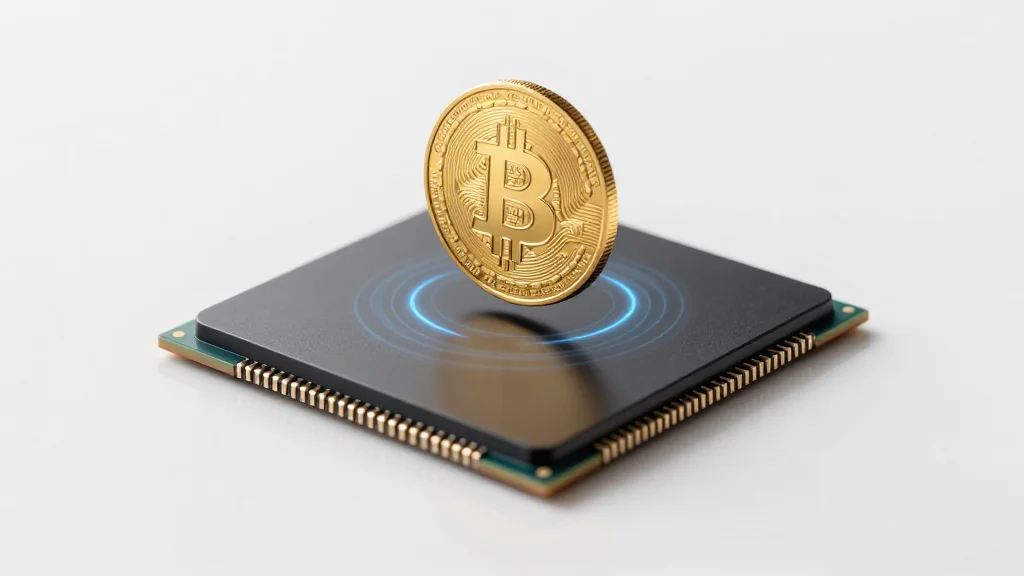
Google Says Quantum Computer Could Crack Bitcoin in Under 9 Minutes, Prompting Urgent Security Push

Companies Mentioned

Why It Matters
The prospect of a quantum‑enabled theft directly challenges the foundational trust model of Bitcoin and other major cryptocurrencies, which rely on the infeasibility of reversing elliptic‑curve signatures. A successful attack would not only erase billions of dollars in value but also undermine confidence in decentralized finance, prompting a wave of regulatory scrutiny and potentially reshaping the competitive landscape between legacy blockchains and next‑generation, quantum‑resistant platforms. Beyond immediate financial loss, the research forces the industry to confront a broader security paradigm shift. Post‑quantum cryptography is still in its infancy, and large‑scale adoption will require coordinated upgrades across wallets, exchanges, and infrastructure providers. The timeline compression to as early as 2029 means that developers, investors, and policymakers must prioritize quantum‑ready solutions now rather than treating the threat as a distant, theoretical risk.
Key Takeaways
- •Google’s paper shows a quantum computer could derive a Bitcoin private key in under nine minutes, with a 41% success probability.
- •Estimated 6.9 million BTC (including 1.7 million Satoshi‑era coins) are vulnerable to long‑exposure attacks.
- •Fewer than 500,000 physical qubits and ~1,500 logical qubits may be sufficient, tightening the attack timeline to 2029.
- •Circle’s Arc blockchain integrates post‑quantum signatures at launch, positioning itself as a quantum‑resistant alternative.
- •Industry debate centers on BIP‑360 public‑key removal versus hash‑based signatures like SPHINCS+ as mitigation paths.
Pulse Analysis
Google’s disclosure acts as a catalyst that could accelerate the quantum‑resistance arms race across the crypto sector. Historically, cryptographic upgrades have been incremental—think of the migration from SHA‑1 to SHA‑256—because the cost of a hard fork is high and consensus is hard to achieve. The new timeline, however, compresses the window for coordinated action, making piecemeal fixes less viable. Projects that have baked post‑quantum algorithms into their genesis block, such as Circle’s Arc, will likely attract institutional capital seeking insurance against a quantum shock, creating a bifurcation between quantum‑ready and legacy chains.
From a market perspective, the threat could trigger a re‑pricing of Bitcoin’s risk premium. Traders may begin to factor in a “quantum risk factor” similar to how they price geopolitical or regulatory risks today. This could manifest as higher volatility premiums, increased demand for hedging instruments, and a surge in demand for quantum‑resistant stablecoins. Moreover, the competition for cheap electricity between AI compute farms and Bitcoin miners—already evident in Anthropic’s multi‑gigawatt TPU deal—may intensify, pushing miners to diversify into AI hosting or to adopt more energy‑efficient hardware.
Regulators will also feel pressure to issue guidance on quantum‑ready cryptography, especially as the Federal Reserve and other central banks explore digital currencies that could be vulnerable to the same attacks. A coordinated, industry‑wide roadmap—perhaps led by standards bodies like NIST—will be essential to avoid a fragmented response that could erode confidence in the broader digital asset ecosystem. In short, Google’s findings are not just a technical footnote; they are a strategic inflection point that could reshape the security, economics, and regulatory landscape of crypto for the next decade.
Google Says Quantum Computer Could Crack Bitcoin in Under 9 Minutes, Prompting Urgent Security Push
Comments
Want to join the conversation?
Loading comments...