
Proscribing the IRGC Will Make Britain Safer
The United Kingdom faces an escalating threat from Iran’s Islamic Revolutionary Guard Corps (IRGC), which has recently orchestrated attacks on Jewish‑linked sites in London and is suspected of using local gangs to further its agenda. Despite sanctioning 1,238 Iranian individuals and entities—including 84 IRGC affiliates in 2023—the IRGC continues to launder billions of pounds (≈ $1.3 billion) through luxury real‑estate portfolios and shell companies. With Ahmad Vahidi, the architect of the 1994 AMIA bombing in Argentina, now leading the IRGC, the risk of a comparable tragedy on British soil is mounting. Experts argue that only a formal proscription of the IRGC, as a Proscribed Organisation, can give law‑enforcement the powers needed to freeze assets and disrupt its operations.

Global Warning Intelligence Summary 12 - Free for All Members
The Global Warning podcast has released its latest intelligence brief, the McBeth Intel Report 012, as a free PDF for all members. The 840 KB report is available for direct download from the Substack page and accompanies the weekly podcast episode. This...

Mosaic Defense and Dispersed Command: Iran Strikes Back
After Israel’s 12‑Day War decapitation strikes in June 2025, Iran activated its long‑developed Mosaic Defense doctrine, enabling semi‑autonomous regional units to continue missile and drone operations despite the loss of senior commanders and launch infrastructure. The strategy, rooted in two...

Norway Wants To Lead A "Viking Bloc" For Containing Russia In Northern Europe
Norway is positioning itself as the leader of a new “Viking Bloc” aimed at containing Russia across the Arctic and Baltic regions. The proposal follows a recent NATO exercise that deployed 32,500 troops from 14 member states in Norway and...
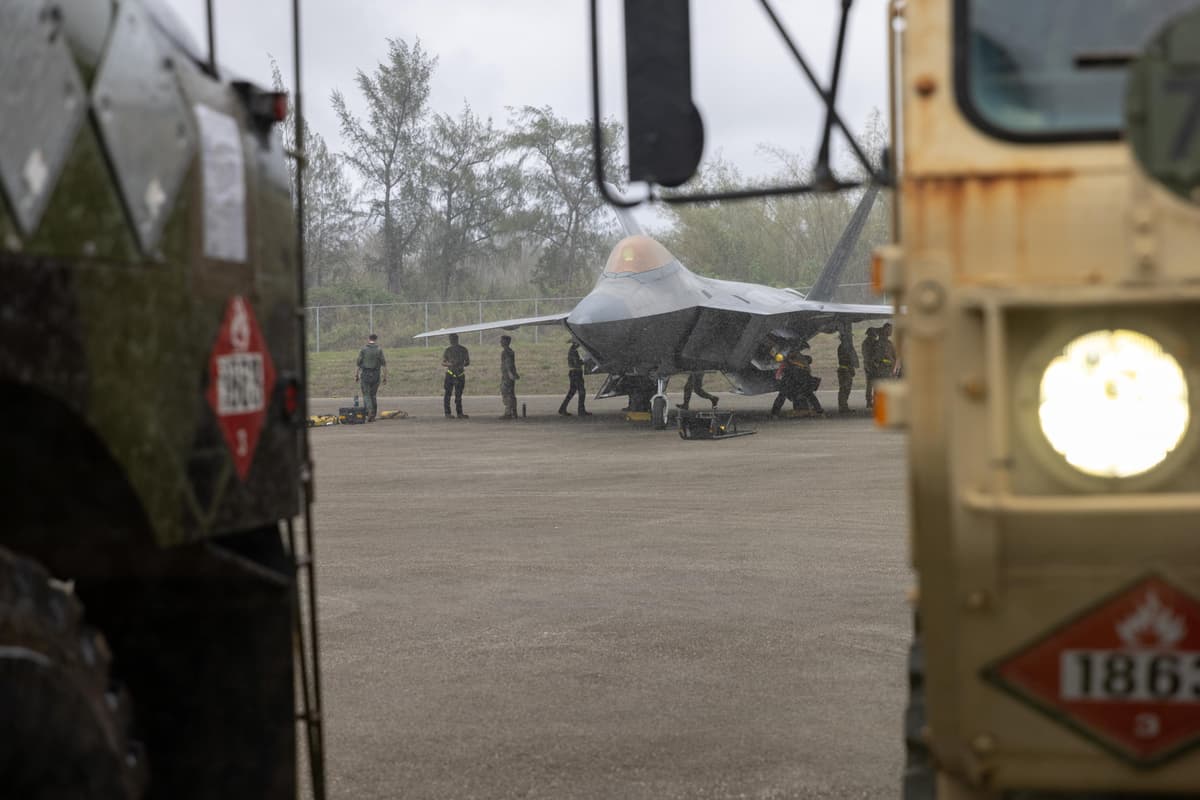
Historic Tinian Airfield Slated for Debut Flight Operations as Pentagon Expands Pacific Network
The U.S. Air Force will reactivate Tinian’s historic North Field on May 31, ending four years of construction and vegetation clearing. The multi‑million‑dollar project restores the World‑War‑II airstrip that has lain dormant for nearly 80 years. A 250‑person detachment will support...
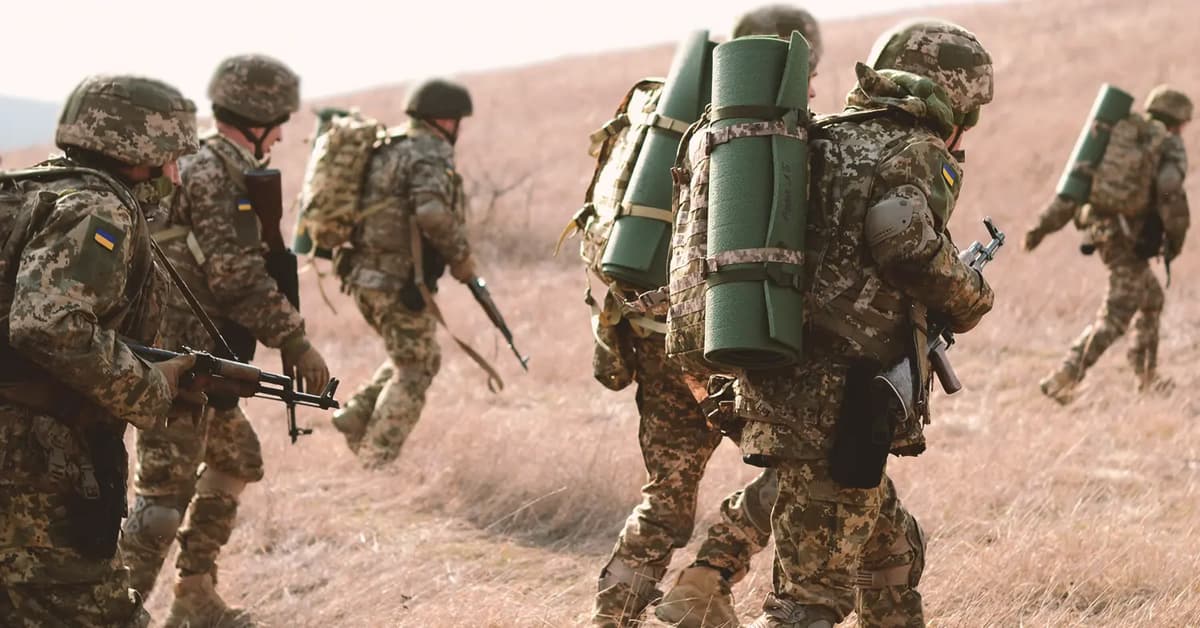
Two New Mechanized Brigades to Be Formed Despite Shortages
Ukraine’s Ground Forces intend to stand up two new mechanized brigades—the 167th and 50th—despite a systemic manpower crunch that leaves many existing units at less than 30% of authorized strength. The plan forces the transfer of personnel from seasoned formations,...
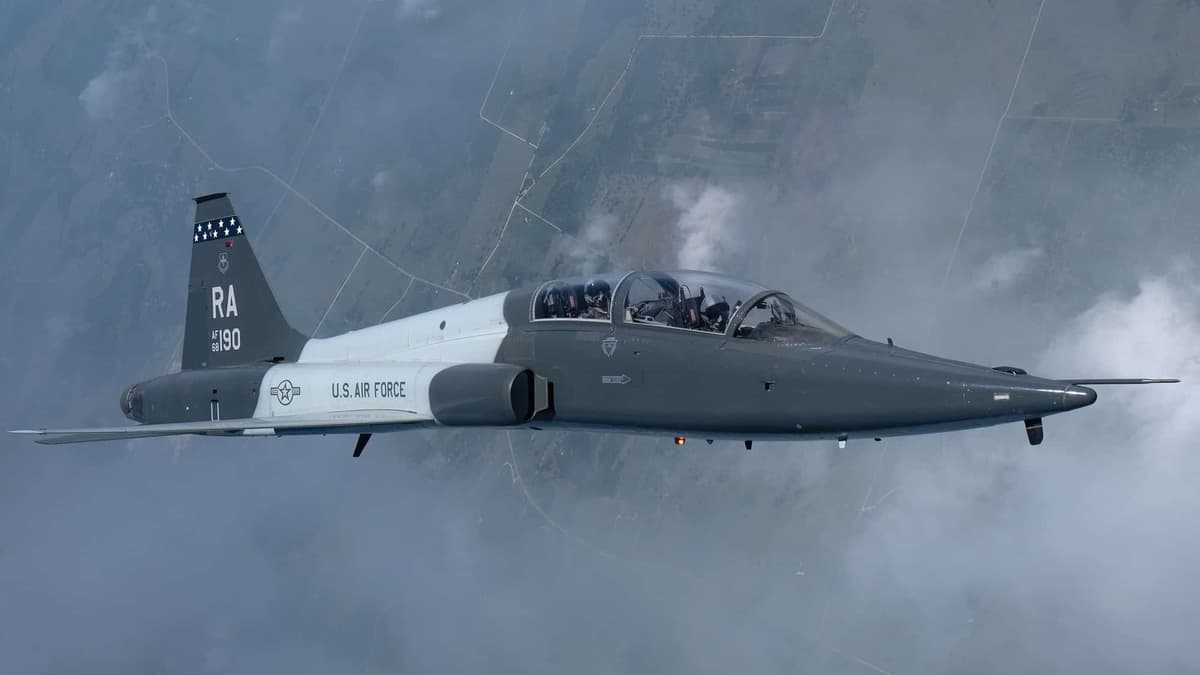
U.S. Air Force Announces Operational Pause for T-38 Talon Fleet
The U.S. Air Force announced a fleet‑wide operational pause for all T‑38 Talon jet trainers on May 19, 2026, following a fatal crash on May 12 in Alabama. The pause will remain in effect until each aircraft passes a detailed...
![Defense & Aerospace Daily Podcast [May 20, 2026] NAVIER’s Dr. Sampriti Bhattacharyya](/cdn-cgi/image/width=1200,quality=75,format=auto,fit=cover/https://defaeroreport.com/wp-content/uploads/2026/05/8D38627D-CDAC-4327-9D24-ADBAC07ABF25-e1779300012647.jpeg)
Defense & Aerospace Daily Podcast [May 20, 2026] NAVIER’s Dr. Sampriti Bhattacharyya
Navier, founded by Dr. Sampriti Bhattacharyya, unveiled a scalable hybrid‑electric hydrofoil system that boosts speed and efficiency for commercial and military vessels. The technology promises up to 40% fuel savings and a markedly lower acoustic profile, enhancing stealth capabilities. Navier...

House Committee Claims Possible NASA/China Interactions
The House Select Committee on China released a report titled “Research Security for America’s Future in Space: NASA’s Enforcement of the Wolf Amendment.” It alleges that hundreds of NASA‑funded papers involve Chinese co‑authors or institutions, potentially breaching the 2011 Wolf...
The Limits of Human Oversight at Machine Speed
The article argues that while AI can compress observation and orientation phases, human decision‑making remains the bottleneck, limiting defense cycles to augmented‑human speed. In cyber, AI tools now discover, exploit, and even patch zero‑day vulnerabilities faster than defenders can respond,...
Intelligence at the Speed of Relevance: Rethinking the Intelligence Cycle for the AI Era
The article argues that the traditional intelligence cycle—tasking, collection, processing, analysis, dissemination—was designed for a world of scarce data and now hampers the U.S. intelligence community in the AI era. While AI can compress individual steps, the overall workflow remains...
It's All About the Qubits, Baby
Quantum computing remains in its infancy, with the Department of Defense estimating practical machines are at least ten years away. A recent Congressional Research Service report echoes this timeline, noting that scalable qubit architectures are still experimental. Despite the technical...

Alexander Backs Scottish Defence Industry at DPRTE
Secretary of State for Scotland Douglas Alexander addressed the DPRTE Scottish Defence Procurement and Supply Chain Summit, outlining the UK government's plan to boost defence spending to 2.5% of GDP by 2027 and 3% in the next parliament. He highlighted...

Royal Navy Tests Killer Drone-Helicopter Team in Norway
The Royal Navy’s 700X Squadron paired Wildcat helicopters with Puma drones for a three‑week fjord exercise in Norway’s Exercise Tamber Shield. The drills tested fast‑attack boat engagements, simulated missile threats, and aerial target interceptions, while a parallel mesh‑network trial at...

Congressional Report on Operation Epic Fury Lists 42 U.S. Aircraft Damaged or Destroyed
The Congressional Research Service released an independent tally of U.S. aircraft damaged or destroyed during Operation Epic Fury, counting 42 airframes. The list covers 24 MQ‑9 Reapers, seven KC‑135 tankers, four F‑15E Strike Eagles, two MC‑130J Commando IIs and single...

Programmable Metasurface Enables Passive Radar to Track Drones without Transmitting
A programmable metasurface now stamps temporal codes onto ambient radio waves, turning passive radar into an active‑like sensor without emitting its own signal. The metasurface‑enabled passive radar (MEPR) uses a 32 × 24 array of PIN‑diode elements that switch at 2.5 µs intervals,...

Official Photos And Footage Of Russia’s Two-Seat Su-57 Prototype Emerge
Official photos and video released by Russia’s Ministry of Defence confirm the first flight of a two‑seat Su‑57 prototype on May 19, 2026. The aircraft, dubbed informally Su‑57D, was piloted by Sukhoi chief test pilot Sergei Bogdan and showcased a...

Iran's Floating Oil Stockpile Jumps 65% As U.S. Naval Blockade Bites
Iran’s floating oil stockpile surged 65% to roughly 42 million barrels as the U.S. naval blockade, launched in mid‑April, forced Iranian tankers to linger in the Persian Gulf and near the Strait of Hormuz. The number of Iranian‑laden vessels rose from...
![DEFAERO Strategy Series [May 19, 26] IISS’ Nigel Inkster](/cdn-cgi/image/width=1200,quality=75,format=auto,fit=cover/https://defaeroreport.com/wp-content/uploads/2026/05/108308121-1779079950697-gettyimages-2275750817-AFP_B2WN99E.webp)
DEFAERO Strategy Series [May 19, 26] IISS’ Nigel Inkster
Former MI6 operative Nigel Inkster joined Defense & Aerospace Report’s Strategy Series to dissect President Trump’s recent summit with China’s Xi Jinping and preview Xi’s upcoming meeting with Vladimir Putin. Inkster argued that the talks signal a potential “grand bargain”...

SBU Exposes Draft Evasion and Bribery Schemes Across Military Units
The Security Service of Ukraine (SBU), together with the State Bureau of Investigation and the National Police, uncovered multiple bribery and draft‑evasion schemes across five regions, detaining commanders and officials who sold “rear” assignments or falsified medical exemptions. In Chernihiv...

Between Two Fronts: Why Japan-South Korea Security Cooperation Is No Longer Optional
The article warns that a simultaneous Taiwan crisis and North Korean escalation will stretch U.S. military commitments, forcing Japan and South Korea to shoulder greater regional security responsibilities. It argues that their security is interdependent and that fragmentation would erode...

What Latin American Militaries Should Learn From Cuba, Ukraine, and Iran
Cuba has acquired several hundred loitering‑munition drones to deter potential U.S. aggression, a move inspired by lessons from Ukraine and Iran. The article argues that most Latin American militaries lack clear strategic objectives and continue to spend on prestige weapons...

5 Big Energy Stories - 5.19.2026: Drone Magnets, Alaska LNG, and an EV Fee Whose Time Has Come
The Pentagon has set an ambitious goal of fielding up to 300,000 drones as unmanned systems become central to modern combat. While the U.S. is pouring $13.6 billion into autonomous weapons for FY‑2026, the critical magnets that power these drones remain...

CiS Unveils Autonomous Drone Dock for Moving Ships
German autonomous‑systems firm CiS introduced the ORKA Dock, a fully automated launch and recovery hangar for its ORKA uncrewed aerial system, at the Combined Naval Event. The dock can open, launch, retrieve and recharge a drone in under 30 seconds...
Inside the FBI’s New Push to Track Leaks and Monitor Employees
The FBI’s FY 2027 budget request includes a $7 million digital watermarking program to embed forensic markers in shared documents, enabling leak attribution. It also earmarks $11.4 million for a User Activity Monitoring (UAM) suite, built on a $7 million Everfox contract that provides...

Rare Referendum on Nuclear Warheads Begins in South Carolina
Nearly 100 residents attended the first court‑ordered public hearing in North Augusta, South Carolina, to weigh the Department of Energy’s plan to convert the Savannah River Site into a plutonium‑pit production plant. The proposal follows the abandonment of a $5.4 billion...

Arms Without Strings: What Buying Chinese Military Technology Really Means
The May 2025 India‑Pakistan clash and the February 2026 US‑Israel‑Iran war thrust Chinese military technology into the spotlight, showcasing the J‑10CE fighter, PL‑15 missiles and BeiDou navigation in combat. Beijing’s offer bundles low unit prices, flexible financing, minimal political licensing, joint‑production options...

Weaponizing Supply Chains: How Iran and China Drive Strategic Food Insecurity in Modern Conflict
Iran’s coordinated mine deployment and fast‑boat attacks forced the Strait of Hormuz to close, while Beijing simultaneously imposed sweeping export bans on urea and NPK fertilizers. The dual choke‑points halted roughly one‑third of global seaborne fertilizer trade and cut up...
![Defense & Aerospace Daily Podcast [May 18, 2026] Look Ahead W/ Byron Callan](/cdn-cgi/image/width=1200,quality=75,format=auto,fit=cover/https://defaeroreport.com/wp-content/uploads/2026/05/Screenshot-2026-05-18-at-8.56.20-AM.png)
Defense & Aerospace Daily Podcast [May 18, 2026] Look Ahead W/ Byron Callan
The podcast highlighted a sharp decline in European defense equities as investors interpret a potential winding‑down of the Ukraine conflict, questioning the urgency of regional modernization programs. In Washington, Senate and House committees are holding hearings on a third defense‑spending...

Chained Dragon: China's Structural Limitations in AI
The United States is leveraging export controls, massive private capital, and a dense data‑center network to preserve a strategic lead in artificial intelligence and quantum computing. In 2024 American AI startups attracted $109.1 bn, dwarfing China’s $9.3 bn, and the U.S. now...

The Weekly Preflight: 5 Things to Watch in Global Security | Week of May 18, 2026
The Weekly Preflight flags five high‑risk developments for the coming week. A drone struck the Barakah nuclear plant’s generator in the UAE, sparking a fire but no radiation release. An Ebola outbreak in the Democratic Republic of Congo has trapped...
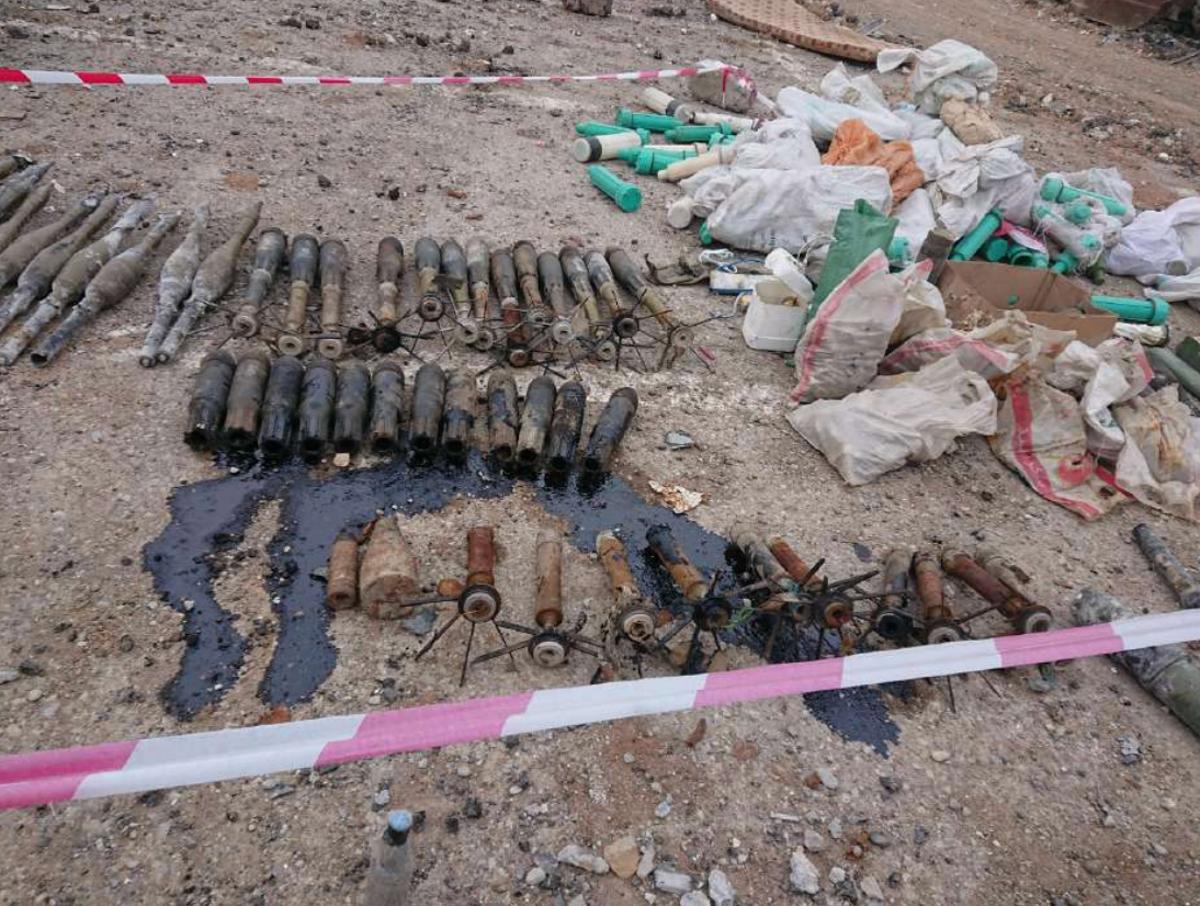
Inside the Islamic State Recoilless Gun Program | ARES
Armament Research Services released Special Report 6 detailing Islamic State’s home‑made light recoilless guns, including four conventional types and a newly documented fifth variant that carries a sulphur‑mustard chemical payload. The weapons share a common 89 mm barrel, folding fins and a...

The Maverick Era: Inside the DIA’s (Defense Intelligence Agency) Digital Insurgency
At the SCSP summit, DIA Chief AI Officer Major General Robert Kinney unveiled the Digital Modernization Accelerator, nicknamed the Maverick Accelerator, to replace siloed, bespoke projects with a hub‑and‑spoke architecture. The initiative leverages Other Transaction Authorities to compress procurement cycles—six...

The Escalation Trajectory of U.S.-Iran Tensions After the Collapse of the Negotiations
The United States has launched a maritime blockade of Iranian ports after talks in Pakistan collapsed, shifting the region from a fragile de‑escalation to a volatile escalation phase. Iran’s IRGC views its nuclear program as essential to regime survival, limiting...

Destinus and Rheinmetall Push 2000km Strike Drone Forward
Destinus announced an accelerated launch of the RUTA Block 3 programme, a 2,000‑kilometre long‑range precision strike drone, with flight testing slated for 2027. The system will feature a next‑generation T220 turbojet engine, a 250‑kg warhead and containerised launch capability, and will...

The Night Ukrainian Drones Exposed Gaps in Moscow’s Defenses and State TV Gave It 60 Seconds
Ukrainian long‑range drones struck four targets in the Moscow region on May 16‑17, including the OFAC‑sanctioned Angstrem semiconductor plant and three oil‑related facilities. Russian air defenses claimed to have downed over 120 drones, but open‑source imagery showed fires, smoke plumes...

UK F-35 Fleet Stretched by Combat Operations and Upgrade Delays
The UK has taken delivery of all 48 F‑35B jets ordered, but only 47 are operational after a lost aircraft, and daily mission‑capable numbers hover around ten. A surge of combat operations in the Middle East – dubbed Operation Luminous –...
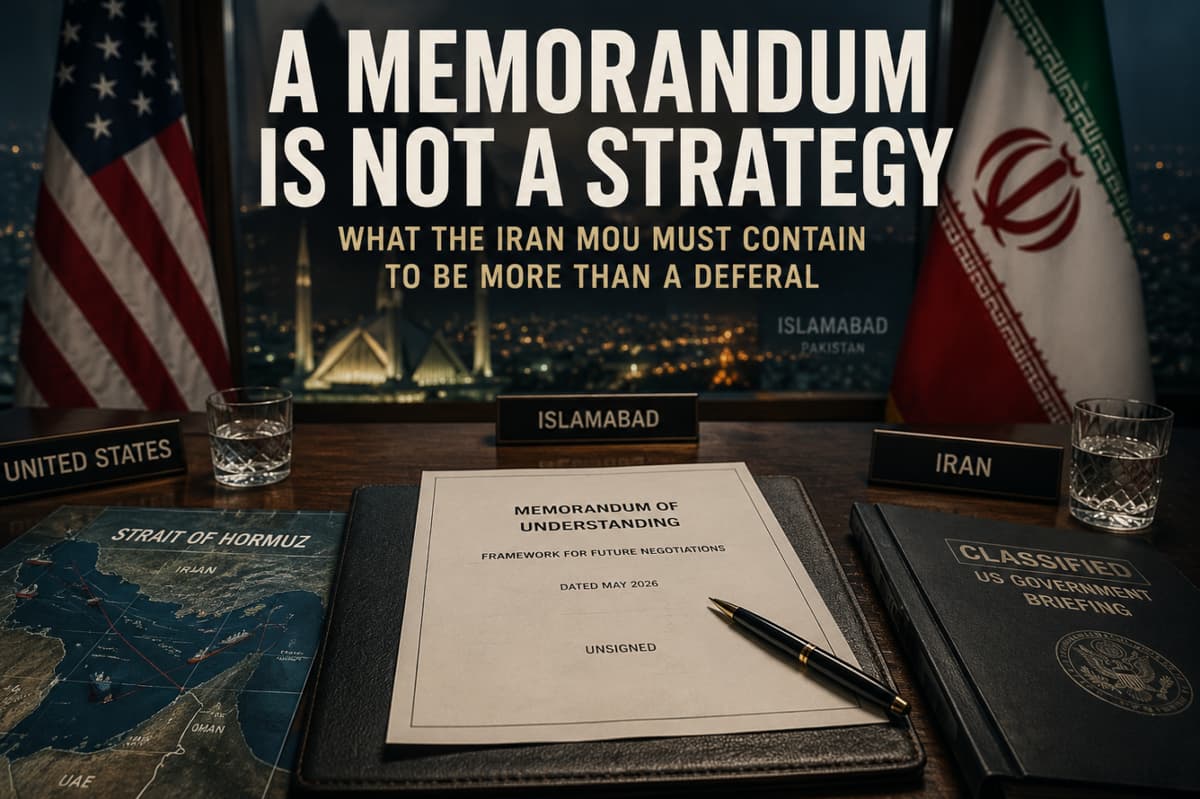
A Memorandum Is Not a Strategy: What the Iran MoU Must Contain to Be More Than a Deferral
The U.S. is drafting a one‑page memorandum of understanding (MoU) with Iran following a recent de‑escalation, but Congress warned that without a clear theory of victory the agreement could merely postpone core issues. Testimony from Defense Secretary Pete Hegseth and...

Blind Spots
Planet Labs, a leading commercial satellite operator, announced a multi‑stage suspension of imagery over the Gulf, Iran and allied bases after the U.S. government requested the hold to prevent adversaries from exploiting the data. The pause began on March 6, was...

I'll Be Speaking At Temple University of Japan May 21, 6:30 PM
The speaker will present at Temple University Japan on Thursday, May 21, from 6:30 p.m. to 8:00 p.m. Seats are limited, and attendees must reserve a spot by emailing Robert Dujarric. The event is exclusive to paid subscribers and will be held...
Australia's Bushmaster Gets a Dutch Encore After Proving Itself in Ukraine
Australia is selling Bushmaster protected mobility vehicles to the Netherlands, though the exact number and price remain undisclosed. The sale coincides with a larger Australian commitment of AUD 1.2 billion (about US $800 million) to produce 268 new Bushmasters, upgrade army trucks, and continue...

Small Wars Journal and Arizona State University to Participate in SOF Week 2026
Small Wars Journal (SWJ) and multiple Arizona State University (ASU) security initiatives will attend SOF Week 2026 in Tampa, the premier gathering of the international special‑operations community. The partnership brings together academic programs, research centers, and publications such as Inter...
Video: What Happens After NATO?
Former President Trump withdrew 5,000 U.S. troops from Germany and halted a planned 4,000‑troop deployment to Poland, sparking doubts about America’s commitment to NATO. The cancellation of a 2027 Tomahawk cruise‑missile shipment to Germany, along with delays in weapon deliveries...

U.S. Agencies Will Operate From Surveillance Tower in Chihuahua, Despite Recent Unauthorized CIA Presence in the Mexican State
U.S. federal agencies—including the FBI, DEA, ATF, HSI and CBP—are slated to occupy the 18th floor of the new Centinela Tower in Ciudad Juárez, using the facility’s advanced surveillance platform for cross‑border intelligence sharing. The move proceeds despite a recent diplomatic...
![Defense & Aerospace Report Podcast [May 15, ’26 Washington Roundtable]](https://hixhlmpcokxhartfkpyi.supabase.co/storage/v1/object/public/images/thumbnails/022a8448736d95fc0ebcf729497914e0.webp)
Defense & Aerospace Report Podcast [May 15, ’26 Washington Roundtable]
The Defense & Aerospace Report Washington Roundtable, sponsored by L3Harris, examined President Trump’s $1.15 trillion defense budget request and the evolving Reconciliation 2.0/3.0 process. Panelists debated the Pentagon’s estimate that the Iran‑Israel conflict has already cost $29 billion and reviewed diplomatic moves,...

Intel Suggests Iran’s Missiles Aren’t Gone
U.S. intelligence reports that Iran still possesses roughly 70% of its pre‑war missile arsenal, including both ballistic and cruise systems. The data show 30 of the 33 missile sites along the Strait of Hormuz have been rebuilt, contradicting the Trump...

Washington Is Closer Than Ever to Pulling Off Its 66-Year Dream of Regime Change in Cuba
Washington is intensifying pressure on Cuba with a surge of U.S. intelligence flights, a historic meeting between CIA Director John Ratcliffe and senior Cuban officials, and fresh sanctions targeting the state‑run conglomerate GAESA. The island’s energy blockade has exhausted diesel...

US Admiral Says Iranian Navy and Its Stocks of Sea Mines Have Been Substantially Eliminated
U.S. Central Command says it has destroyed about 90% of Iran’s 8,000 sea‑mine stockpile and 161 naval vessels during a 38‑day campaign. More than 700 airstrikes hit mine sites while over 13,500 strikes and 10,200 sorties crippled Iran’s ballistic‑missile, drone...
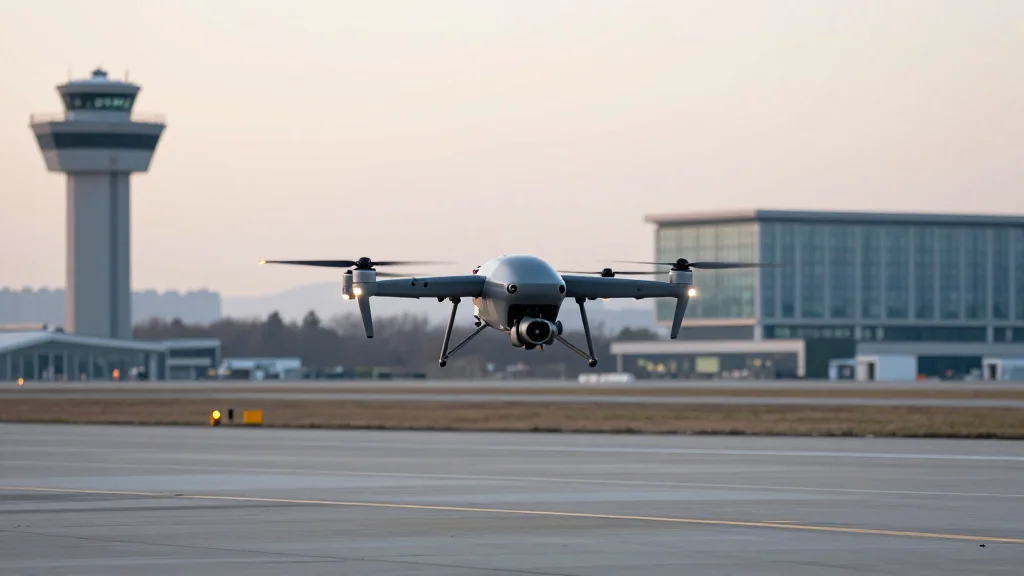
Helsinki Airport Shuttered For Hours After Military Drone Threat Puts Finland On High Alert
Early Friday, May 15, Helsinki International Airport shut down after a military‑grade drone was detected, prompting a city‑wide indoor‑shelter warning for 1.8 million residents. All take‑offs and landings stopped at 4 a.m. and resumed around 7 a.m., during which nine inbound flights—including a...

27 Nations Back Hormuz Mission in Joint Statement
A joint statement signed by 27 nations on 14 May affirms political support for an independent multinational mission, co‑led by the United Kingdom and France, to safeguard freedom of navigation through the Strait of Hormuz. The mission will protect civilian...