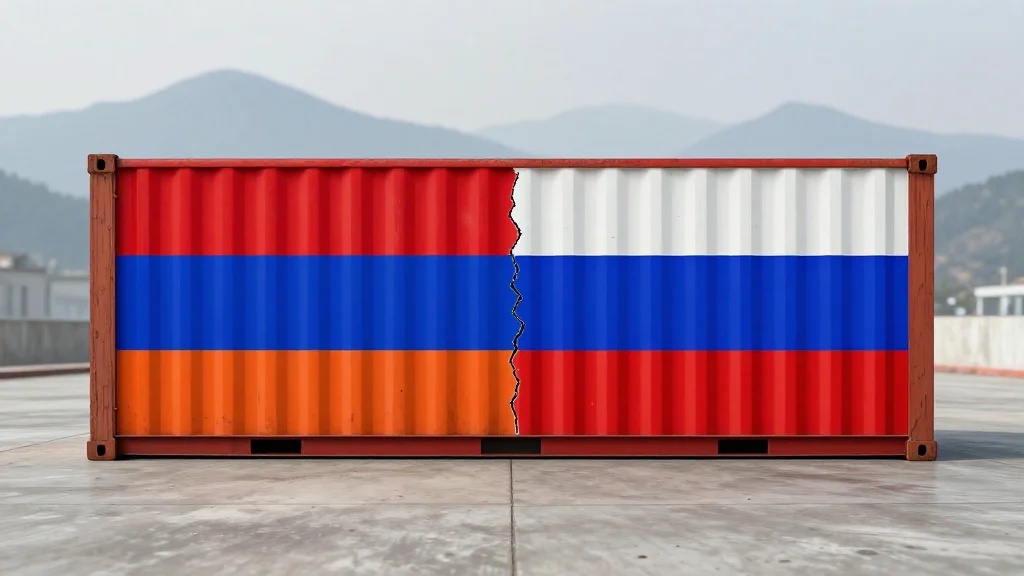
Armenia Relations with Russia Reach Crisis Point, Continuing Worrying Trend for Moscow
Key Takeaways
- •Russia tightened import rules on Armenian goods in early April.
- •Armenian speaker threatens exit from CSTO and EAEU if restrictions persist.
- •40% of exports go to Russia; 60% of gas imports from Russia.
- •EU pledged €270 million (~$295 million) fund to deepen ties with Armenia.
- •Armenia pursues new trade routes with Turkey, Azerbaijan, and US‑backed corridor.
Pulse Analysis
Armenia’s diplomatic pivot has accelerated after a tense April meeting in Moscow, where President Vladimir Putin warned that Yerevan cannot belong simultaneously to the EU customs bloc and the Eurasian Economic Union. Within days, Russia announced tighter import standards for Armenian products, a move seen as leverage to curb Yerevan’s Western outreach. The Armenian government responded with a stark warning: if Moscow’s measures persist, Armenia may pull out of the Collective Security Treaty Organization (CSTO) and the EAEU, signaling a potential realignment of its security architecture.
Economic interdependence makes the gamble risky. Roughly 40% of Armenia’s exports flow to Russia, while over 60% of its natural‑gas supply—priced at $165 per thousand cubic metres, well below European market rates—comes from Moscow. Remittances from the Armenian diaspora in Russia account for about 7% of GDP. Yet the EU has launched a four‑year €270 million (~$295 million) assistance package aimed at integrating Armenia into Western markets, and U.S. Vice President JD Vance has offered military aid, including drones. These incentives aim to offset the economic costs of a potential break with Russia.
Geopolitically, Armenia’s drift threatens Russia’s strategic depth in the South Caucasus. The country’s participation in the CSTO has already been frozen, and it is exploring new trade corridors with Turkey and Azerbaijan, as well as the U.S.-backed TRIPP project that could reroute regional commerce away from Moscow. Russian officials, from the Foreign Ministry to security analysts, view these moves as a direct challenge to their southern periphery, fearing that increased Western economic footholds could translate into political and military influence. The outcome of Armenia’s June parliamentary elections will likely determine whether Yerevan completes its exit from Russian‑led structures or seeks a more balanced, multivector foreign policy.
Armenia Relations with Russia Reach Crisis Point, Continuing Worrying Trend for Moscow
Comments
Want to join the conversation?