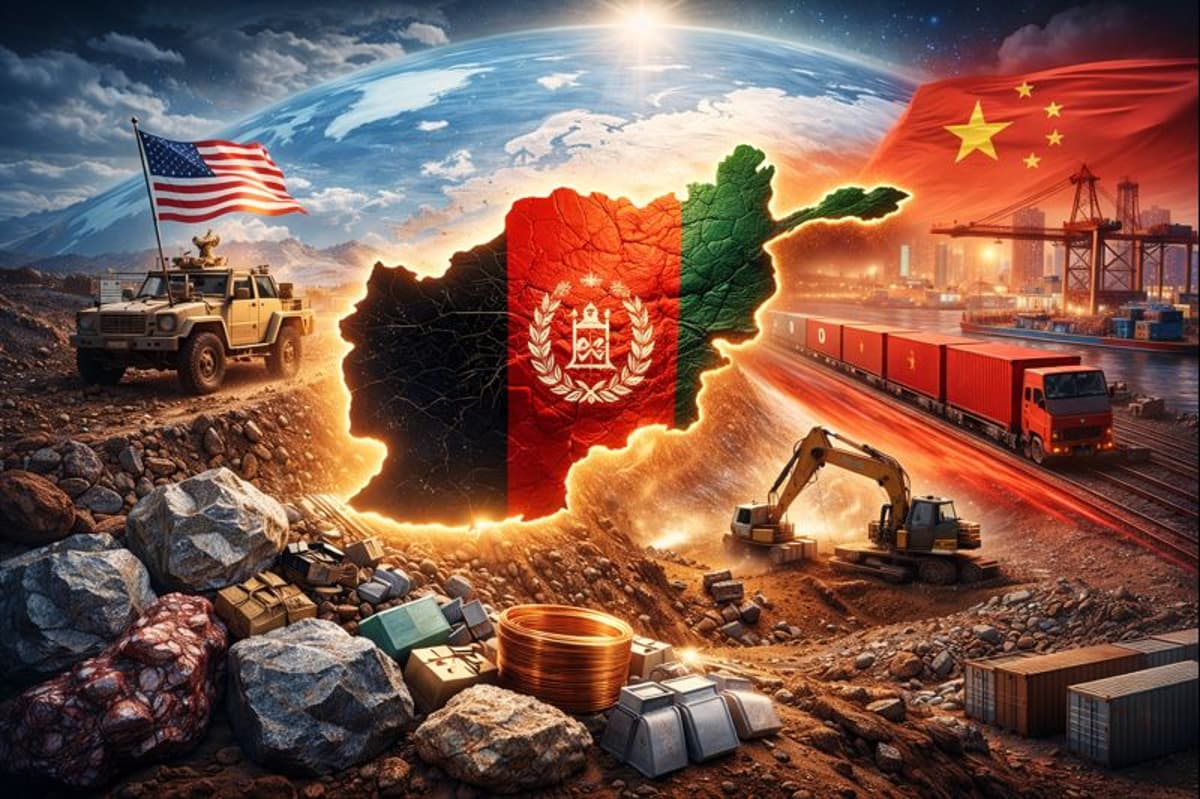
China, Afghanistan, and Critical Minerals: Options for U.S. Strategic Competition Below the Threshold of War
•February 20, 2026
0
Why It Matters
Control over Afghanistan’s critical minerals influences global defense supply chains and can either reinforce or diminish China’s dominance in mineral processing. A U.S. strategy that secures downstream value adds strategic resilience without costly military deployment.
Key Takeaways
- •China’s Afghan mineral projects remain limited and exploratory.
- •U.S. can target processing, certification, not raw extraction.
- •Strategic competition shifting to non‑kinetic economic statecraft.
- •Afghanistan’s minerals critical for defense supply chains.
- •Multilateral financing can alter payoff structures against China.
Pulse Analysis
Afghanistan’s mineral endowment—copper, lithium, rare earths, and iron—has become a focal point in the evolving great‑power rivalry that now relies more on economic statecraft than battlefield victories. Beijing’s post‑withdrawal strategy blends diplomatic outreach, tariff‑free trade promises, and modest infrastructure pilots, yet its extraction contracts have delivered modest revenues and remain largely exploratory. This cautious approach reflects China’s risk‑averse calculus in insecure environments, where security guarantees and long‑term financing are scarce, leaving a strategic opening for competitors.
U.S. policymakers can exploit that opening by re‑orienting the competition toward downstream activities where American and allied firms hold clear advantages. Investing in processing hubs, establishing trusted‑supplier certification regimes, and financing recycling or substitution technologies create “blue‑ocean” value that bypasses raw‑ore extraction where China enjoys geographic proximity. Game‑theoretic insights suggest that altering payoff structures—through multilateral financing facilities, selective sanctions relief, and procurement guarantees—can shift the equilibrium, making Chinese offers less attractive while bolstering allied supply‑chain resilience.
For the U.S. military, the implication is a shift from kinetic presence to enabling roles: intelligence support for interagency mineral‑security initiatives, security‑force assistance to protect transit points, and engineering assets to build allied processing capacity outside Afghanistan. A chartered Interagency Afghanistan Critical Minerals Working Group, coupled with a mid‑term allied processing facility and a long‑term certification framework, would provide measurable metrics of success and embed the United States in the higher‑value segments of the supply chain, thereby limiting China’s strategic leverage in the region.
China, Afghanistan, and Critical Minerals: Options for U.S. Strategic Competition Below the Threshold of War
0
Comments
Want to join the conversation?
Loading comments...