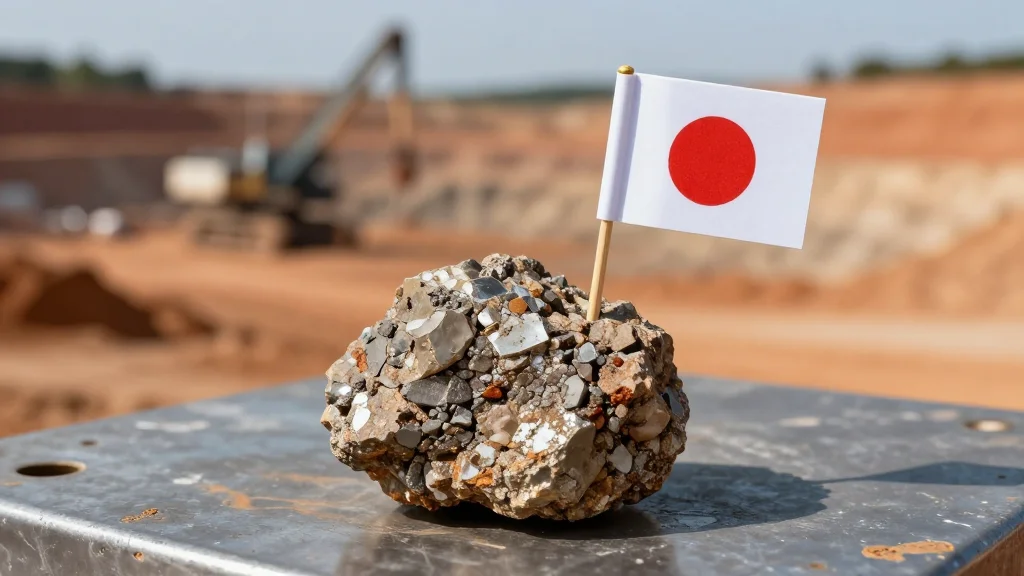
George Answers Your Questions: Japan, Australia and a New Regional Order
Key Takeaways
- •Japan imports >80% of its critical minerals.
- •Australia aims to become top supplier of rare earths to Japan.
- •New trilateral security pact deepens supply‑chain cooperation.
- •Regional order shifts toward US‑Japan‑Australia alignment.
- •China's influence challenged by resource‑security partnership.
Pulse Analysis
Japan’s industrial engine has long been hamstrung by a chronic shortage of critical minerals such as rare earths, cobalt and lithium. Over 80% of these inputs are imported, making the country vulnerable to supply shocks and geopolitical pressure. In response, Tokyo has accelerated diplomatic outreach to resource‑rich partners, with Australia emerging as the most reliable source due to its stable political environment and extensive mining sector. This strategic shift reflects a broader effort to insulate Japanese manufacturing from external disruptions and to secure the raw materials that power everything from smartphones to electric vehicles.
Australia, sitting on some of the world’s largest deposits of rare earths, lithium and nickel, is capitalising on this demand by forging deeper economic and security ties with Japan. Recent agreements include joint ventures for downstream processing, preferential trade terms, and coordinated investment in green‑energy projects that will convert raw ore into battery‑grade materials. For Canberra, the partnership not only diversifies its export basket beyond traditional commodities like iron ore and coal, but also cements its role as a critical node in the emerging Indo‑Pacific supply chain. The influx of Japanese capital is expected to create thousands of high‑skill jobs and boost regional development in Western Australia and the Northern Territory.
The bilateral cooperation is reshaping the regional order, aligning Japan, Australia and the United States in a quasi‑security framework that counters China’s growing influence over critical mineral markets. By linking resource security with defense collaboration, the trio is building a resilient economic architecture that discourages coercive trade practices. Investors are watching closely as the partnership could spur a wave of infrastructure spending, drive up commodity prices, and trigger further strategic realignments across Southeast Asia. In the long term, this resource‑security nexus may become a defining feature of the Indo‑Pacific’s geopolitical landscape.
George Answers Your Questions: Japan, Australia and a New Regional Order
Comments
Want to join the conversation?