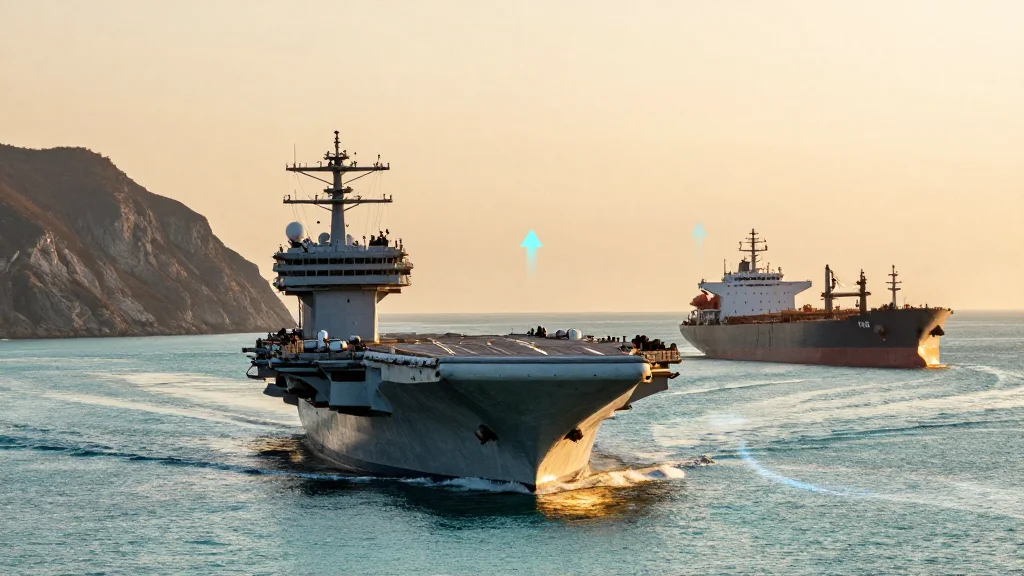
A Way Out via the Strait of Hormuz
Why It Matters
Linking Strait openness to a nuclear pact could break the stalemate, stabilizing global oil markets and reducing escalation risk for the US, Iran, and their allies.
Key Takeaways
- •Iran’s Strait closure adds symmetric leverage to nuclear negotiations
- •Sanctions have cut Iran’s GDP by roughly 50% since 1989
- •$50 billion annual investment needed for >5% Iranian growth
- •China could fund Iranian infrastructure, easing US‑Iran deal path
Pulse Analysis
The latest flare‑up between Washington and Tehran underscores a decades‑old dilemma: sanctions cripple Iran’s economy while offering the United States a low‑cost bargaining chip. Economists estimate that sanctions have shaved about two percentage points off Iran’s annual growth, leaving its economy roughly half the size of Turkey’s. This asymmetry fuels a classic time‑inconsistency problem—once Iran makes irreversible nuclear concessions, the U.S. faces little domestic cost in re‑imposing sanctions, creating a perpetual trust deficit.
A novel lever has emerged from the 40‑day war: Iran’s ability to choke the Strait of Hormuz, the world’s most critical oil conduit. Unlike sanctions, a closed Strait inflicts comparable economic pain on both sides, providing a mutually costly incentive to keep the waterway open. By embedding the Strait’s status into a nuclear‑sanctions package—making sanctions relief contingent on uninterrupted shipping—both parties gain a self‑enforcing mechanism that mitigates the time‑inconsistency dilemma and offers a clearer narrative of victory for domestic audiences.
China’s involvement could tip the balance. As Iran’s largest oil customer, Beijing stands to lose roughly $150 billion annually from a $40‑per‑barrel price spike, and even more when broader commodity costs are considered. Leveraging its capital and supply‑chain capacity, China can channel frozen Iranian assets into large‑scale infrastructure and renewable projects, creating vested stakeholders on both sides of the deal. If the upcoming Trump‑Xi summit capitalizes on this convergence, the United States, Iran, and China may forge a durable framework that stabilizes oil markets and reshapes Middle‑East geopolitics.
A way out via the Strait of Hormuz
Comments
Want to join the conversation?
Loading comments...