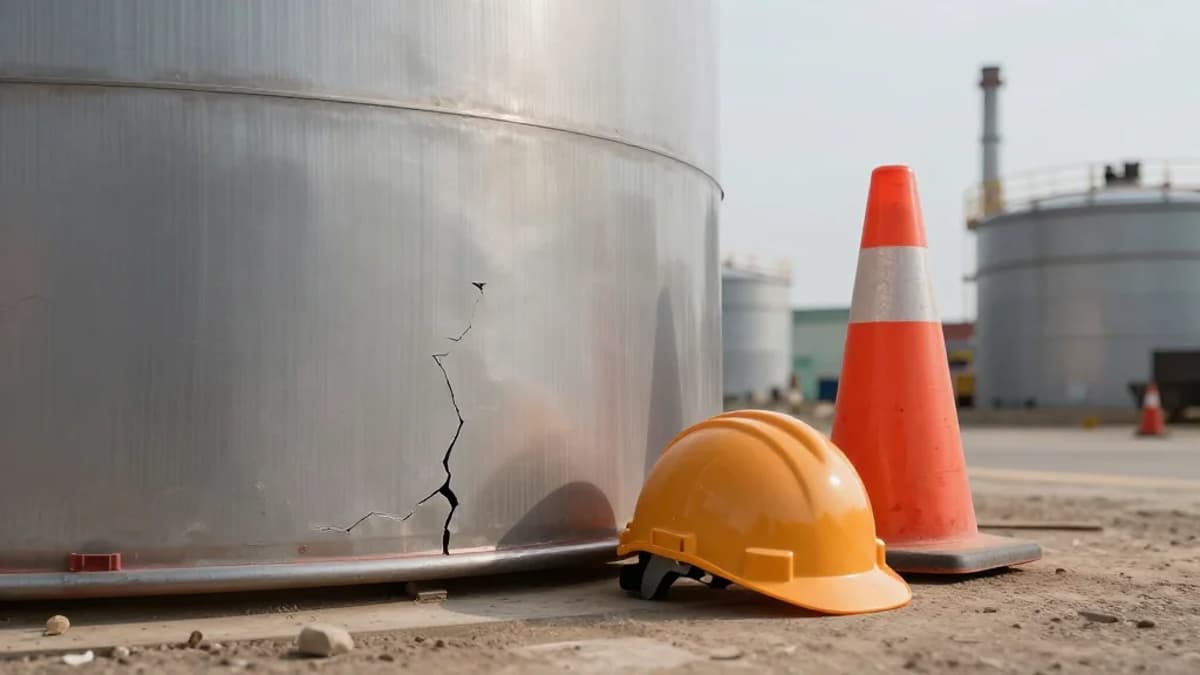
Bahrain Says Refinery Fire From Iran Strike Has Been Contained
•March 7, 2026
0
Companies Mentioned
Why It Matters
The containment preserves Bahrain’s sole refining capacity, safeguarding downstream revenues and regional fuel supply amid heightened geopolitical tension.
Key Takeaways
- •Fire contained, no injuries, refinery still operating.
- •BMP project valued at $7 bn, key to Vision 2030.
- •New 225,000 b/d unit replaces 80‑year‑old equipment.
- •Residual hydrocracking unit adds 65,000 b/d capacity.
- •Iranian missile strike raises regional energy security concerns.
Pulse Analysis
The missile strike on Bahrain’s Sitra refinery underscores the vulnerability of critical energy infrastructure in a volatile region. While the National Communication Centre confirmed the fire was quickly contained and production continued, the incident forced operators to initiate immediate damage assessments. Such rapid response mitigates supply disruptions, but the visual evidence of multiple impacts highlights the escalating risk profile for downstream assets near conflict zones.
Bapco Energies’ $7 bn Modernisation Programme, inaugurated in late 2024, transformed the 90‑year‑old refinery with a 225,000 b/d integrated crude‑vacuum unit and a 65,000 b/d residual hydrocracking train. These upgrades, delivered by a consortium led by Technip Energies and supported by Total Energies, Chevron, and Worley, are central to Bahrain’s Vision 2030, aiming to boost domestic refining margins and reduce reliance on imported fuels. The new units not only increase throughput but also improve product slate flexibility, positioning Bahrain as a modest regional hub.
Geopolitically, the attack reflects Iran’s broader missile campaign following retaliatory strikes by the US and Israel, raising concerns about the stability of Gulf energy corridors. Any prolonged outage at Sitra could ripple through regional fuel markets, potentially tightening supply and nudging prices upward. Stakeholders will watch closely how quickly the BMP can return to full capacity, as its performance will influence both Bahrain’s economic diversification goals and the resilience of the wider Middle‑East energy landscape.
Bahrain says refinery fire from Iran strike has been contained
0
Comments
Want to join the conversation?
Loading comments...