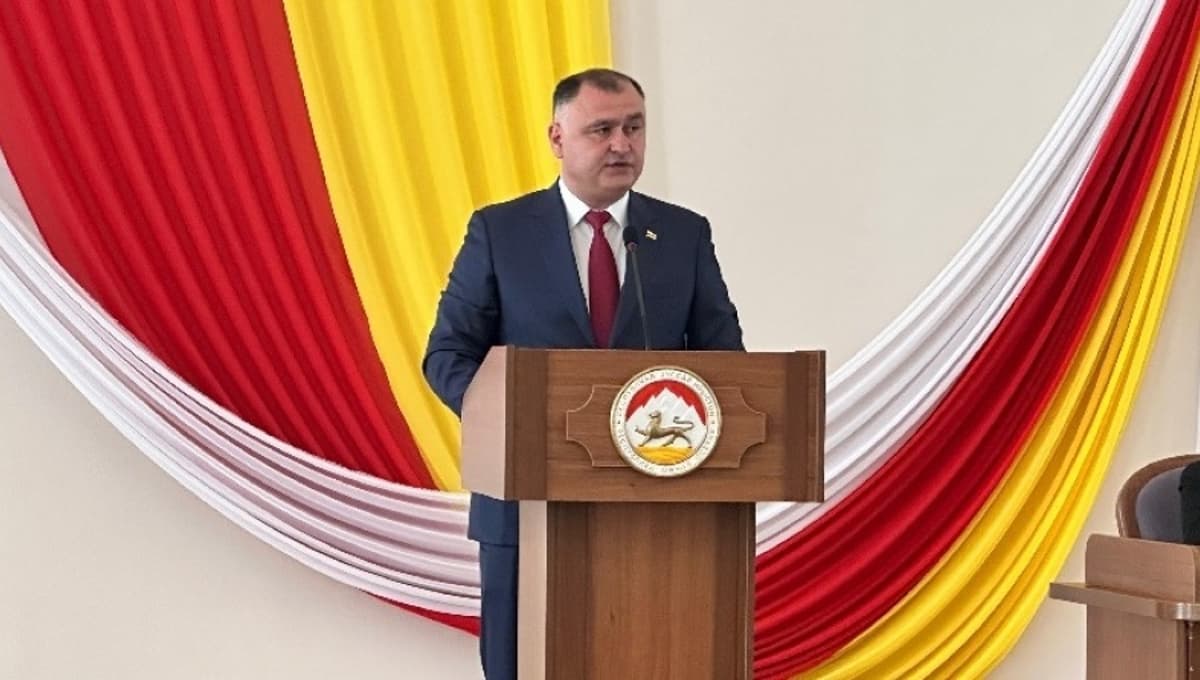
CAUCASUS BLOG: Russia's South Ossetia Treaty Edges Toward Annexation
Why It Matters
The treaty deepens Russian foothold on Georgia’s border, heightening regional security risks and testing Western resolve to counter Moscow’s expansionist tactics.
Key Takeaways
- •Treaty allows Russian officials in South Ossetia administration.
- •Property, energy, and transport systems will be harmonised with Russia.
- •Simplified Russian citizenship offered to South Ossetian security personnel.
- •Georgia’s government remains silent, drawing criticism from opposition.
- •Treaty mirrors Moscow’s passportisation strategy in Ukraine and Transnistria.
Pulse Analysis
The May 9 treaty between Russia and South Ossetia marks a decisive shift from informal support to formalized integration. By embedding Russian officials within the de‑facto administration and synchronising legal frameworks—property, energy, transport, and social security—the Kremlin creates a seamless governance layer that blurs the line between a client state and a Russian province. The timing on Victory Day underscores Moscow’s narrative of historic reunification, while the rapid Duma ratification signals a calculated effort to pre‑empt diplomatic pushback.
Moscow’s approach mirrors its "passportisation" playbook, first deployed in the 2008 Georgia war and later in eastern Ukraine, where mass issuance of Russian passports creates a pretext for intervention. The 2025 decree extending simplified citizenship to Abkhazia and South Ossetia, followed by a 2026 decree for Transnistria, illustrates a systematic strategy: legal integration, demographic leverage, and the ability to claim protection of Russian nationals abroad. This method reduces the need for overt military occupation, allowing Russia to consolidate influence while keeping the West’s response fragmented.
For Georgia, the treaty threatens both sovereignty and economic stability, as South Ossetia serves as a conduit for parallel imports that circumvent sanctions. The silence of the Georgian Dream administration fuels domestic dissent and risks alienating Western partners, potentially accelerating Georgia’s pivot toward the EU and NATO. Meanwhile, analysts outline three trajectories: continued deep integration without formal annexation, full legal incorporation with possible unification of the Ossetian peoples, or a prolonged status quo. Each scenario carries distinct geopolitical costs, from heightened sanctions to renewed regional unrest, making the treaty a pivotal barometer of Russia’s long‑term ambitions in the post‑Soviet space.
CAUCASUS BLOG: Russia's South Ossetia treaty edges toward annexation
Comments
Want to join the conversation?
Loading comments...