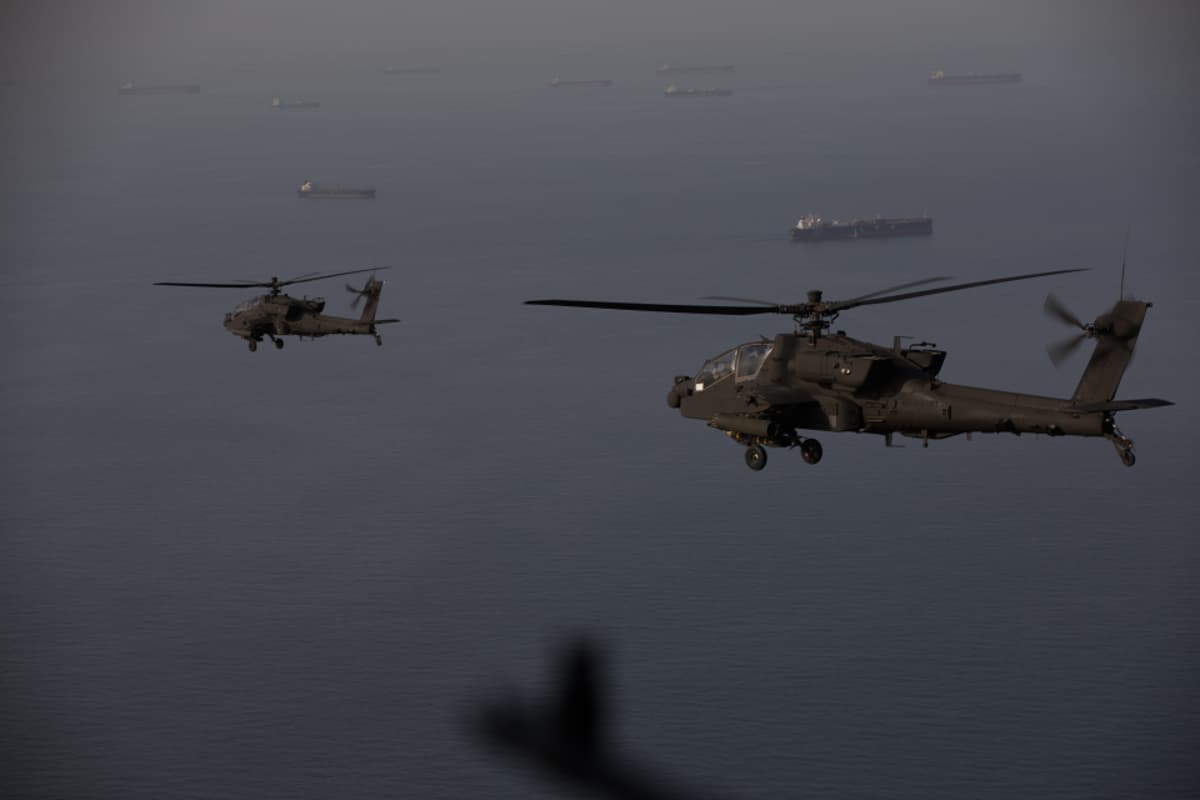
Cheap Iranian Drone Downed $25 Million US Army Helicopter—Maybe by Chance
Companies Mentioned
Why It Matters
The loss demonstrates how inexpensive, possibly Russian‑enhanced drones can threaten costly US platforms, forcing a reassessment of counter‑drone strategies and raising escalation risks in a volatile region.
Key Takeaways
- •Iranian Shahed drone, costing $35K, downed a $25M US Apache
- •First Army Apache loss in the 2026 Iran‑US conflict
- •Possible Russian‑modified Shahed could target moving assets, analysts say
- •US responded with self‑defense strikes on Iranian air defenses
- •Rescue used a drone‑powered boat, a first for US ops
Pulse Analysis
The downing of a $25 million AH‑64 Apache by a $35,000 Shahed drone highlights a stark cost asymmetry that is reshaping modern combat. While Shahed drones were originally designed for static, GPS‑guided strikes, recent reports suggest Iran may have received Russian‑modified versions capable of real‑time operator control. This evolution enables cheap platforms to engage moving targets, eroding the traditional advantage of high‑value manned aircraft and forcing militaries to invest in layered air‑defense and electronic‑warfare solutions.
For the United States, the incident is a wake‑up call. Existing counter‑drone measures, largely focused on larger UAVs and missile threats, may be insufficient against low‑cost, swarming systems that can be retrofitted for kinetic attacks. The successful rescue using a drone‑powered boat also signals a shift toward autonomous assets in search‑and‑rescue missions, potentially reducing risk to personnel. Defense planners are now weighing rapid integration of directed‑energy weapons, AI‑driven detection, and hardened cockpit designs to mitigate similar vulnerabilities.
Geopolitically, the episode intensifies an already fragile cease‑fire in the Gulf. US retaliatory strikes on Iranian air‑defense installations risk broader escalation, especially as Iran continues to target regional infrastructure and US assets. The Strait of Hormuz, a critical artery for global oil shipments, could see heightened disruptions if drone and missile exchanges expand. Stakeholders in energy markets and international trade are therefore monitoring the situation closely, as any prolonged conflict could reverberate through commodity prices and supply chains worldwide.
Cheap Iranian drone downed $25 million US Army helicopter—maybe by chance
Comments
Want to join the conversation?
Loading comments...