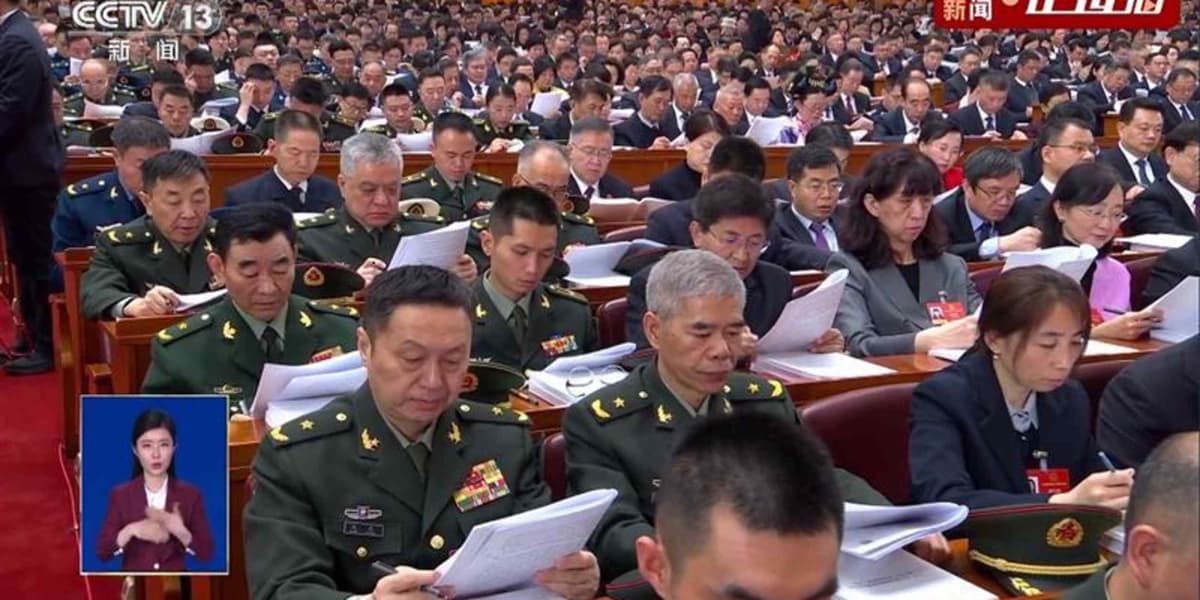
China Military Tense, Xi at Ease at Start of National People's Congress
•March 5, 2026
0
Why It Matters
The purge reshapes China’s military hierarchy, influencing defence policy and signaling Xi’s unchallenged authority, which affects regional security calculations and investor confidence.
Key Takeaways
- •PLA officers displayed overt loyalty at NPC opening
- •Xi Jinping appeared calm despite internal military purge
- •Anti‑corruption drive targets senior PLA commanders
- •Leadership reshuffle may affect China’s defence policy
- •Signals continuity of Xi’s centralized control
Pulse Analysis
The National People’s Congress (NPC) opening served as a theatrical stage for Beijing to showcase the Party’s grip on the People’s Liberation Army. By having senior officers sit through the government work report, the leadership projected an image of unity at a time when the anti‑corruption drive has already led to the dismissal of high‑ranking generals. This public display of deference is not merely ceremonial; it reinforces Xi Jinping’s narrative of a disciplined, loyal military that operates under strict civilian oversight, a cornerstone of his broader governance model.
Beyond symbolism, the ongoing purge has tangible implications for PLA restructuring. The removal of entrenched commanders creates openings for younger, politically vetted officers who are more likely to align with Xi’s strategic priorities, such as modernising cyber and space capabilities. These personnel shifts could accelerate reforms aimed at joint operations and streamlined command, potentially altering procurement patterns and defence budgeting. Analysts anticipate a short‑term dip in operational continuity, but a longer‑term push toward a more technologically sophisticated force.
Internationally, the episode sends a clear message to both allies and rivals: China’s military remains under firm Party control, reducing the risk of factional dissent that could destabilise regional dynamics. For investors, the stability of Xi’s grip may lower political risk premiums, yet the uncertainty surrounding the pace of military reforms could affect sectors tied to defence contracts. In sum, the NPC ceremony not only affirmed domestic political cohesion but also set the stage for a recalibrated Chinese defence posture that will reverberate across Asia‑Pacific security calculations.
China military tense, Xi at ease at start of National People's Congress
0
Comments
Want to join the conversation?
Loading comments...