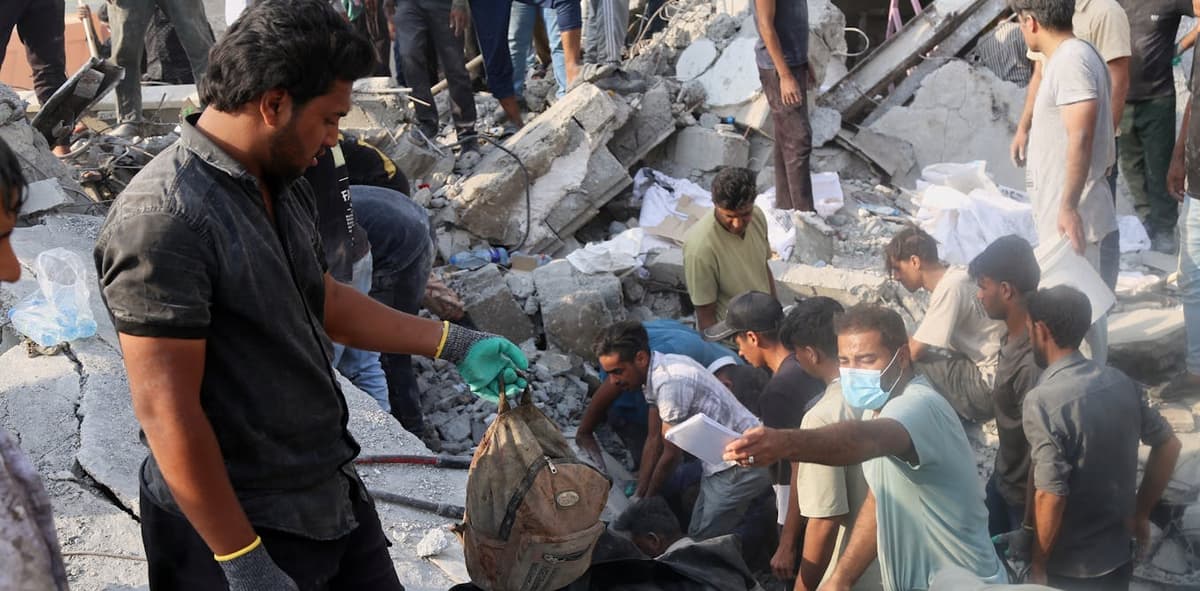
Does International Law Still Matter? The Strike on the Girls’ School in Iran Shows Why We Need It
•March 2, 2026
0
Why It Matters
The attack tests the enforceability of distinction and proportionality rules, highlighting how breaches can undermine the rules‑based international order and affect diplomatic accountability.
Key Takeaways
- •150+ killed, many children, school near IRGC base
- •International humanitarian law demands distinction, proportionality, necessity
- •No evidence school used for military purposes yet
- •Violations expose law's relevance, not its demise
Pulse Analysis
The Minab school strike underscores how contemporary conflicts blur the line between civilian and military spaces. While Iranian authorities allege a deliberate attack on a protected educational facility, the proximity of an IRGC naval installation complicates attribution and legal analysis. Video footage verified by major outlets shows collapsed classrooms and rescued schoolbags, but independent casualty counts are still being compiled, leaving policymakers to navigate a murky factual landscape while public outrage intensifies.
Under international humanitarian law, the principles of distinction, proportionality, and military necessity govern the use of force. Distinction obliges combatants to differentiate between civilian objects—such as schools—and legitimate military targets. Proportionality requires that incidental civilian harm not be excessive relative to the anticipated military advantage, and commanders must take all feasible precautions to minimize collateral damage. In the Minab case, the absence of clear evidence that the school functioned as a military objective raises serious questions about whether the strike complied with these legal standards.
Beyond the immediate tragedy, the incident illustrates why international law remains a cornerstone of global stability. Even when violations occur, the ability to identify, condemn, and potentially sanction breaches reinforces the credibility of the rules‑based order. Persistent adherence to treaty obligations in trade, aviation, and maritime domains demonstrates that law still shapes state behavior. Consequently, scrutinizing events like the Minab school strike is essential not only for accountability but also for preserving the normative framework that deters unchecked aggression.
Does international law still matter? The strike on the girls’ school in Iran shows why we need it
0
Comments
Want to join the conversation?
Loading comments...