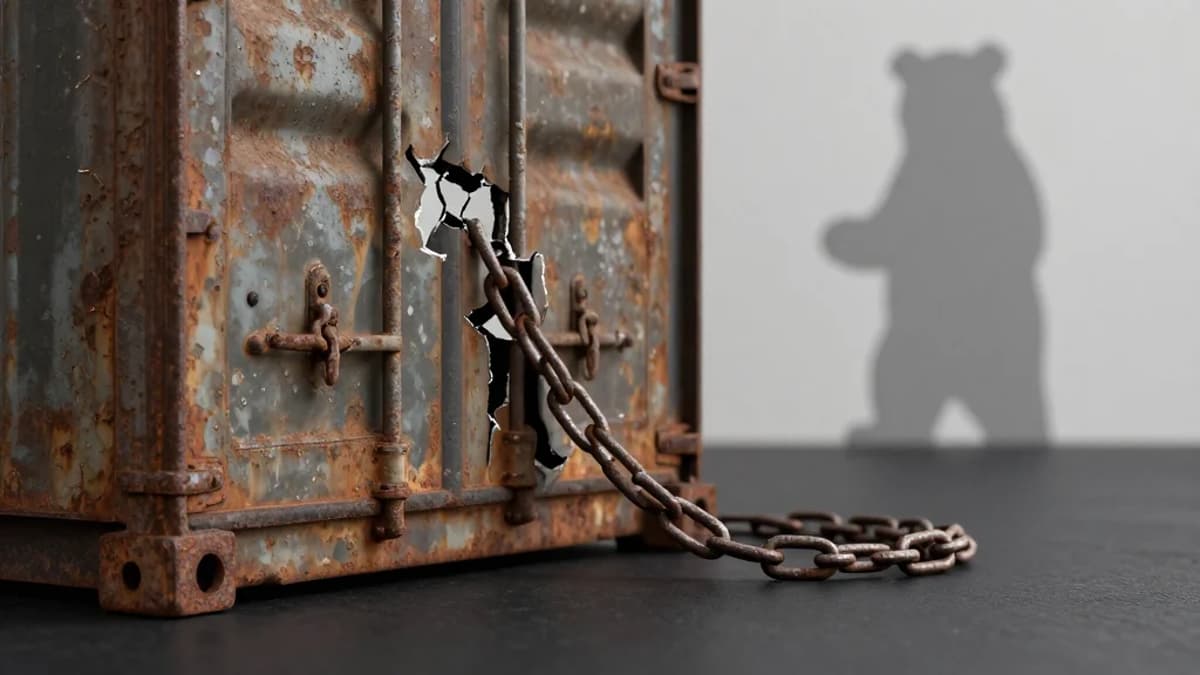
Export Bans that Weren't Really Bans: How Russia Kept Importing Military Goods
•February 24, 2026
0
Why It Matters
The persistence of legal and semi‑legal trade undermines the deterrent power of sanctions, allowing Russia to sustain its war machine. Effective, comprehensive export controls and coordinated secondary sanctions are essential to close loopholes and amplify geopolitical pressure.
Key Takeaways
- •Partial EU bans left many product variants unrestricted
- •Transit loophole allowed fully banned goods to enter Russia
- •Turkey handled over a third of rerouted military goods
- •Rerouted flows peaked at $36 million monthly in 2023
- •Export bans raised trade costs about 19 % overall
Pulse Analysis
The EU’s response to the Ukraine war relied on a rapid cascade of export restrictions aimed at depriving Moscow of critical military inputs. Because many of the targeted items—semiconductors, precision machinery, electronic components—are dual‑use, regulators opted for text‑based bans that singled out narrow technical specifications rather than blanket product‑code prohibitions. This approach preserved legitimate commercial activity but created exploitable gaps: exporters could simply shift to an unlisted variant, and customs officials struggled to verify detailed specifications. Consequently, partially sanctioned goods continued to flow at roughly one‑fifth of pre‑war levels throughout 2022‑23.
Even as the EU expanded full bans, a second evasion route emerged through the transit loophole. Shipments declared for a third‑country destination were allowed to pass through Russian territory, where they were often retained and entered the domestic market. A third, more sophisticated channel involved rerouting fully banned items via intermediary nations. Data reveal that Turkey alone accounted for more than a third of these indirect shipments, with China, Hong Kong and the UAE completing the network. Targeted diplomatic pressure and secondary sanctions against these hubs proved decisive in curbing the flow by 2024.
Quantitative analysis estimates that the export bans lifted effective trade costs by about 19 % for sanctioned EU goods—a noticeable but not prohibitive increase. The modest rise explains why substantial volumes persisted despite formal prohibitions. The experience underscores three policy lessons: comprehensive, immediately enforceable bans are essential; due‑diligence obligations must extend to indirect routes; and coordinated action against key intermediary hubs can produce rapid reductions in illicit trade. As sanctions remain a cornerstone of Western foreign policy, refining export‑control design will be as critical as the political will to impose them.
Export bans that weren't really bans: How Russia kept importing military goods
0
Comments
Want to join the conversation?
Loading comments...