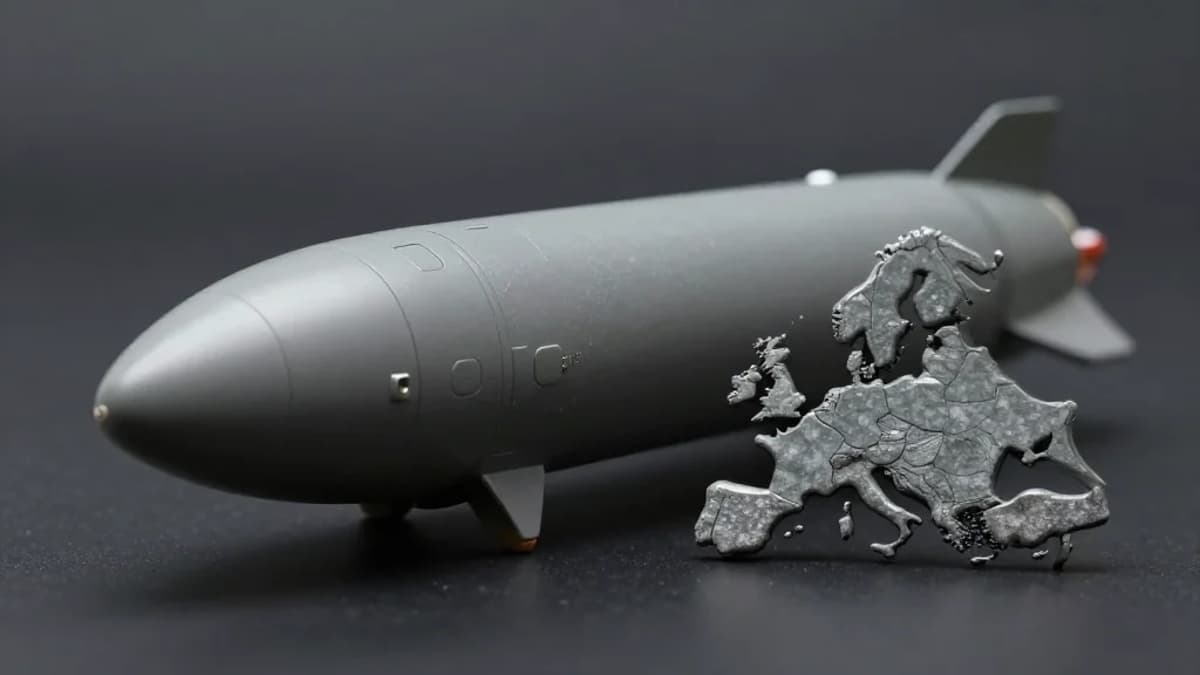
George Answers Your Questions: European Nuclear Umbrella, Risks of a United Europe
•February 21, 2026
0
Why It Matters
Europe’s security hinges on credible deterrence; dependence on external nuclear guarantees exposes the continent to heightened geopolitical risk.
Key Takeaways
- •Europe depends heavily on US nuclear umbrella.
- •Russian arsenal outmatches European capabilities significantly.
- •Population density raises collateral damage risks.
- •Unified EU defense faces political and strategic challenges.
- •Nuclear autonomy debate intensifies amid security concerns.
Pulse Analysis
The debate over Europe’s nuclear posture has resurfaced as Russia continues to expand its strategic arsenal. While NATO members benefit from the U.S. nuclear umbrella, the disparity in warhead counts and delivery systems leaves European capitals uneasy. Analysts argue that a credible deterrent must account for Europe’s unique geography—its dense urban centers mean any nuclear strike would cause disproportionate civilian casualties, raising the stakes for policymakers seeking to avoid escalation.
Strategic autonomy is becoming a rallying cry within the EU, especially as member states grapple with divergent threat perceptions. Proponents of an independent European nuclear capability cite the need for swift decision‑making and reduced reliance on transatlantic consensus. Critics, however, warn that developing such a force could fracture NATO cohesion and provoke a costly arms race with Moscow. The political calculus is further complicated by public opposition to nuclear weapons and the legal constraints of the Non‑Proliferation Treaty.
In the broader context, Europe’s security architecture must balance deterrence with diplomatic engagement. Strengthening conventional forces, investing in missile defense, and deepening cyber resilience are complementary measures that can mitigate the urgency for a nuclear option. Yet, as Russia’s posture hardens, the conversation about a unified European defense strategy—whether under NATO or an autonomous EU framework—will remain central to the continent’s long‑term stability and its role on the global stage.
George Answers Your Questions: European Nuclear Umbrella, Risks of a United Europe
0
Comments
Want to join the conversation?
Loading comments...