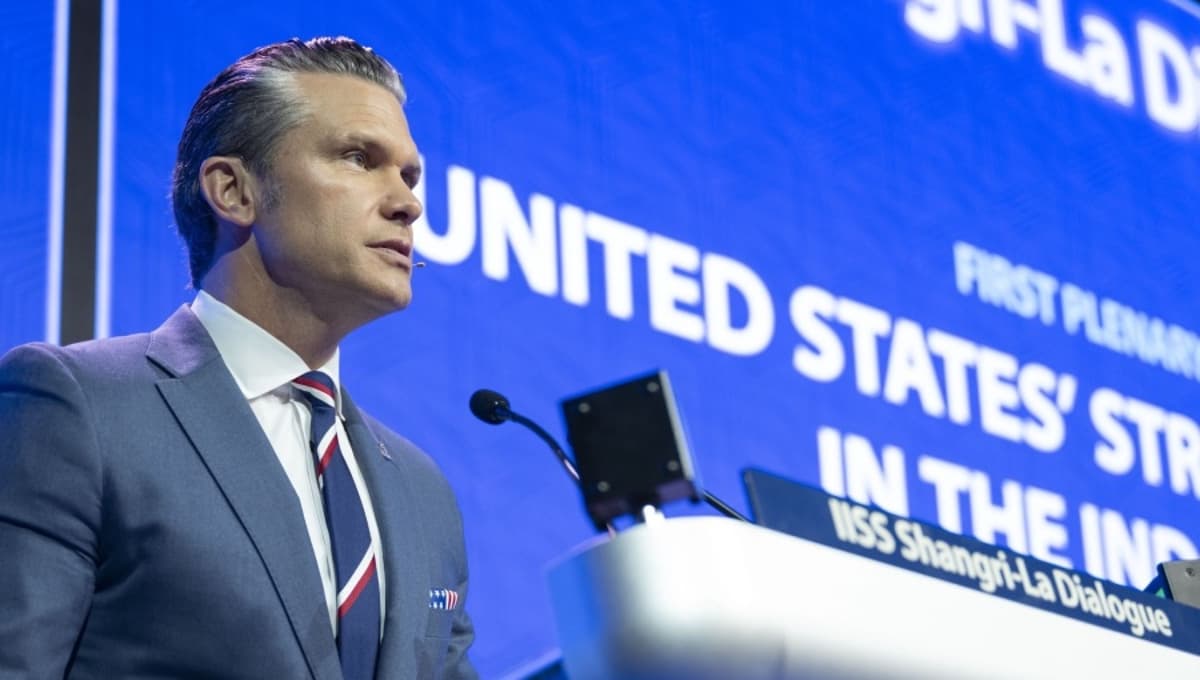
Hegseth Praises US-China Stability but Warns over Beijing’s Military Build-Up
Why It Matters
The remarks signal a U.S. pivot toward realistic, burden‑sharing partnerships while highlighting China’s expanding military, shaping security calculations across the Indo‑Pacific.
Key Takeaways
- •Hegseth says US‑China ties are “better than many years”.
- •He warns of China’s rapid military expansion in Indo‑Pacific.
- •US aims for “measured, quiet strength” without needless confrontation.
- •Emphasizes burden‑sharing, ending U.S. defence subsidies for wealthy allies.
- •Praises Japan’s accelerated defence transformation and deeper alliance.
Pulse Analysis
The Trump administration’s recent overture to Beijing, capped by President Donald Trump’s summit with Xi Jinping in Beijing, has produced a rare diplomatic tone from Washington’s top defense official. At the Shangri‑La Dialogue, Secretary Pete Hegseth described U.S.–China relations as “better than they have been in many years,” a notable departure from the more confrontational language of previous years. Yet he tempered optimism with a stark warning about China’s accelerating military modernization, noting that the scale and speed of new platforms—from hypersonic missiles to carrier‑group expansions—continue to reshape the strategic calculus in the Indo‑Pacific.
Hegseth’s articulation of a “measured, quiet and clear” posture reflects a broader U.S. strategy that seeks to deter Beijing without resorting to open conflict. By stressing burden‑sharing and declaring the era of subsidising the defence of wealthy nations over, the United States is nudging allies toward greater self‑reliance and joint capability development. This approach aims to preserve the regional balance of power while avoiding the escalation risks associated with a high‑visibility arms race. For policymakers, the message underscores the importance of aligning national interests with collective security commitments.
The secretary’s praise for Japan’s “defence transformation” highlights the pivotal role of the U.S.–Japan alliance in the new security architecture. Tokyo’s recent procurement of advanced Aegis‑Ashore systems, stealth fighters, and increased defense spending signals a shift from a purely reactive posture to proactive deterrence. As the United States encourages its Pacific partners to shoulder more responsibility, the alliance network—spanning Australia, South Korea, and the Philippines—could evolve into a more integrated, capability‑focused coalition. How effectively these partners can synchronize doctrine, logistics, and technology will determine whether the Indo‑Pacific can counterbalance China’s growing military footprint.
Hegseth praises US-China stability but warns over Beijing’s military build-up
Comments
Want to join the conversation?
Loading comments...