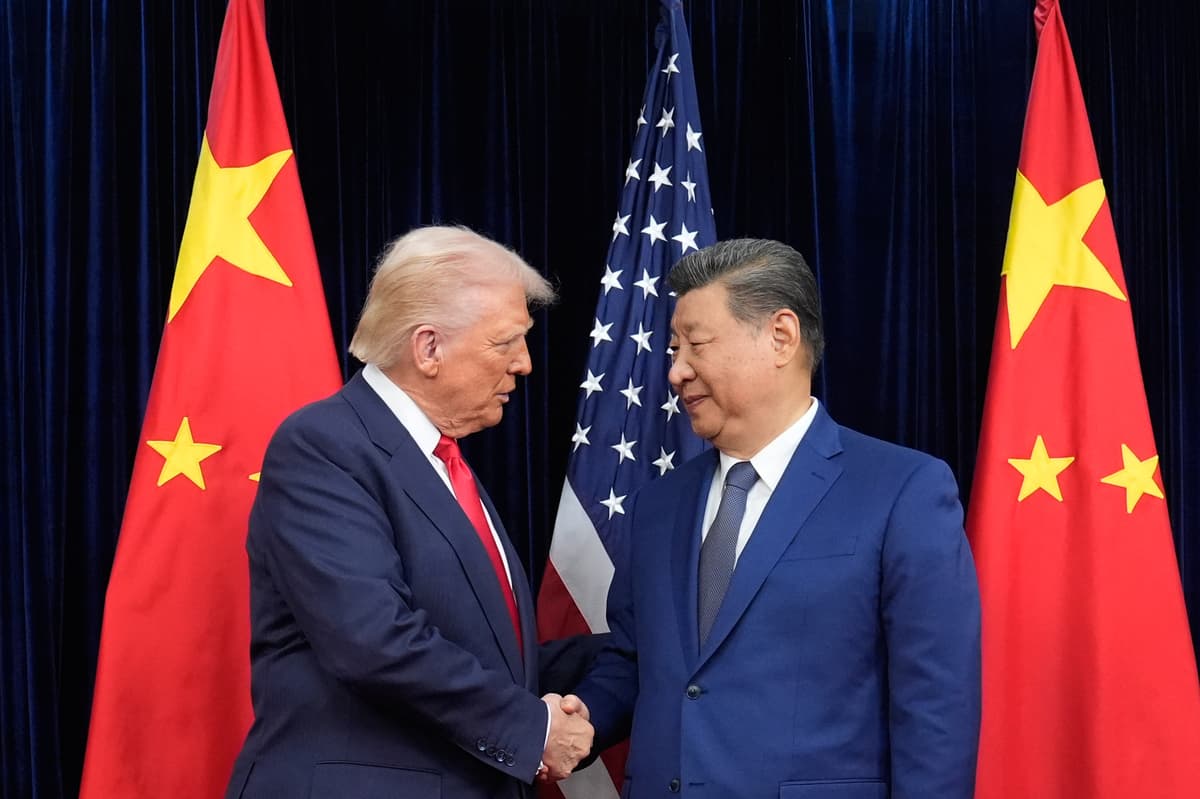
Hormuz Hangs over Beijing Summit
Companies Mentioned

Why It Matters
A resolution could restore vital oil shipments and reduce market volatility, while also testing the limits of U.S.-China cooperation on security issues. The talks may force both capitals to balance strategic interests against domestic political pressures.
Key Takeaways
- •Trump seeks Chinese help to reopen Strait of Hormuz
- •China hosts Iranian foreign minister, signaling leverage before summit
- •U.S. officials urge Beijing to mediate Iran oil‑shipping dispute
- •Beijing orders firms to defy U.S. sanctions on Iranian oil
- •Xi may demand U.S. Taiwan concession for Hormuz assistance
Pulse Analysis
The Strait of Hormuz, a chokepoint through which roughly a fifth of global oil passes, has become a flashpoint as Iran leverages its control to extract diplomatic concessions. Recent Iranian threats to keep the waterway closed have spiked crude prices and forced multinational firms to reassess supply chains. Washington’s strategy now hinges on coaxing Beijing—still a major oil consumer—to persuade Tehran, a move that reflects the growing interdependence of great powers in managing energy security.
At the upcoming summit, President Trump will press Xi for tangible diplomatic action, while Chinese officials quietly cultivate ties with Iranian diplomats. By hosting Iran’s foreign minister and signaling a readiness to mediate, Beijing aims to extract leverage that could be traded for concessions on unrelated issues, notably U.S. policy toward Taiwan. Analysts note that Xi’s willingness to appear as a problem‑solver could bolster his domestic standing and give China a bargaining chip in broader U.S.-China strategic competition.
The broader implications extend beyond the immediate oil dispute. Beijing’s directive for Chinese firms to ignore U.S. sanctions on Iranian oil challenges the effectiveness of Washington’s extraterritorial measures, potentially encouraging other nations to sidestep American restrictions. A successful diplomatic breakthrough could stabilize energy markets, but a stalemate would reinforce the perception that geopolitical leverage can outweigh economic costs, reshaping how sanctions and multilateral pressure are applied in future crises.
Hormuz hangs over Beijing summit
Comments
Want to join the conversation?
Loading comments...