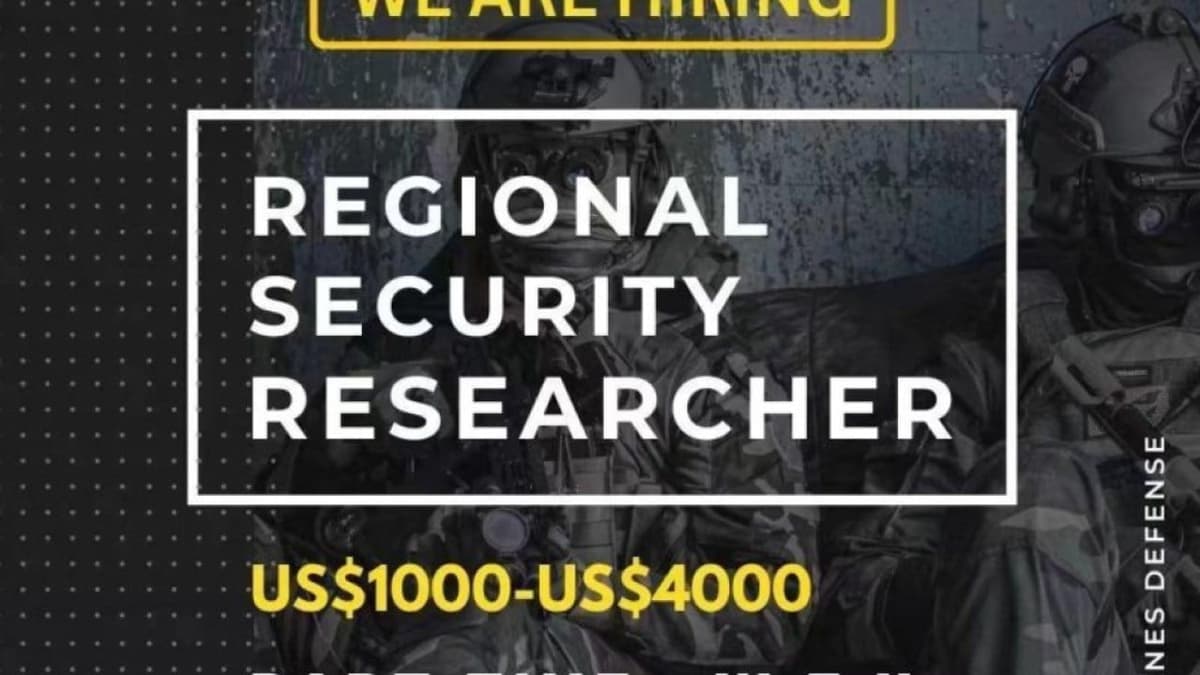
How Fake Military Job Ads in Philippines Led to Alleged Spy Recruitment Pipeline
Companies Mentioned
Why It Matters
The case reveals a sophisticated insider‑threat pipeline that could compromise sensitive defence information and heighten geopolitical tensions in the South China Sea.
Key Takeaways
- •Fake Janes ads offered $66‑$660 for military writing tasks
- •Recruiters used China‑registered domains and local Philippine phone numbers
- •Three civilian defence workers arrested for passing resupply mission data
- •Payments were made via cash hidden in food deliveries
- •Incident underscores rising insider‑threat risk amid South China Sea tensions
Pulse Analysis
The Philippines’ recent espionage scandal underscores how low‑cost, deceptive recruitment campaigns can weaponize ordinary defence personnel. By posing as reputable outlets like Janes, the operators lured writers with offers ranging from 4,000 to 40,000 pesos (approximately $66‑$660) and used Viber, WhatsApp, and email addresses tied to China‑registered domains. Digital forensics revealed that the fake pages were created in 2023, featured poorly edited English, and reused images from legitimate defence portals, making them appear authentic to under‑paid civilian staff. The scheme culminated in three arrests after suspects supplied details on naval resupply routes in the South China Sea, a region already fraught with Beijing‑Manila tensions.
Beyond the immediate breach, the incident highlights a growing trend of state‑linked espionage leveraging online disinformation and economic incentives. Similar tactics were employed by Dickson Yeo, who ran a counterfeit consultancy to harvest U.S. military intelligence, illustrating a playbook that Chinese intelligence services appear to replicate across borders. The use of everyday communication tools—messaging apps hidden in games, cash concealed in food deliveries—demonstrates a shift toward low‑tech, high‑impact methods that evade traditional counter‑intelligence detection. For allied nations, the episode serves as a warning that insider threats are not limited to high‑level officials; they can emerge from junior staff seeking supplemental income.
Mitigating such threats requires a multi‑layered approach: robust vetting of recruitment outreach, mandatory cybersecurity training for all defence personnel, and clear reporting channels for suspicious offers. Governments should also collaborate with social‑media platforms to swiftly dismantle fraudulent pages and trace domain registrations. As the Philippines tightens its defenses, heightened awareness and proactive policy measures will be essential to safeguard critical military information and preserve stability in the contested maritime arena.
How fake military job ads in Philippines led to alleged spy recruitment pipeline
Comments
Want to join the conversation?
Loading comments...