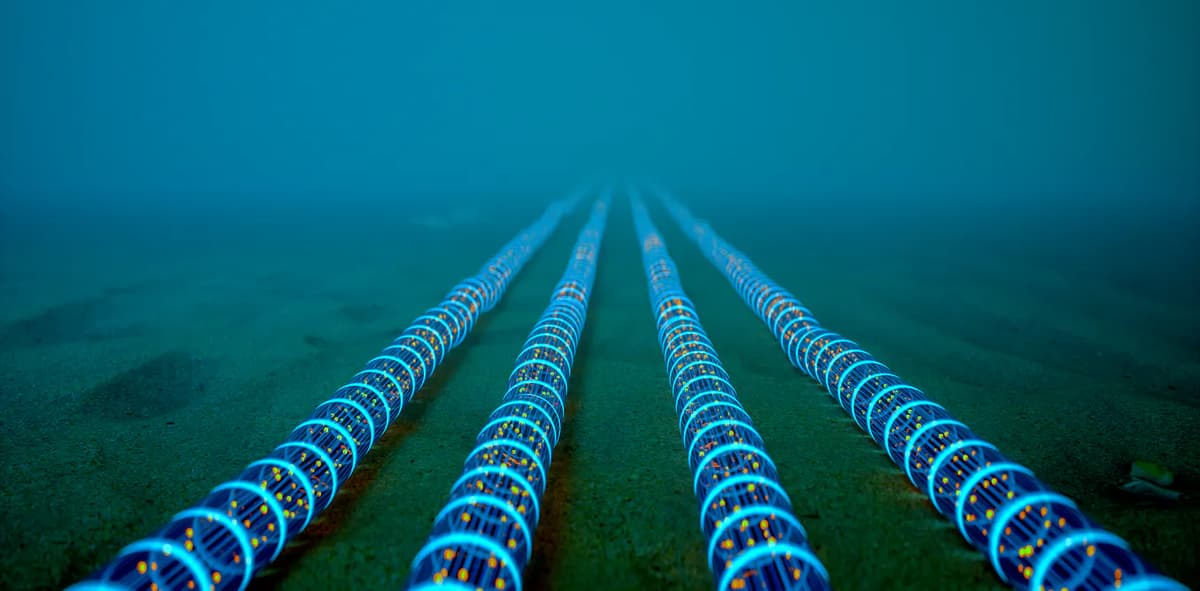
Iran Is Threatening Undersea Cables. The World’s ‘Digital Chokepoints’ Have Never Been More Vulnerable
Why It Matters
Disrupting or monetising undersea cables could cripple global communications, destabilise financial markets, and raise the risk of unintended escalation between powers. The issue forces governments and telecom firms to rethink resilience and security of the internet’s physical backbone.
Key Takeaways
- •Iran proposes fees for Hormuz undersea cable operators
- •Over 95% of global data travels via submarine cables
- •Red Sea incidents cut 25% of Europe‑Asia traffic in 2024
- •Cable cuts can trigger market volatility and financial instability
- •Repair ships face delays in contested waters, raising outage risk
Pulse Analysis
Iran’s recent suggestion to charge fees for access to undersea cables in the Strait of Hormuz marks a stark shift from traditional cyber‑threats to tangible economic leverage over the internet’s physical layer. The Hormuz corridor, alongside the Red Sea, Bab el‑Mandeb and the Suez Canal, funnels the majority of trans‑Atlantic and trans‑Pacific data flows. By framing these routes as "digital chokepoints," Tehran signals that control over seabed infrastructure can be weaponised, echoing earlier incidents where cable cuts disrupted traffic and raised geopolitical tensions.
The economic stakes are profound. Submarine cables carry more than 95% of global data, enabling everything from high‑frequency trading to cross‑border payments. In 2024, a series of breaks in the Red Sea knocked out roughly 25% of Europe‑Asia traffic, causing latency spikes and market jitter. Regions lacking redundant pathways—particularly parts of Africa, the Middle East and South Asia—face heightened risk of prolonged outages, which can translate into financial losses, insurance premium hikes, and supply‑chain disruptions. For investors and multinational firms, the prospect of a fee‑based or hostile interruption adds a new layer of geopolitical risk to digital operations.
From a security perspective, modern militaries rely on undersea cables for command, control and real‑time intelligence. Sabotage or forced shutdowns could impair coordination among allies and obscure attribution, potentially escalating conflicts. Repair vessels, essential for restoring connectivity, often require safe passage and international cooperation—luxuries in contested waters. This reality pushes policymakers to diversify routing, invest in rapid‑response repair capabilities, and develop legal frameworks that treat cable attacks as violations of international law. Strengthening resilience now is not just an IT concern; it is a cornerstone of global economic stability and strategic security.
Iran is threatening undersea cables. The world’s ‘digital chokepoints’ have never been more vulnerable
Comments
Want to join the conversation?
Loading comments...