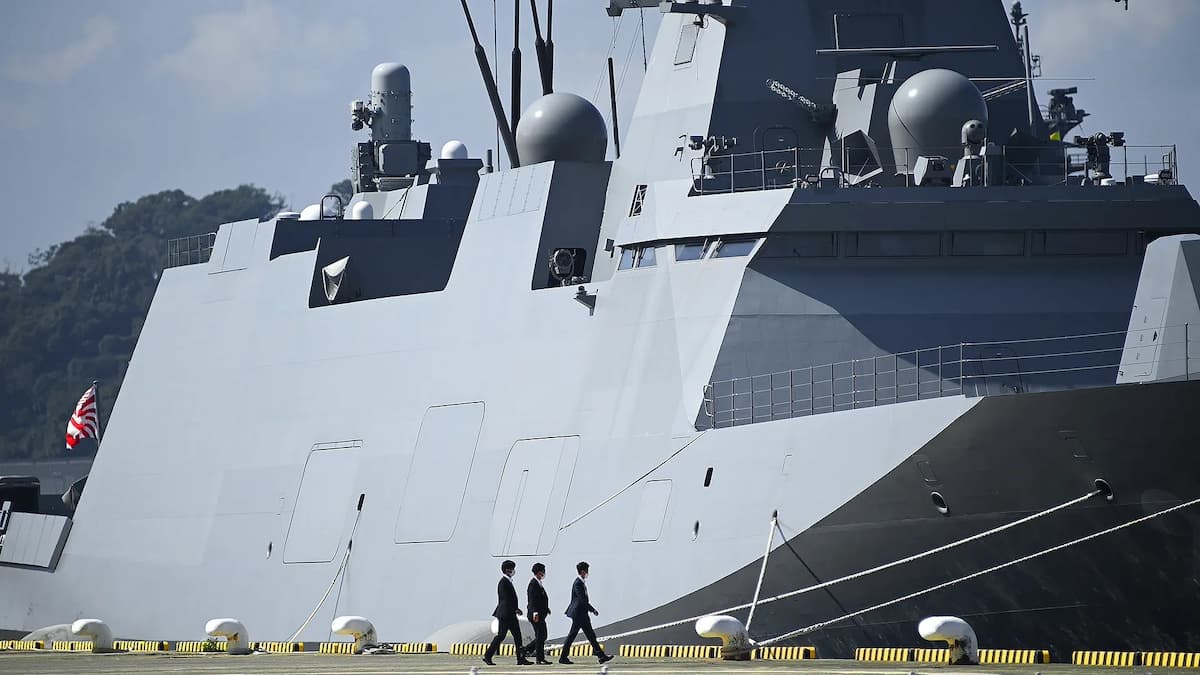
Japan-Australia Frigate Deal About Far More than 11 Warships
Companies Mentioned
Why It Matters
The agreement creates the most integrated north‑south defense partnership in the Indo‑Pacific, strengthening Australia’s maritime deterrence while giving Japan a foothold in high‑end weapons markets. It reshapes regional security by adding a capable, interoperable fleet that can operate alongside U.S. and Japanese forces.
Key Takeaways
- •$14.4 bn contract supplies 11 upgraded Mogami frigates to Australia.
- •First three ships built in Japan, eight assembled in Western Australia.
- •Frigates feature 32 VLS cells, ESSM, and potential Tomahawk missiles.
- •Deal reflects Japan’s relaxed export rules and strategic pivot toward allies.
- •Enhances Australia’s anti‑submarine capability, complicating Chinese naval operations.
Pulse Analysis
Japan’s decision to export a fleet of advanced frigates marks a watershed in its defense policy. After decades of self‑imposed restrictions, Tokyo has revised the “Three Principles on Transfer of Defense Equipment,” allowing lethal systems to be sold to trusted partners. The Mogami deal, valued at up to A$20 billion, is the first large‑scale export of a warship platform since World War II and signals Japan’s ambition to become a premier defense supplier in the Indo‑Pacific. By coupling domestic shipbuilding expertise with U.S. missile technology, Japan is creating a product line that appeals to allies seeking high‑performance yet politically palatable hardware.
The Australian variant of the Mogami class is a technological leap over conventional frigates. Equipped with 32 Mk 41 VLS cells, the ships can launch up to 128 ESSM missiles and are compatible with Naval Strike Missiles and Tomahawk cruise missiles, providing a potent anti‑air and anti‑surface capability. Automation reduces crew size to 92, cutting operational costs and enhancing endurance. Built partly in Nagasaki and partly in Henderson, the program transfers critical know‑how to Australian industry, fostering a joint supply chain that can sustain future upgrades and support regional shipbuilding ambitions.
Strategically, the frigates reinforce a nascent Japan‑Australia axis that complements the Quad and AUKUS frameworks. Their presence in the southern Pacific adds a credible anti‑submarine layer to protect sea lanes vital to Japan’s energy imports and Australian mineral exports. For ASEAN states, the deal illustrates a middle path between Western platforms and Chinese equipment, potentially reshaping procurement choices across the region. As China continues its “salami‑slicing” tactics, the integrated Japanese‑Australian fleet offers a deterrent‑by‑denial posture that could recalibrate power dynamics in the Indo‑Pacific for years to come.
Japan-Australia frigate deal about far more than 11 warships
Comments
Want to join the conversation?
Loading comments...