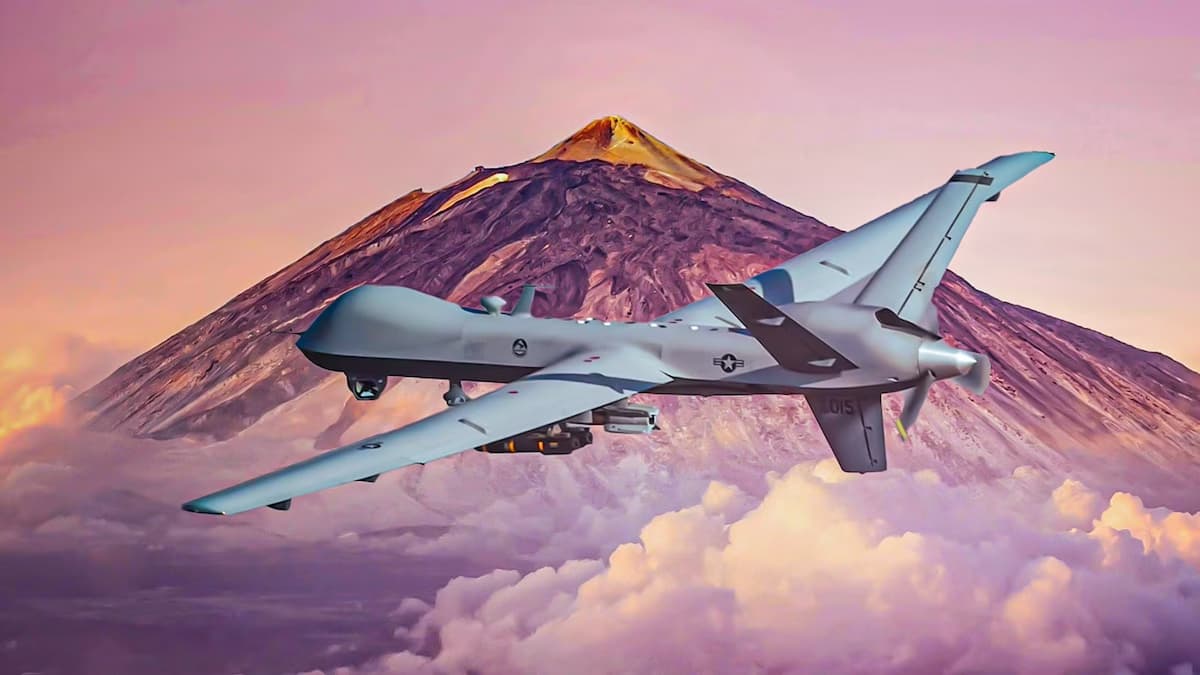
MQ-9 Drones Sharpen US Eye on China’s Pacific Moves
•February 18, 2026
0
Why It Matters
The growing MQ‑9 network binds U.S. and partner forces into a shared surveillance architecture that could reshape power dynamics in the Western Pacific, while its potential vulnerability raises significant strategic and financial stakes for U.S. deterrence.
Key Takeaways
- •MQ‑9 network expands across Indo‑Pacific bases.
- •Drones provide persistent ISR and strike options for allies.
- •China's advanced A2/AD systems could threaten MQ‑9 survivability.
- •Cost per unit around $30 million makes losses significant.
- •MQ‑9 serves as airborne communications hub in JADC2.
Pulse Analysis
The United States’ decision to proliferate MQ‑9 Reaper drones throughout the Indo‑Pacific reflects a strategic shift toward "deterrence by detection." By positioning long‑endurance MALE UAVs at Kadena, Kunsan, and Basa, Washington creates a near‑continuous eyes‑on‑target capability that can be shared with allies. Japan’s plan to double its Coast Guard fleet, Taiwan’s order of four units, and India’s purchase of 31 aircraft illustrate how the platform is becoming a cornerstone of a collective ISR architecture, extending surveillance reach into the East China Sea, Taiwan Strait and South China Sea while offering limited strike options.
Despite the operational benefits, the MQ‑9’s vulnerability is increasingly evident. In Yemen, Houthi forces using legacy surface‑to‑air missiles and loitering munitions claimed to down dozens of MALE UAVs, including U.S. Reapers, underscoring how even low‑tech defenses can attrit the platform. China’s layered anti‑access/area‑denial (A2/AD) network—featuring HQ‑9 SAMs, advanced radars and fighter patrols—poses a far greater threat. Each drone costs roughly $30 million, so losses would erode both ISR capacity and the financial calculus of a surveillance‑first posture.
Looking ahead, the MQ‑9 is being re‑imagined as more than a sensor; it functions as an airborne communications node within Joint All‑Domain Command and Control (JADC2) and the Advanced Battle Management System (ABMS). By relaying data and linking disparate platforms, the Reaper can extend the reach of high‑end assets without exposing them to contested airspace. However, policymakers must weigh this networking advantage against the platform’s attritable nature, potentially accelerating investments in higher‑survivability UAVs, stealthier drones, or satellite‑based ISR to sustain credible deterrence in the face of China’s growing A2/AD capabilities.
MQ-9 drones sharpen US eye on China’s Pacific moves
0
Comments
Want to join the conversation?
Loading comments...