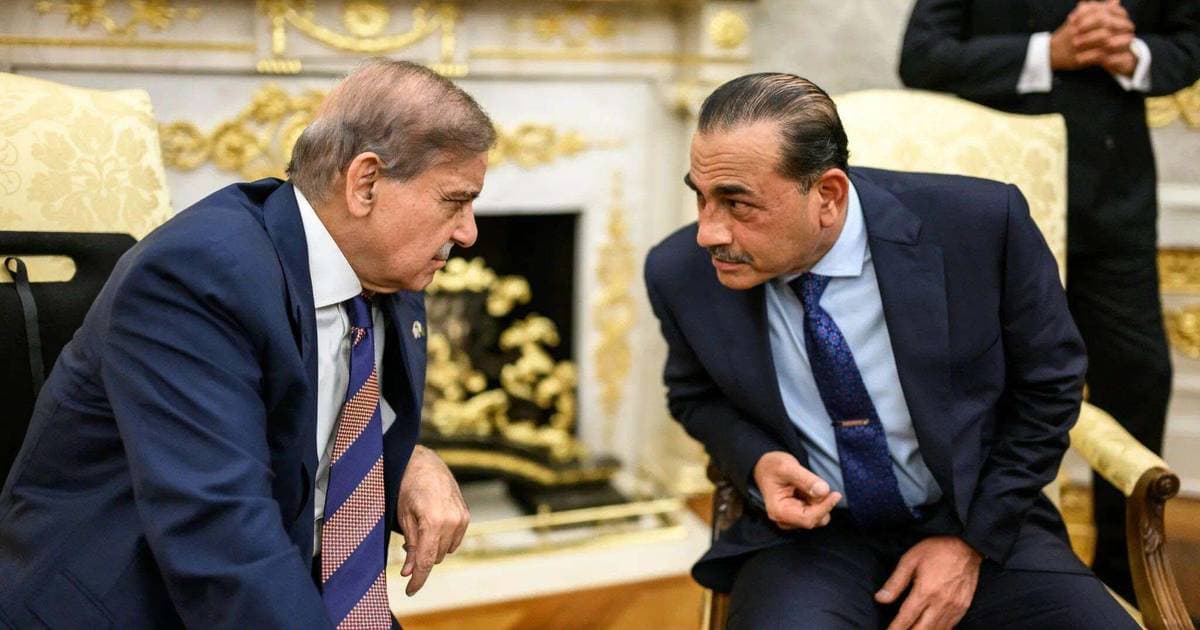
Pakistan. Caught Between President Trump and a Lethal Nuclear Dilemma
Why It Matters
Pakistan’s choices will shape South Asian security, affect global nuclear non‑proliferation, and influence energy markets tied to the Strait of Hormuz.
Key Takeaways
- •Pakistan leverages US ties to secure rare‑earth and oil access.
- •Saudi‑Pakistan defence pact may involve nuclear weapons support.
- •Indian missile strike revived Pakistani army’s domestic popularity.
- •US‑China naval presence heightens risk of regional escalation.
- •Pakistan’s economy strained by Hormuz blockade and loan repayments.
Pulse Analysis
Pakistan’s diplomatic choreography has become a high‑stakes performance. By courting former President Donald Trump, Islamabad hopes to unlock access to untapped rare‑earth deposits in Balochistan and potential oil reserves, while leveraging a newly publicized Saudi defence agreement that hints at nuclear collaboration. This outreach follows a dramatic escalation with India, where a missile barrage and cruise‑missile retaliation revived the Pakistani army’s popularity and gave Shehbaz Sharif leverage in Washington. The United States, meanwhile, maintains a naval presence that could shift from deterrence to direct action against Iran’s remaining nuclear infrastructure, a scenario that would place Pakistan at the crossroads of U.S. and Saudi strategic objectives.
The regional security calculus is equally complex. Iran’s estimated 440 kg of 60%‑enriched uranium remains a flashpoint, and Saudi Arabia’s demand for Pakistani nuclear backing intensifies the pressure on Islamabad to balance its Shia‑majority domestic concerns with external expectations. A failure to curb Iran’s nuclear ambitions could trigger a Saudi‑driven activation of the secret pact, potentially drawing Pakistan into a nuclear‑sharing arrangement that would alarm both the West and regional rivals. Concurrently, the U.S. Marine Expeditionary Units stationed near the Strait of Hormuz underscore the risk of a kinetic conflict that could cripple global oil flows.
Economically, Pakistan faces a perfect storm. A U.S.‑administered blockade of the Hormuz Strait hampers oil imports, while Saudi Arabia has extended a $3 billion loan on top of an existing $5 billion rollover, and the UAE seeks $3.5 billion repayment. These financial lifelines are offset by soaring food prices and persistent terrorism threats, limiting Islamabad’s policy flexibility. As China pushes for the reopening of maritime routes to protect its own oil reserves, Pakistan’s ability to navigate these overlapping pressures will determine whether it emerges as a pivotal mediator or a flashpoint for broader nuclear conflict.
Pakistan. Caught Between President Trump and a Lethal Nuclear Dilemma
Comments
Want to join the conversation?
Loading comments...