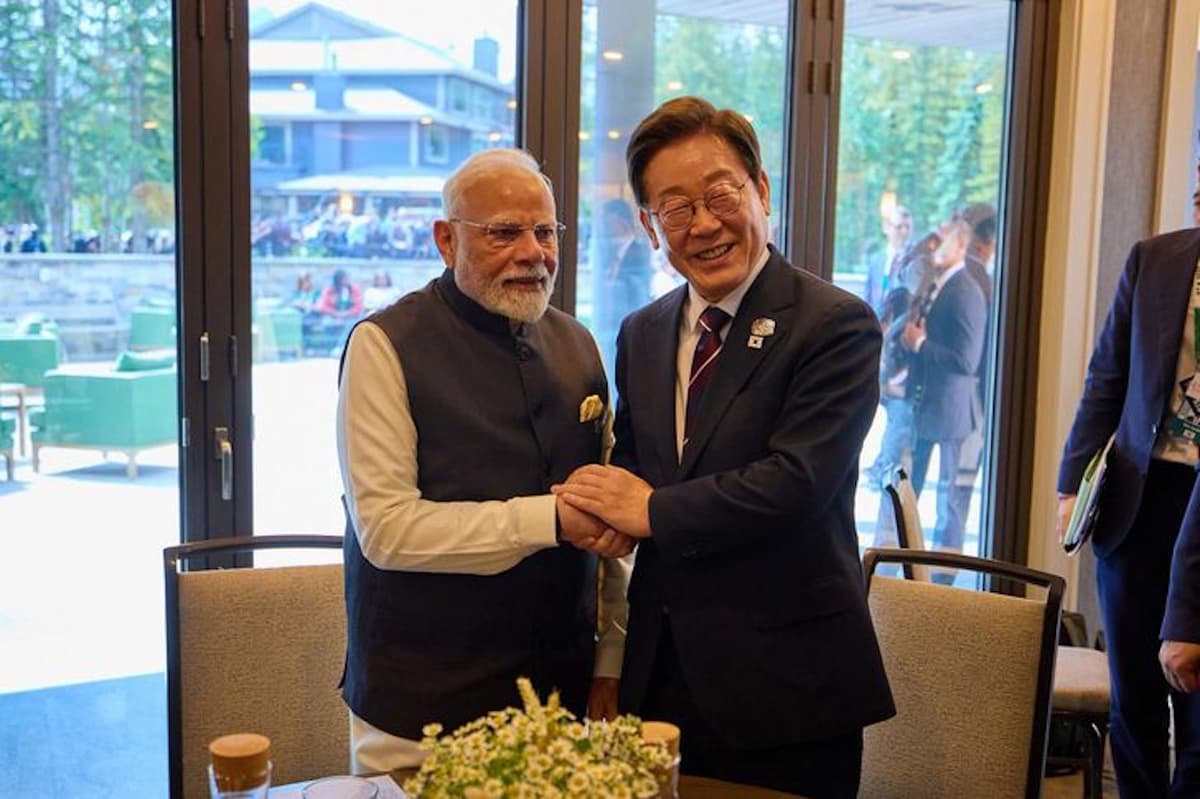
Recalibrating the India-South Korea Strategic Partnership
Companies Mentioned
Why It Matters
The partnership can diversify supply chains and strengthen democratic alignment in the contested Indo‑Pacific, while mitigating South Korea's over‑reliance on China and expanding India's strategic influence in East Asia.
Key Takeaways
- •President Lee's three‑day India visit aims at strategic partnership shift
- •South Korea balances US security ties with 20‑25% trade dependence on China
- •India‑South Korea trade exceeds $27 B; goal $50 B, $10 B Korean investment
- •Defence, semiconductor and maritime cooperation remain under‑exploited
- •Incremental MoUs risk losing strategic autonomy amid Indo‑Pacific rivalry
Pulse Analysis
The upcoming three‑day state visit by South Korean President Lee Jae‑myung to New Delhi marks more than a diplomatic courtesy; it is a deliberate response to a rapidly fragmenting Indo‑Pacific order. Seoul is wrestling with a stark internal split: a traditional security alliance with the United States that stations roughly 28,500 American troops, versus an economic reality in which China accounts for about a quarter of its trade. Recent doubts about U.S. resolve in crises such as Iran have amplified calls in Seoul for a more autonomous foreign‑policy posture, making the timing of the visit critical.
For India, the partnership offers a pragmatic lever to diversify supply chains and counterbalance China’s growing sway. Bilateral trade already tops $27 billion and both sides have pledged to push the figure toward $50 billion, while Korean conglomerates have poured more than $10 billion into Indian manufacturing, electronics and renewable projects. Yet cooperation remains shallow in high‑impact arenas—defence co‑development, semiconductor joint ventures, and coordinated maritime security in the Indian Ocean. Elevating these sectors would create a resilient technology corridor that reduces reliance on Beijing‑controlled inputs.
The visit must therefore shift from signing memoranda of understanding to delivering concrete, time‑bound commitments. Joint R&D labs, co‑production lines for next‑generation chips, and a bilateral defence procurement framework could cement a strategic foothold for both capitals. Failure to act risks South Korea drifting further into China’s economic orbit, leaving India with diminished influence on its eastern flank and weakening the broader democratic architecture of the Indo‑Pacific. A decisive, well‑structured partnership can reinforce strategic autonomy for both nations while shaping a more balanced regional order.
Recalibrating the India-South Korea strategic partnership
Comments
Want to join the conversation?
Loading comments...