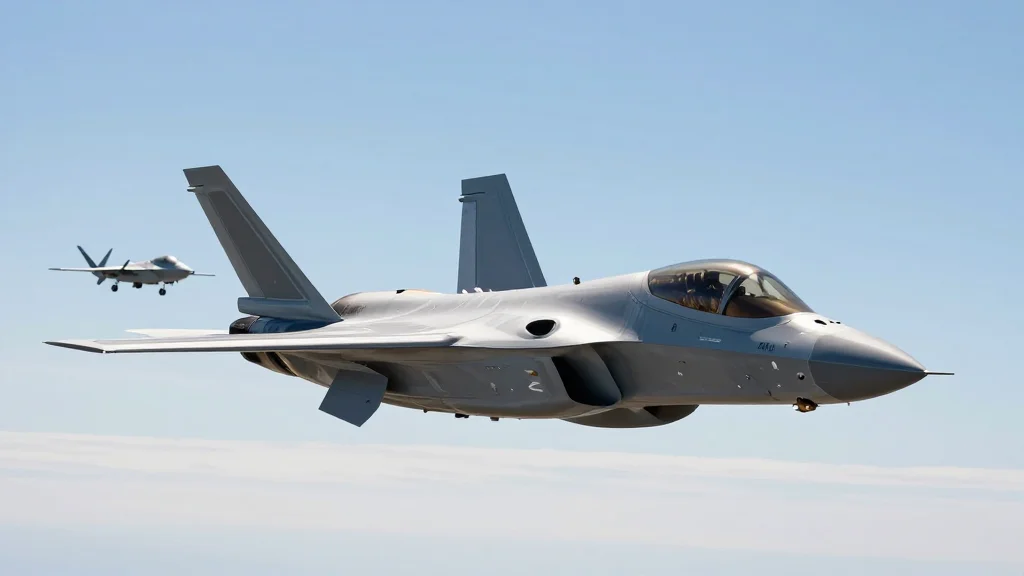
Scaling for Diverse Fleet Needs: How Many CCA Will Be Acquired per Crewed Aircraft?
Companies Mentioned
Why It Matters
Understanding acquisition ratios shapes force structure, budget allocation, and interoperability across allied air forces, directly influencing future combat effectiveness.
Key Takeaways
- •No universal uncrewed‑crewed aircraft ratio exists.
- •MALE CCAs enable low‑risk, cost‑effective teaming.
- •Fleet composition depends on mission, capability, national doctrine.
- •Dassault's stealth UCAV signals growing market demand.
- •Suppliers must offer flexible acquisition models.
Pulse Analysis
The rise of collaborative combat aircraft reflects a broader shift toward mixed‑crew operations, where unmanned platforms augment traditional fighters. While early UAV programs focused on stand‑alone missions, modern MALE CCAs are engineered to integrate seamlessly into existing squadrons, sharing sensor data and tactical cues. This integration reduces pilot workload and exposure to high‑risk environments, but it also complicates procurement strategies because each air force must balance mission profiles, budget constraints, and legacy platform compatibility.
Operational planners are grappling with formation sizing, a variable that hinges on threat level, geographic theater, and desired sortie tempo. Smaller mixed flights can deliver rapid, precise strikes, whereas larger swarms provide redundancy and overwhelming firepower. The flexibility of MALE CCAs allows commanders to tailor the uncrewed‑to‑crewed mix, yet the lack of an industry‑wide standard forces manufacturers to offer modular solutions that can be scaled up or down without extensive redesign. This adaptability is crucial for nations seeking to modernize fleets while preserving existing manned assets.
Market dynamics are accelerating as legacy manufacturers like Dassault unveil next‑generation stealth UCAVs, signaling confidence in the CCA concept’s commercial viability. Suppliers are now incentivized to provide not only the airframes but also integrated command‑and‑control suites, training packages, and lifecycle support that accommodate varying acquisition ratios. As allied interoperability becomes a strategic priority, flexible procurement models will likely dominate future contracts, ensuring that air forces can field the optimal blend of crewed and uncrewed assets for any operational scenario.
Scaling for diverse fleet needs: How many CCA will be acquired per crewed aircraft?
Comments
Want to join the conversation?
Loading comments...