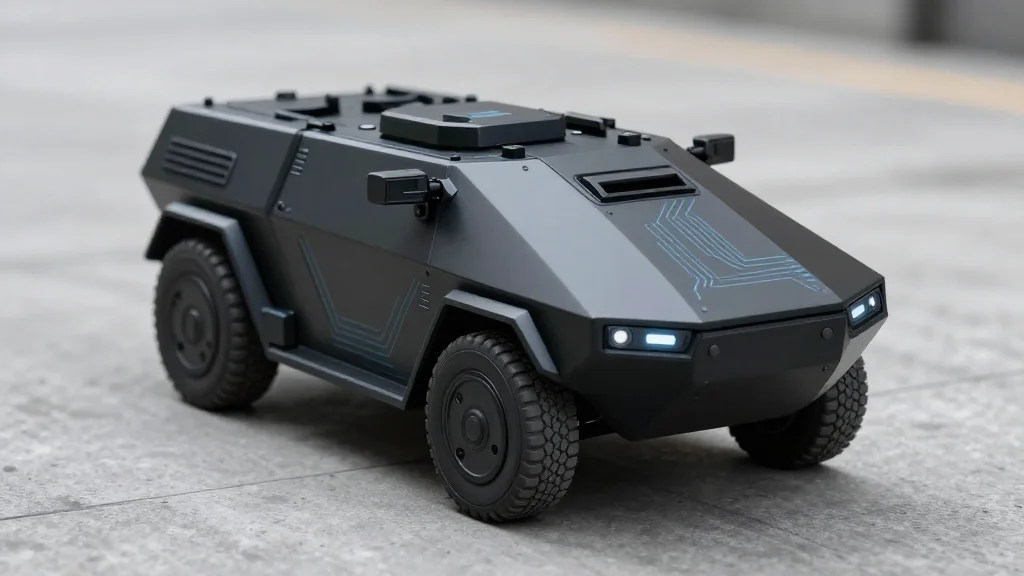
Smarter, Faster and More Disruptive: The Defense Tech Reshaping Investment
Companies Mentioned

Why It Matters
These trends reshape capital allocation across the defense sector, offering high‑growth opportunities but also exposing investors to regulatory, technological, and operational risks that can affect portfolio performance.
Key Takeaways
- •Pentagon earmarks $13.4 bn for AI and autonomous systems in 2026 budget
- •Quantum‑ready cyber defenses expected to dominate defense spending by 2030
- •Hypersonic missile reliability remains low; counter‑hypersonic tech offers safer returns
- •Space economy projected at $760 bn‑$1 tn by 2030, driving dual‑use investments
Pulse Analysis
The defense industry’s investment thesis is no longer anchored to massive, monolithic platforms. Artificial intelligence is delivering measurable value in decision support, command‑and‑control, and logistics, prompting the Pentagon to allocate $13.4 bn in its 2026 budget. Yet the regulatory landscape remains fluid; recent push‑back from AI firms over surveillance and autonomous‑weapon usage illustrates that investors must differentiate between commercially viable AI and politically sensitive applications to avoid headline and compliance risks.
Cybersecurity is evolving under the dual pressure of AI‑enhanced threats and the looming quantum computing era. Adversaries are already harvesting encrypted data for future decryption, compelling defense ministries to invest heavily in quantum‑resistant encryption and AI‑driven detection systems. These upgrades are increasingly viewed as non‑discretionary spend, creating a sizable market for vendors that can deliver rapid, automated response capabilities and realistic training simulations. The quantum‑cyber nexus is expected to dominate defense R&D budgets by the early 2030s.
Hypersonic weapons capture headlines, but their operational reliability remains questionable, with frequent launch failures and disputed performance metrics. Investors therefore find a more defensible upside in counter‑hypersonic technologies and broader missile‑defense ecosystems, especially under initiatives like AUKUS that exclude nuclear payloads. Simultaneously, the space economy’s rapid cost reductions have unlocked a $760 bn‑$1 tn market by 2030, where dual‑use satellites and data analytics serve both commercial customers and defense agencies. Europe’s push for launch independence, exemplified by new spaceports, adds another layer of strategic opportunity for capital seeking exposure to the next wave of defense‑linked innovation.
Smarter, faster and more disruptive: the defense tech reshaping investment
Comments
Want to join the conversation?
Loading comments...