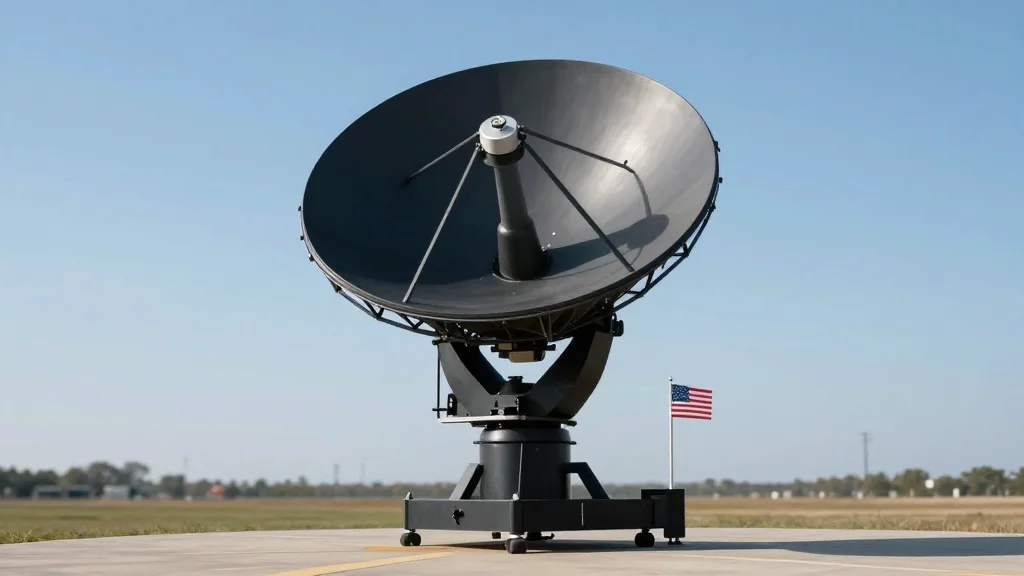
Space Control Budget More Than Doubles To About 30 Percent Of Space Force Request

Why It Matters
The surge underscores the Pentagon’s prioritization of space control amid great‑power competition, and it signals a substantial influx of contracts for defense firms specializing in satellite tracking, electronic warfare, and debris mitigation.
Key Takeaways
- •Space Control budget reaches $21.6 billion for FY2027.
- •Represents roughly 30% of Space Force’s $71 billion request.
- •$19.4 billion of the budget is classified, limiting public insight.
- •Unclassified procurement jumps to $459 million, up $457 million YoY.
Pulse Analysis
The FY2027 Space Force budget request marks a decisive shift toward space control, allocating $21.6 billion—more than double the prior year’s figure. At roughly 30% of the overall $71 billion request, this line item reflects the service’s belief that dominance in orbit is as critical as air or sea superiority. The increase aligns with broader Pentagon plans to boost defense spending to $1.5 trillion, positioning space as a contested domain where the United States must maintain a decisive edge.
A striking feature of the proposal is the opacity of the program: about $19.4 billion is classified, shielding details about capabilities, platforms, and counter‑space tactics. Analysts interpret this as an effort to protect emerging technologies such as resilient satellite constellations, on‑orbit electronic warfare, and advanced tracking of hostile assets. As China and Russia accelerate their own anti‑satellite programs, the U.S. is signaling a willingness to invest heavily in deterrence and rapid response, even if the specifics remain hidden from public scrutiny.
For the defense industrial base, the budget surge translates into a wave of new contracts. The unclassified procurement request of $459 million—up $457 million from the previous year—targets next‑generation sensors, ground‑segment upgrades, and debris‑removal services. Companies that can deliver resilient hardware and AI‑driven analytics stand to benefit, while the classified portion may open opportunities for firms with cleared capabilities. Over the next few years, the scale of funding will likely shape the architecture of U.S. space control, influencing everything from satellite design to joint operational doctrines.
Space Control Budget More Than Doubles To About 30 Percent Of Space Force Request
Comments
Want to join the conversation?
Loading comments...