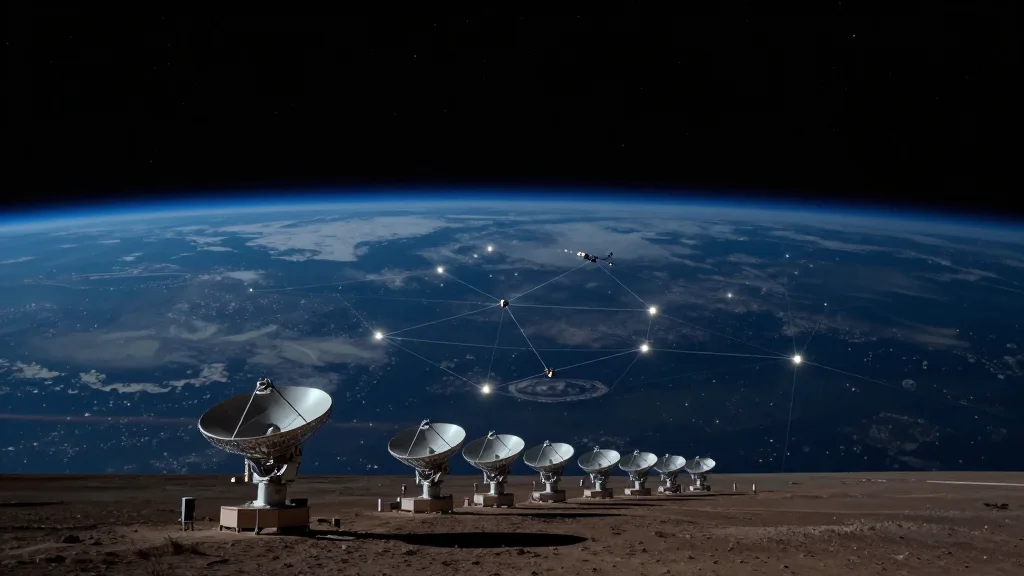
Space Force Grants SpaceX $2.29 B to Build Satellite‑Based Sensor‑to‑Shooter Network

Companies Mentioned
Why It Matters
The SDN Backbone will give the U.S. military a resilient, low‑latency communications layer that can survive contested environments, directly enhancing the speed and accuracy of missile‑defense and drone‑operations. By embedding commercial satellite technology into a hardened defense network, the Space Force accelerates capability delivery while reshaping procurement norms, potentially prompting other services to adopt similar OTA‑driven contracts. Globally, the contract may trigger a new wave of space‑based communications races as peer adversaries seek comparable sensor‑to‑shooter links. The architecture’s reliance on laser crosslinks reduces dependence on ground infrastructure, a capability that could be mirrored by rival nations, raising the stakes for space‑domain security and prompting renewed diplomatic dialogue on norms for militarized low‑Earth‑orbit constellations.
Key Takeaways
- •Space Force awarded SpaceX a $2.29 billion firm‑fixed‑price contract on May 26, 2026.
- •The SDN Backbone must deliver a prototype by the end of 2027 using low‑Earth‑orbit satellites with laser crosslinks.
- •Col. Ryan Frazier highlighted the contract as a major boost for warfighter communications.
- •The network will integrate with the Space Development Agency’s Transport Layer and the Pentagon’s Golden Dome architecture.
- •The deal positions SpaceX as a central defense contractor ahead of a potential $1.75 trillion IPO.
Pulse Analysis
SpaceX’s win reflects a decisive pivot in U.S. defense acquisition: speed and commercial agility now outweigh the traditional emphasis on diversified industrial base. The OTA mechanism sidesteps many of the bureaucratic hurdles that have slowed legacy programs, allowing SpaceX to leverage its rapid launch cadence and mature Starlink infrastructure. This approach reduces time‑to‑field but concentrates risk; a single‑point failure in the constellation could jeopardize a critical communications layer. The Pentagon will need robust redundancy and rigorous cybersecurity audits to mitigate that exposure.
Historically, the U.S. has relied on multiple vendors for satellite communications to preserve competition and resilience. By consolidating the SDN Backbone with SpaceX, the Space Force bets on a proven commercial platform to meet an urgent operational need—real‑time sensor‑to‑shooter links for missile defense. If successful, the model could become a template for future high‑tempo programs, from hypersonic tracking to AI‑driven ISR, accelerating the integration of cutting‑edge tech into the warfighter’s toolkit.
Looking ahead, the contract may catalyze a strategic feedback loop: as SpaceX demonstrates the viability of commercial‑grade security in a defense context, other commercial players will likely pursue similar OTA deals, intensifying competition and driving down costs. Conversely, adversaries observing the U.S. move may accelerate their own satellite constellations, potentially sparking a new space‑based arms race. Policymakers will have to balance the benefits of rapid innovation with the imperative to maintain a secure, diversified supply chain for national‑security assets.
Space Force Grants SpaceX $2.29 B to Build Satellite‑Based Sensor‑to‑Shooter Network
Comments
Want to join the conversation?
Loading comments...