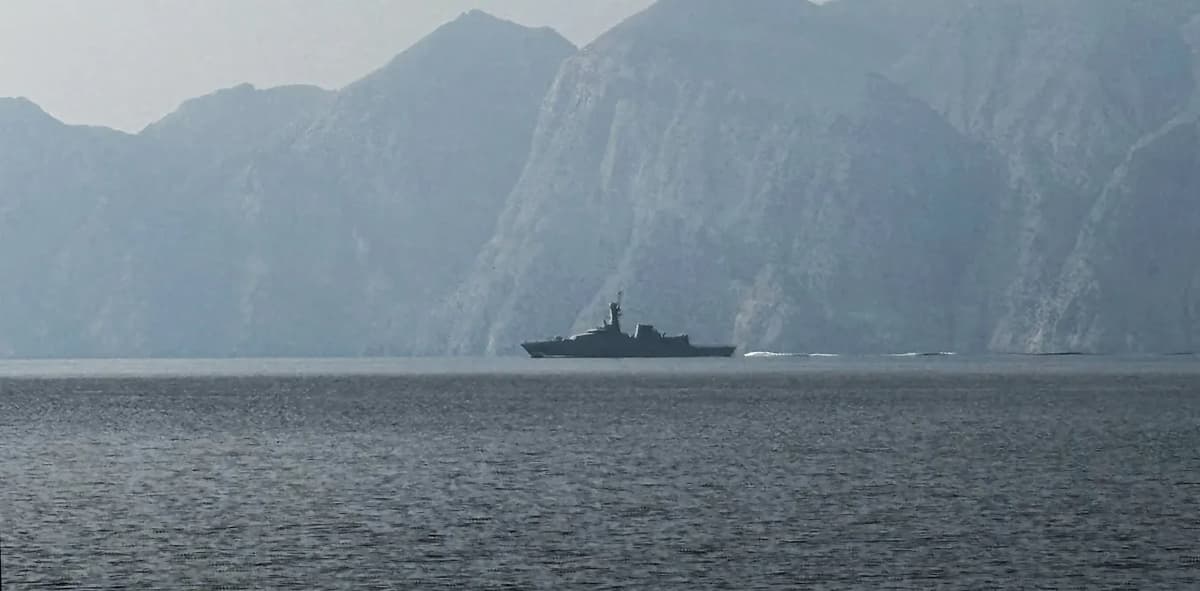
Strait of Hormuz Blockade: The Complex Regional Realities the US Ignores at Its Peril
Why It Matters
The blockade jeopardizes global energy markets and could trigger wider regional instability, challenging U.S. strategic credibility in the Middle East.
Key Takeaways
- •Trump ordered US naval blockade of Hormuz, halting Iranian port traffic
- •Hormuz handles ~20% of global oil shipments, ~$1 trillion annually
- •Oman’s Musandam peninsula hosts distinct Kumzari culture, complicating control
- •UAE‑Oman rivalry over the strait could spark local identity conflicts
- •Misreading regional dynamics risks a US strategic blunder like Suez
Pulse Analysis
The United States, under President Donald Trump, announced a naval blockade of the Strait of Hormuz, effectively cutting off Iranian port traffic. The narrow waterway, only 21 nautical miles wide at its tightest point, funnels roughly 20 percent of the world’s oil—about 18 million barrels a day—equating to over $1 trillion in annual trade. By halting shipments, the blockade threatens to spike crude prices, disrupt supply chains for refiners in Asia and Europe, and force shipping firms to reroute around the longer, costlier Cape of Good Hope. The immediate market reaction underscores the strait’s outsized role in global energy security.
Understanding the blockade requires a look beyond geopolitics to the region’s layered history. British imperial policy in the 19th century co‑opted coastal tribes and allied with the Sultan of Oman, laying the groundwork for today’s oil monarchies in the UAE, Qatar, Bahrain and Kuwait. The Musandam peninsula, an Omani exclave jutting into Hormuz, is home to the Kumzari people, whose maritime culture and distinct language set them apart from neighboring Arab and Persian communities. Tensions between Oman and the hawkish UAE over Iran‑linked toll proposals illustrate how local identity politics can quickly become strategic flashpoints.
For Washington, the Hormuz move risks repeating the miscalculations of the 1956 Suez Crisis, where a failure to grasp local nationalist currents precipitated a costly withdrawal. As Iran’s Revolutionary Guard tightens its grip, sub‑national groups on both banks may seize the power vacuum, potentially aligning with either Omani or Emirati interests. A prolonged blockade could push oil‑dependent economies to accelerate diversification, while investors hedge against heightened geopolitical risk. The episode thus serves as a litmus test for U.S. ability to adapt strategy to nuanced regional realities, with implications for the broader post‑Cold‑War order.
Strait of Hormuz blockade: the complex regional realities the US ignores at its peril
Comments
Want to join the conversation?
Loading comments...