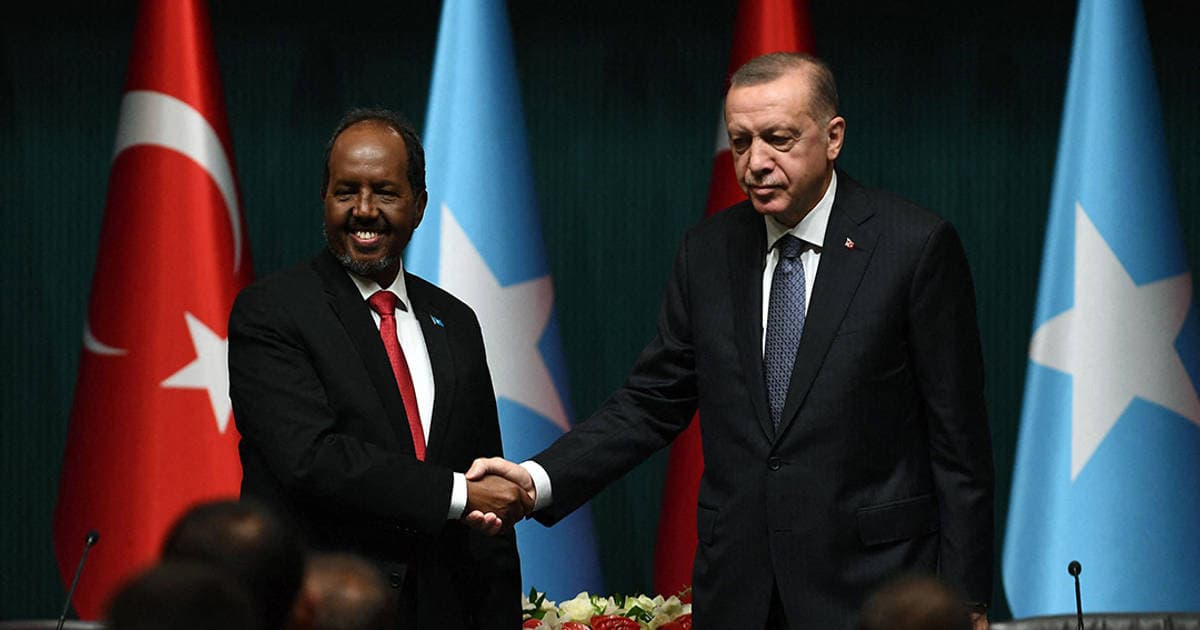
The New Scramble: Turkey, Somalia and the Battle for the Red Sea
Why It Matters
The deal could channel significant oil revenues to Turkey, reshaping energy supply chains, while its military foothold gives Ankara strategic leverage in a contested maritime corridor critical to global trade.
Key Takeaways
- •Turkey's 2024 oil deal grants up to 90% of production costs
- •Turkish drillship Çağrı Bey began exploratory drilling at Curad‑1 well
- •Ankara runs Camp TURKSOM and plans Laas Qoray base near Bab al‑Mandab
- •Somalia's royalty rate capped at 5% under Turkish oil agreement
- •Turkish expansion challenges UAE, Saudi, Israel for Red Sea dominance
Pulse Analysis
Turkey’s relationship with Somalia has evolved from a goodwill tour in 2011 to a multifaceted partnership that blends commerce, security, and geopolitics. Early humanitarian outreach built a reservoir of goodwill, leading to thousands of Somali students in Turkish universities and Turkish firms managing Mogadishu’s port and airport. This soft‑power foundation paved the way for Ankara’s current assertive posture, as it seeks to secure energy supplies and project influence beyond its traditional sphere, leveraging Somalia’s untapped hydrocarbon potential.
The 2024 oil pact is the centerpiece of Turkey’s commercial ambition. Roughly 30 billion barrels of oil—about a quarter of the UAE’s proven reserves—are now on Turkey’s radar. Under the agreement, Turkish state oil entities can recoup up to 90% of extraction costs before profit sharing, while Somalia receives a modest 5% royalty. Critics warn the terms are lopsided and were rushed through parliament, raising concerns about transparency and long‑term fiscal benefits for the Somali state. Nonetheless, the arrival of the deep‑water drillship Çağrı Bey signals Ankara’s intent to move quickly from exploration to production, potentially reshaping regional energy flows.
Parallel to its economic push, Turkey is cementing a military footprint that mirrors its commercial stakes. Camp TURKSOM, already a hub for training Somali special forces, is complemented by plans for a new base at Laas Qoray, a strategic point near the Bab al‑Mandab strait that channels roughly 12% of world trade. This expansion pits Ankara against the UAE, Saudi Arabia and Israel, each vying for dominance over the Red Sea corridor. As the United States and UN presence wanes, Turkey’s dual‑track strategy—oil extraction coupled with a fortified security presence—could redefine power dynamics in the Horn of Africa and the broader Indian Ocean arena.
The New Scramble: Turkey, Somalia and the Battle for the Red Sea
Comments
Want to join the conversation?
Loading comments...