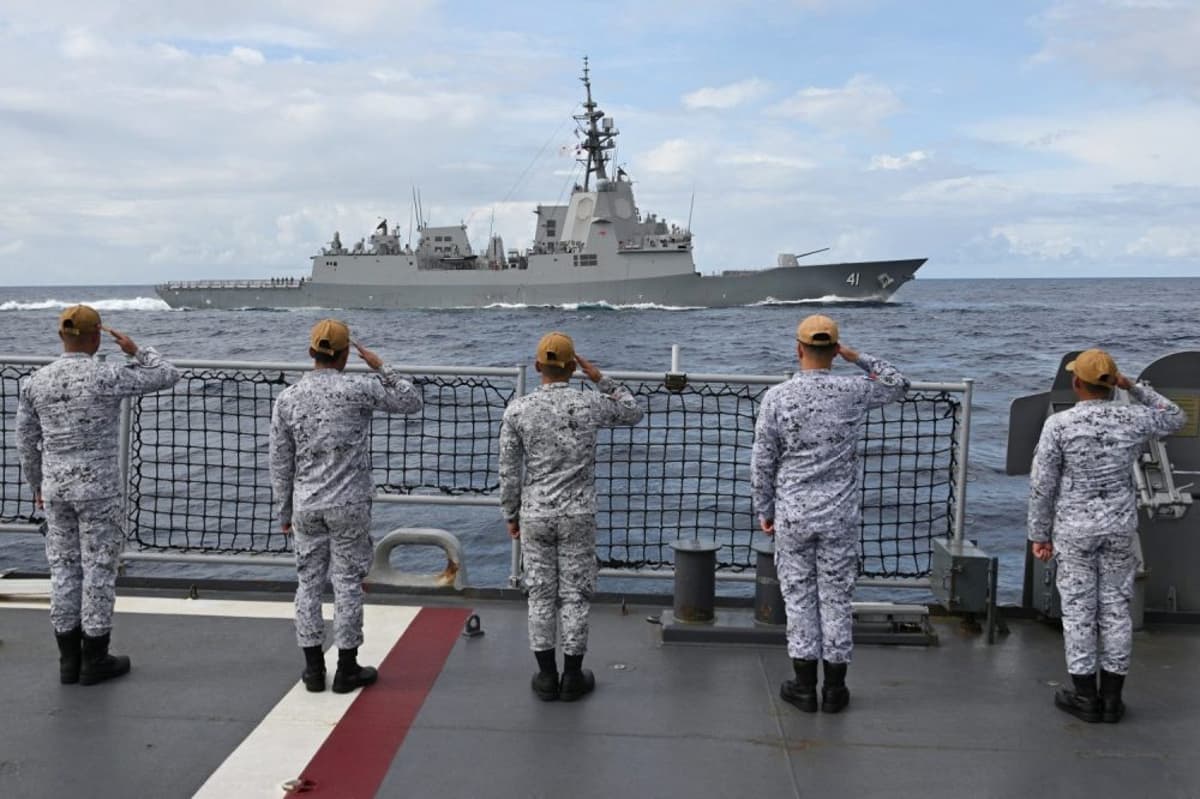
The shift reconfigures U.S. influence in a region vital to countering China, risking weakened alliances for immediate industrial gains.
The Trump administration’s "America First" export order reframes weapons sales as a tool for bolstering domestic production and securing strategic resources. By codifying a three‑point rubric—self‑defense investment, geographic relevance, and economic contribution—Washington signals that future deals will be evaluated through a commercial lens rather than traditional alliance politics. This approach mirrors broader efforts to revive the U.S. defense industrial base, encouraging partner nations to purchase American equipment that feeds domestic supply chains and offsets the cost of critical‑minerals extraction contracts.
In Southeast Asia, the new criteria create a clear hierarchy. Manila, with its proximity to Taiwan and ongoing disputes in the South China Sea, aligns closely with U.S. strategic goals and is poised to receive continued or expanded arms packages. Singapore’s control of the Strait of Malacca also fits the geographic priority, while Cambodia’s recent lifting of an embargo hints at a quid‑pro‑quo tied to mineral access. Conversely, Jakarta and Hanoi lack the required strategic depth and have not secured mineral pacts, leaving them vulnerable to reduced U.S. support and prompting them to diversify toward Australia, India, Japan, or even Russian and Chinese suppliers.
The broader implication is a potential fragmentation of the Indo‑Pacific security network at a time when Beijing’s assertiveness is intensifying. Short‑term gains in industrial revenue may come at the expense of trust and predictability that underpin long‑term alliances. Policymakers must balance immediate economic objectives with the strategic necessity of a cohesive partner coalition; otherwise, the United States risks ceding influence to rival powers and weakening its capacity to shape regional outcomes.
Trump’s “America First” Arms Export Strategy and Its Impact on Southeast Asia
On Feb. 6, U.S. President Trump declared through an executive order that the United States would abide by a new “America First” arms export strategy. The goal of the strategy is to “ensure that future arms sales prioritize American interests by using foreign purchases and capital to build American production and capacity.” Importantly, the Trump administration established a prioritization rubric for judging whether an ally or partner is eligible for receiving U.S.-made weapons. It states that the United States will prioritize arms sales and transfers to partners that:
have invested in their own self‑defense and capabilities,
have a critical role or geography in United States plans and operations, or
contribute to our economic security.
Based on the above criteria, most Southeast Asian countries are likely to face greater difficulties in securing U.S. weaponry. Not every state in the region seeks Washington’s assistance—nor can every state afford it. However, those that are interested may be in for a rude awakening as they encounter a new U.S. paradigm in which they receive little to nothing from Washington.
This will prompt them to seek weapons deliveries from others, be they U.S. friends or adversaries. In the end, Trump’s new arms export policy will further weaken the U.S. network of alliances and partnerships in a particularly crucial region in the Indo‑Pacific at a time when Washington should be shoring up its network to more effectively counter Beijing.
The Philippines – With long coastlines facing the South China Sea and a history of clashes with China over maritime territorial expansion, the Philippines could benefit. The recently released U.S. National Security Strategy argues that control over the South China Sea has “major implications for the U.S. economy,” since about one‑third of global shipping passes through its waters. The document also asserts that the United States must deter China from attacking or invading Taiwan. Given the Philippines’ location less than 100 miles from the southern tip of Taiwan, continuing to arm Manila is likely to be a priority.
Cambodia – Last week the Trump administration lifted an arms embargo against Phnom Penh, paving the way for Cambodia to diversify away from its heavy dependence on Chinese‑built systems. Although the administration’s rationale for ending the embargo remains opaque, the new strategy provides some clarity. In October, while Trump attended the ASEAN summit in Malaysia, he inked a new agreement with Cambodia to access its critical‑minerals deposits. Phnom Penh’s reciprocal benefit for supporting Trump’s economic‑security agenda appears to be renewed access to U.S. arms supplies. The same may be possible for Malaysia and Thailand, which also signed critical‑minerals deals with Trump on the sidelines of the summit, though tangible benefits remain uncertain. Most U.S. arms are probably too expensive for Cambodia and Malaysia to afford.
Singapore – Singapore spends just 2.7 percent of its GDP on defense—well below the 3.5 percent the Trump administration generally desires from close friends. Nevertheless, the city‑state checks two other interrelated boxes. Strategically located at the narrow mouth of the Strait of Malacca, the main sea lane connecting the Indian Ocean to the Pacific, U.S. military planners could consider Singapore vital to blockading Chinese shipping in a potential future war, even if Singapore’s own capabilities are modest. Moreover, U.S. Assistant Secretary of State for East Asian and Pacific Affairs Michael DeSombre emphasized during his recent visit that the administration is “deepening partnerships that protect freedom of navigation and the trade routes critical to American and Singaporean prosperity,” explicitly linking the strait to U.S. economic security.
Indonesia and Vietnam – Both nations may lose priority under Trump’s new arms‑transfer strategy. Although DeSombre’s recent visits to Jakarta and Hanoi were productive, neither country is as geographically critical as the Philippines or Singapore to Washington’s China‑countering strategy. Both also lack the military capability or willingness to make substantial contributions to a potential conflict, emphasizing non‑alignment in foreign policy. Neither has yet inked critical‑minerals pacts, the current easiest path to elevate standing in Washington. Vietnam relies heavily on Russia for arms; Indonesia does the same while also hunting bargains from other suppliers, including China. Consequently, arms assistance to them is likely to be deprioritized over the next three years.
Laos, Myanmar, Brunei, and Timor‑Leste – While Laos and Myanmar could see a boost in profile because of their critical‑minerals reserves, the Trump administration’s consideration of supporting Myanmar’s military junta in exchange for resources remains speculative. Brunei and Timor‑Leste are unlikely to benefit, as they offer little strategic or resource value to an “America First” policy.
The new executive order underscores the Trump administration’s focus on renewing the United States’ industrial base—a constant in Trump’s thinking. It suggests that the United States will continue to pursue arms sales that generate immediate economic returns, industrial capacity, and tangible contributions to U.S. objectives, rather than reinforcing long‑term alliances and shared values.
Outside Southeast Asia, the new strategy is already being referenced. On Feb. 10, the U.S. ambassador to Bangladesh, Brent Christensen, said Washington planned to sell Dhaka unspecified weapons, even though Bangladesh does not meet any of the stated criteria. A recently concluded trade deal may have influenced that decision.
In practice, the shift toward short‑term, transactional reciprocity could fragment the security architecture the United States has painstakingly built in the Indo‑Pacific. States that cannot meet Washington’s new criteria may diversify their security partnerships, turning to Australia, India, Japan, South Korea, European nations, or even Russia and China. While the United States may secure more favorable industrial deals in the short run, it risks eroding the trust, predictability, and political goodwill that make alliances durable over the longer term. Weakening this strategic network at a moment of escalating great‑power competition against China could prove to be a self‑inflicted wound for the Trump administration.
Comments
Want to join the conversation?
Loading comments...