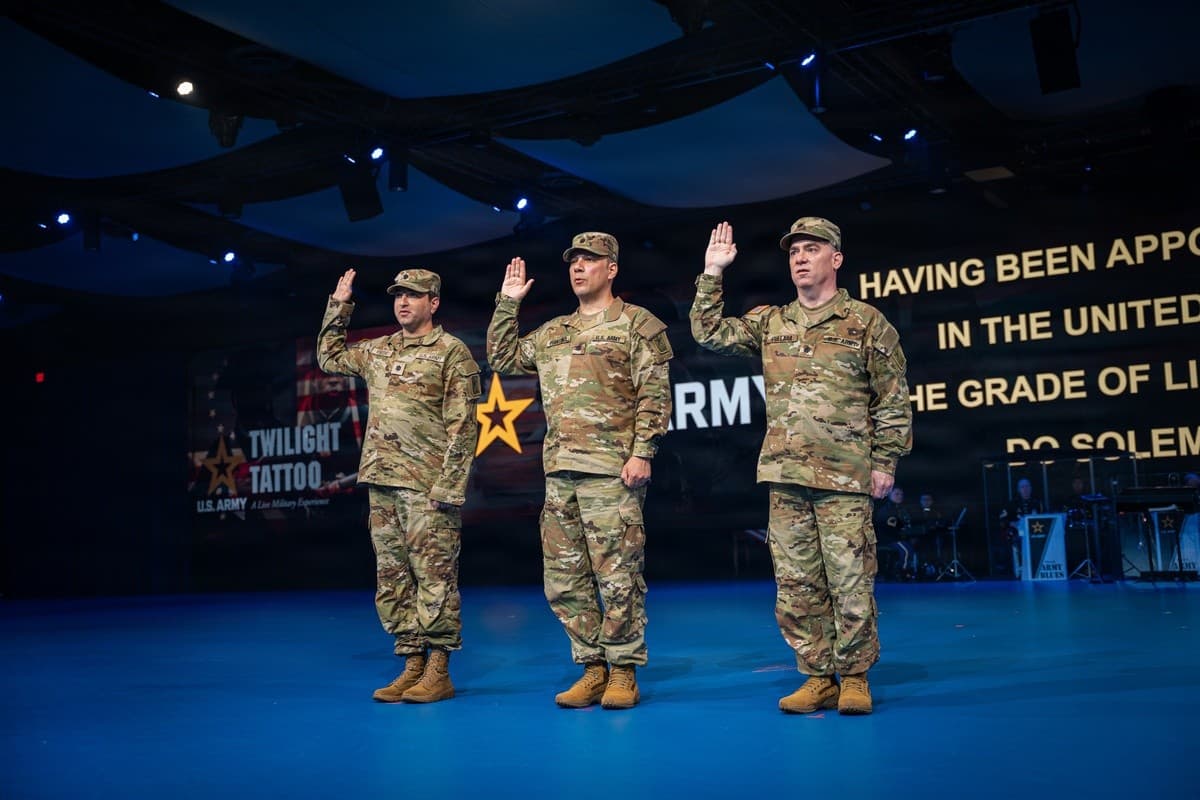
US Army Commissions Second Cohort of Tech Executives Into Innovation Unit
Companies Mentioned


Why It Matters
By pulling top tech talent into the military, the Army accelerates its AI and autonomous‑systems capabilities, narrowing the innovation gap with the private sector. The model also creates a new talent pipeline that could reshape defense procurement and research.
Key Takeaways
- •Three tech executives commissioned into Army's Detachment 201
- •Detachment 201 bridges commercial AI talent with military
- •Onboarding timeline cut from 18 months to six
- •First cohort advised on autonomous systems and counter‑drone tech
- •Program lets leaders serve without leaving civilian jobs
Pulse Analysis
The rapid emergence of artificial intelligence, autonomous platforms and data‑driven logistics is redefining modern warfare, prompting the U.S. Army to overhaul its acquisition and research processes. Traditional defense procurement cycles, often measured in years, struggle to keep pace with the speed at which commercial firms iterate on machine‑learning models and sensor technologies. To close that gap, the service has turned to a talent‑first strategy, recruiting civilian innovators who can inject cutting‑edge expertise directly into operational planning and technology development.
Detachment 201, officially the Executive Innovation Corps, operationalizes this strategy by commissioning senior tech leaders as reserve officers. The second cohort, announced this week, adds Cloudflare’s CTO Dane Knecht, venture capital CTO Sam Pallara, and Facebook AI Research co‑founder Serkan Piantino to a roster that already includes Palantir, Meta and OpenAI executives. The Army has slashed the onboarding timeline from more than 18 months to roughly six, enabling participants to maintain their day jobs while advising on projects ranging from autonomous munition supply‑chain analytics to counter‑drone defenses.
The program signals a broader shift toward hybrid civil‑military innovation ecosystems, offering defense contractors a clearer pathway to collaborate with the services and giving the Army a steady flow of commercial best practices. If successful, Detachment 201 could accelerate fielding of AI‑enabled weapons, improve data resilience, and attract additional private‑sector talent wary of full‑time enlistment. Critics, however, warn about potential conflicts of interest and the need for robust oversight to ensure that proprietary technologies are appropriately managed within the security framework.
US Army commissions second cohort of tech executives into innovation unit
Comments
Want to join the conversation?
Loading comments...