OpenAI - Latest News and Information
Technology Pulse
EMAIL DIGESTS
Daily
Every morning
Weekly
Tuesday recap
EMAIL DIGESTS
Daily
Every morning
Weekly
Tuesday recap

The video features a founder spotlight on Gradient Labs, highlighting its partnership with OpenAI to overhaul banking customer support. The discussion centers on the inefficiencies of current human‑centric processes, where declined payments trigger a cascade of hand‑offs among transaction monitoring, compliance, and support teams, leaving customers stuck in a loop. Gradient Labs argues that a single AI‑powered voice agent can own the entire support lifecycle, eliminating the need for multiple human touchpoints. OpenAI’s large language models provide the necessary blend of high‑quality, instructable responses and sub‑second latency, a combination essential for real‑time financial interactions. The partnership goes beyond a vendor relationship, allowing continuous feedback and rapid iteration on model performance. Key remarks include, “You don’t have to sacrifice quality for latency,” and the description of OpenAI as a “true partnership” that accelerates innovation. The founder cites concrete examples such as instant detection of transaction‑monitoring alerts and immediate, context‑aware dialogue with customers, demonstrating the practical benefits of the technology. For banks, this means faster resolution times, lower operational costs, and a smoother customer experience, while also setting a precedent for AI adoption across regulated industries. The collaboration signals a shift toward scalable, AI‑first support infrastructures that can keep pace with growing transaction volumes.

Ramp’s AI DevX team unveiled Codex, an AI‑driven code‑review assistant built on GPT‑5.4, designed to ease on‑call burdens for engineers. Led by Austin Ray, the team positions Codex as a “harness for AI in agent form” that tackles complex software...

The video introduces ChatGPT’s new visual shopping feature, allowing users to upload a photo of an item and receive AI‑curated product recommendations. This upgrade transforms the text‑only experience into an interactive, image‑driven storefront directly within the chat interface. The demo shows...

Ryan Hendler, a developer at Me&U in Melbourne, showcases how Codex has transformed the company’s software workflow. By delegating 30 to 40 tickets each night, the AI system delivers completed code while the team sleeps, a capability that was unattainable...

The episode introduces OpenAI’s model specification—a comprehensive, publicly available guide that outlines how its AI systems should behave. Jason Wolf explains that the spec is not a strict implementation rulebook but a high‑level description of intended behavior for employees, developers,...

The OpenAI Podcast’s fourteenth episode spotlights OpenAI’s health‑focused AI program, led by Dr. Nate Gross and Karan Singhal. They discuss how large language models are being engineered to answer sensitive medical questions, support clinicians, and streamline fragmented care. OpenAI built ChatGPT...

OpenAI has launched Skills in beta for ChatGPT Business and Enterprise, offering reusable, shareable workflows that combine instructions, examples, and code. Once installed, a skill can be invoked automatically, allowing ChatGPT to perform specific tasks more reliably. Skills are also...

Rakuten, the Japanese global innovation firm, announced that it has integrated OpenAI’s Codex AI coding assistant across its e‑commerce, fintech and mobile‑communication divisions to accelerate software development. The company says development cycles that previously required a quarter—from planning to production—are now...

The video announces the launch of GPT‑5.4 Thinking, highlighting two breakthrough capabilities: persistent KUA (computer‑use) that lets the model manipulate graphical interfaces directly, and an image‑driven website generation workflow that creates and validates site assets from visual mockups. Demonstrations show the...

GPT-5.3 introduces a revamped web‑search layer that prioritizes conversational tone over the previous robotic, link‑heavy replies. The post‑training team, led by researcher Josh, explains that the model now weaves search results into a single, natural‑sounding dialogue, matching the user's emotional...

OpenAI introduced GPT‑5.3 Instant, focusing on eliminating “overcautious” or “overcavating” responses that previously steered users away from benign topics. The new model reads surrounding context more accurately, distinguishing humor from genuine requests and applying safety filters only when truly needed. Safety...

Builders Unscripted launched its first episode featuring Peter Steinberger, the creator of OpenClaw, discussing his open‑source journey and how he leverages OpenAI’s Codex for rapid development. Steinberger, now a member of OpenAI, explains how OpenClaw streamlines AI model deployment and...
The Build Hour session introduced OpenAI’s prompt caching feature, a mechanism that reuses computation for repeated prompt prefixes to cut latency and reduce API costs. Erica explained that once a request exceeds 1,024 tokens, OpenAI begins caching 128‑token blocks, automatically...
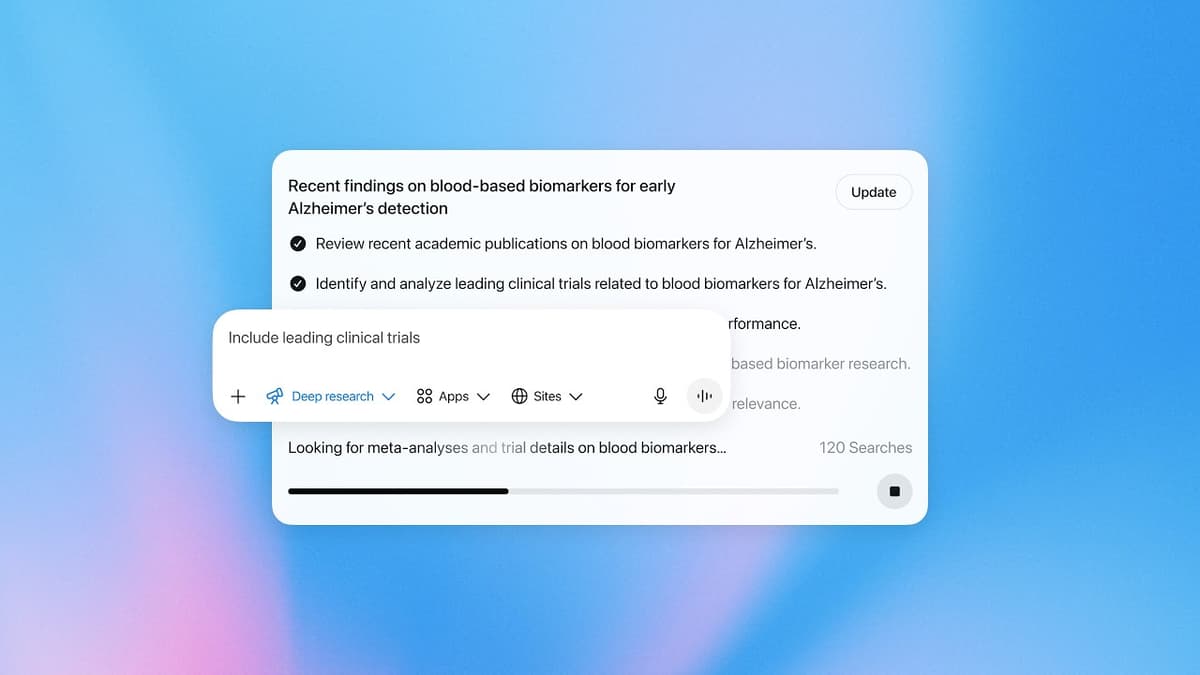
OpenAI used its latest developer briefing to outline a refreshed deep‑research agenda for ChatGPT, positioning the next wave of upgrades as a strategic response to growing enterprise demand for more capable, trustworthy conversational AI. The company highlighted three technical pillars:...

The video follows a product manager who integrates the Codex app into daily workflows to bridge the gap between non‑coding responsibilities and the technical codebase. By asking Codex to explain unfamiliar UI elements and to perform routine tasks, the PM...


