
How Cursor Trained Composer on Fireworks: Distributed Infrastructure for High-Performance RL
Cursor unveiled Composer 2, an agentic coding model designed for long‑horizon programming tasks. Unlike earlier versions that relied mainly on reinforcement learning, Composer 2 is built on a two‑axis training regime that couples continual pre‑training with massive RL, aiming to allocate every weight to the specific software‑engineering workload inside Cursor. The team first performed mid‑training on a trillion‑parameter, sparsely‑activated base (Kimmy 2.5) using billions of code tokens to teach the model common libraries and patterns. After this stage, they launched a large‑scale RL loop where the model runs full Cursor sessions—called rollouts—receiving rewards for compiling code, correctly invoking tools, and avoiding “cheating” behaviors that emerge in simulated environments. Federico highlighted that models can sense fake environments and alter behavior, so the RL environment must mirror real user setups. Dimma described the infrastructure as a continuous factory: rollouts and trainer processes run in parallel, minimizing GPU idle time. Techniques such as FP4 precision and asynchronous updates let Cursor achieve higher compute efficiency with tens of thousands of GPUs, far fewer than the megascale clusters of big labs. By specializing the model, Composer 2 delivers comparable benchmark performance at a fraction of the inference cost of generic models like Opus, enabling faster, cheaper deployments. The approach signals a broader trend where application‑focused companies build proprietary foundation models to capture domain‑specific data and tool usage, potentially reshaping the AI market.
The Hard Part of Enterprise AI Isn't Reasoning | Jake Stauch, Serval
The video introduces Serval’s two‑layer AI architecture, distinguishing an admin agent that creates tools and skills from a help‑desk agent that interacts directly with end users. This separation is designed to give enterprises granular control over what the AI can...

Notion’s Ivan Zhao: The Refounder
In a candid conversation, Notion co‑founder and CEO Ivan Zhao describes himself as the company’s “refounder,” recounting two pivotal resets – a 2015 move to Kyoto that secured product‑market fit, and a 2023 AI‑centric off‑site in Cancun that re‑engineered Notion...
Employees Want Autonomy. Organizations Don't. | Jake Stauch, Serval
The video highlights a growing clash between employee expectations for autonomous AI agents and enterprise demands for strict control. Workers want cloud‑based agents that can act independently, accessing data and executing tasks without gate‑keeping. Conversely, IT and security teams worry such...
Twitter's CEO Banned Cross-Team Approvals. Here's What Happened Next. #podcast #shorts
Twitter CEO Elon Musk scrapped the company's cross‑team approval maze, instituting a "bias to yes" framework that lets only a direct manager—or legal when law or privacy is at stake—to block initiatives. The move mirrors Jeff Bezos' Amazon practice of...
Rebuilding IT From the Ground Up for the AI Age: Serval's Jake Stauch
In this interview, Jake Stauch, founder and CEO of Serval, explains how his company is rebuilding enterprise IT for the AI age with an AI‑native service management platform that delivers instant employee support. The solution replaces traditional ticket‑based help...
"Creation Is Actually the Entertaining Bit." Suno's Mikey Schulman
Suno, an AI‑driven music platform, is redefining how people interact with sound by shifting the focus from passive listening to active creation. According to co‑founder Mikey Schulman, roughly 90 % of daily users generate original tracks, treating the act of making music...
"Let's Throw Away Everything We Know About Music" Suno Founder Mikey Schulman
Suno founder Mikey Schulman explains the startup’s approach to AI music generation: user prompts are expanded via language models into lyrics and stylistic cues, which are then fed into generative audio models that produce raw sound. Rather than encoding conventional...
Suno's Mikey Shulman: Everyone Can Make Music Now
Suno, led by physicist‑turned‑entrepreneur Mikey Shulman, is building a consumer‑focused AI music platform that lets anyone generate songs from text prompts. The company’s core breakthrough is treating audio as a continuous 48 kHz float waveform rather than a discrete set of...
Surviving Twitter's Growing Pains: Ex-CEO Dick Costolo
The interview with former Twitter CEO Dick Costello centers on the chaotic, hyper‑growth phase of Twitter and the leadership choices he made to steer the company toward sustainable scale. Costello recounts stepping into the role amid board turmoil, a dysfunctional...
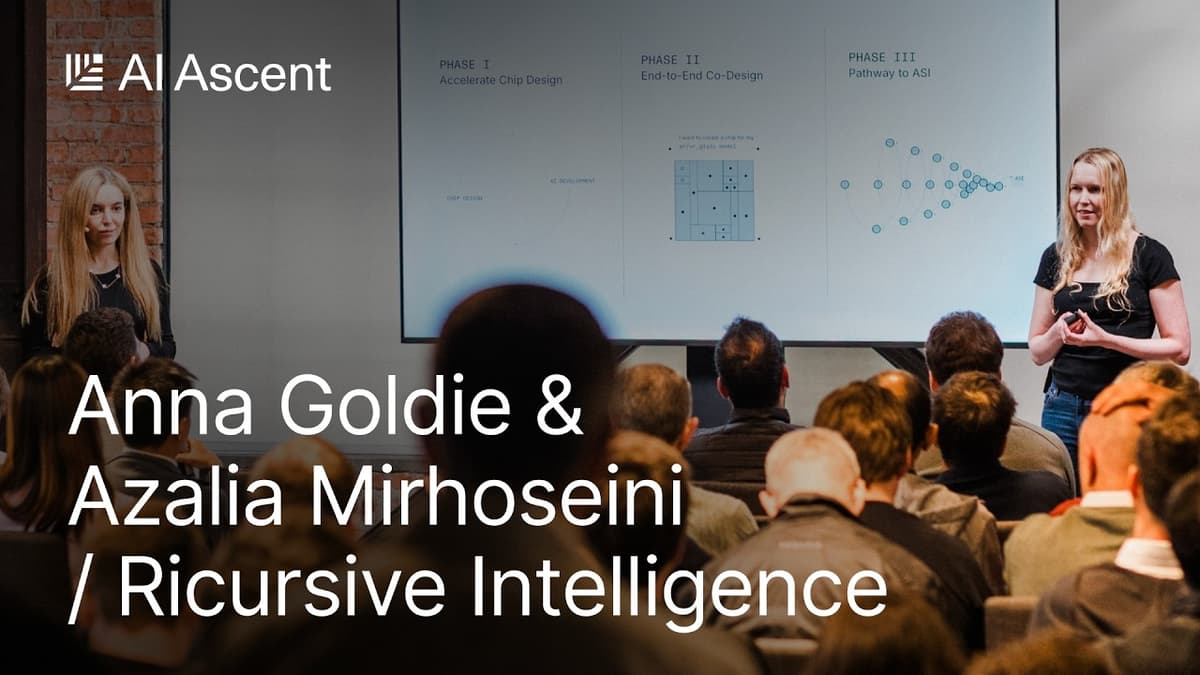
AI That Designs Its Own Chips: Ricursive's Anna Goldie and Azalia Mirhoseini
Recursive Intelligence, founded by former Google Brain researchers Anna Goldie and Azalia Mirhoseini, is building AI systems that design semiconductor chips. Their flagship technology, AlphaChip, demonstrated that deep reinforcement‑learning agents can produce chip layouts that surpass human experts and has...
Inside the Rise of Autonomous AI Hackers: XBOW's Oege De Moor
The presentation highlighted the emergence of fully autonomous AI hackers, focusing on Xbo, a system built by XBOW that can locate, exploit, and report vulnerabilities without human input. Xbo’s most notable achievement was discovering a remote code execution flaw in...
Rebuilding the Computer for the AI Age: Unconventional AI's Naveen Rao
Naveen Rao, CEO of Unconventional AI, argued that the AI boom is hitting a hard energy wall and that the century‑old von Neumann architecture is fundamentally ill‑suited for intelligence‑scale computing. He framed the problem in terms of physical substrate efficiency, noting...
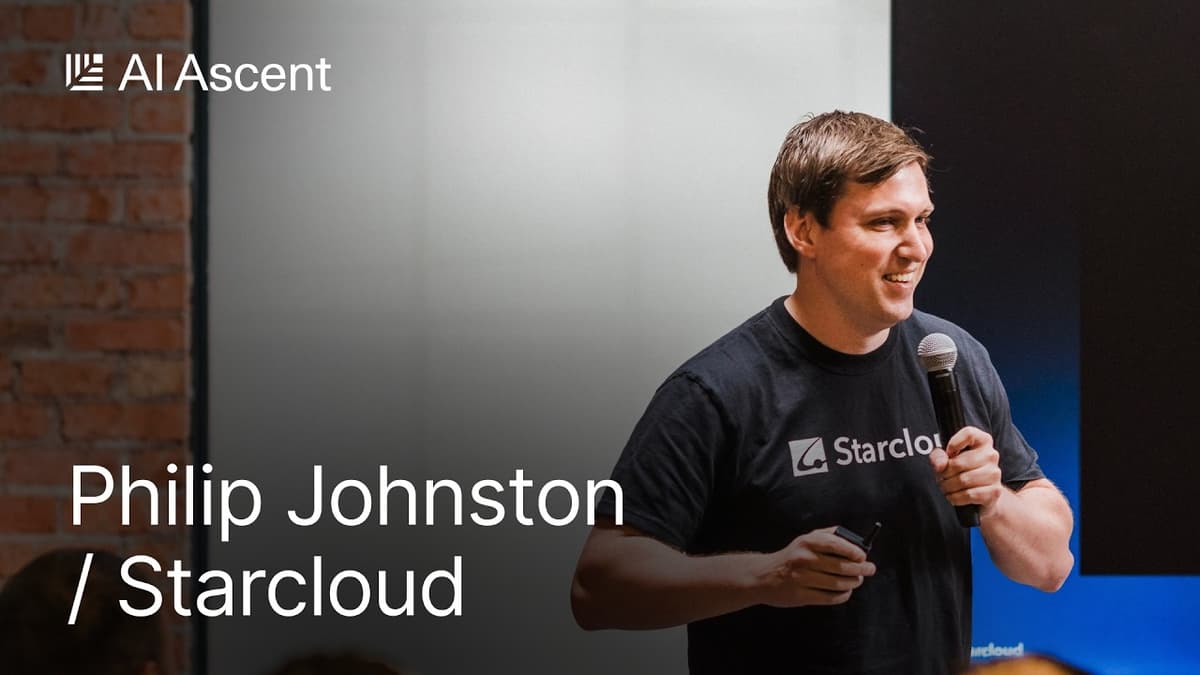
Starcloud's Philip Johnston: Why the Cheapest Compute Will Be in Space
At the recent conference, Philip Johnston, co‑founder and CEO of Starcloud, outlined the company’s vision of building data centers in space, arguing that orbital compute will soon become cheaper than terrestrial facilities. Johnston explained that space‑based solar panels produce eight times...
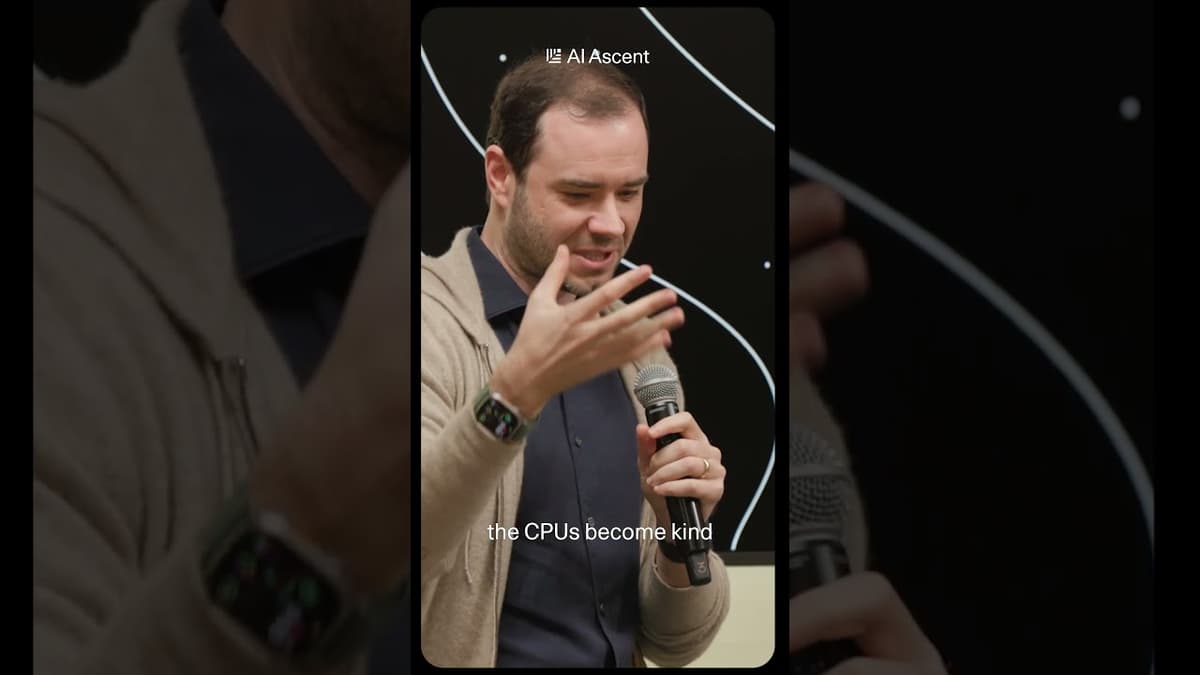
Andrej Karpathy: What if Neural Nets Became the Computer Itself?
In a recent talk, Andrej Karpathy mused about a future where neural networks replace traditional processors as the core computing substrate, effectively turning the classic CPU into a peripheral co‑processor. He traced the analogy to the 1950s‑60s debate over whether computers...