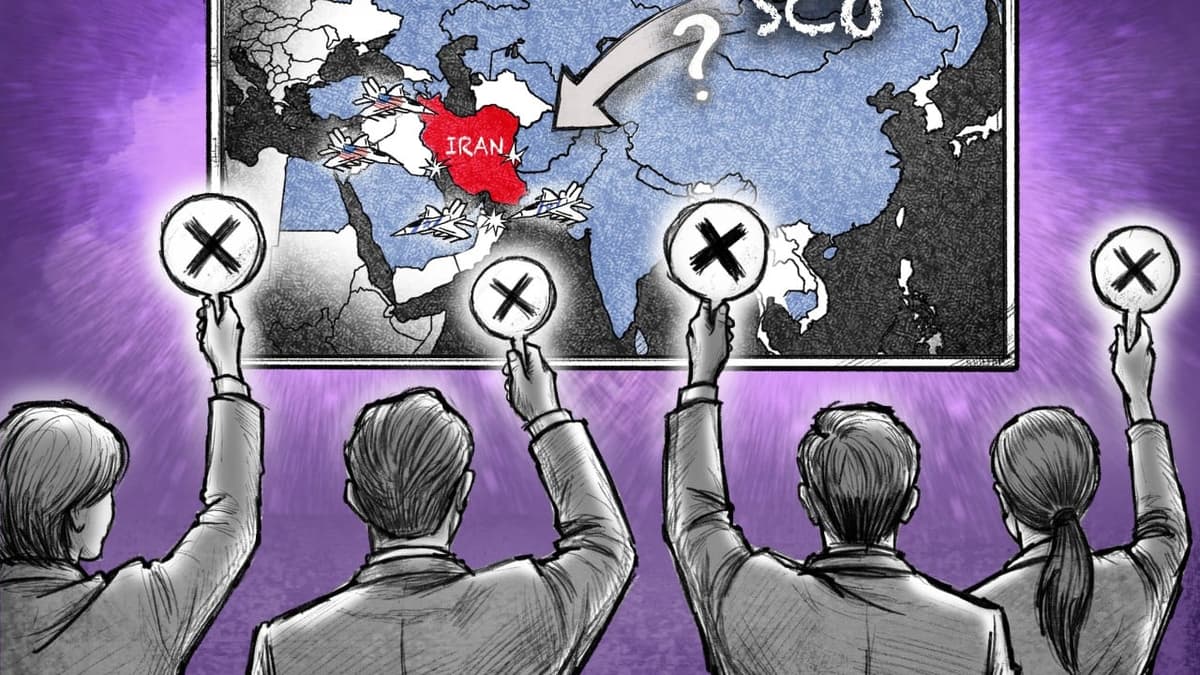
Why the Shanghai Cooperation Organisation Isn’t Nato for Iran
Companies Mentioned
Why It Matters
Understanding the SCO’s non‑military posture clarifies why Iran cannot rely on it for security, while highlighting China’s expanding leverage over Central Asia and the broader geopolitical balance in Eurasia.
Key Takeaways
- •SCO prioritizes political coordination over collective defense for members
- •Central Asian states value sovereignty, avoiding NATO‑style military commitments
- •China uses SCO platform to deepen economic and security ties in region
- •Iran cannot count on SCO as a reliable security guarantor
- •US‑Iran tensions may push Central Asia closer to Beijing
Pulse Analysis
The Shanghai Cooperation Organisation, founded in 2001 by China, Russia and several former Soviet republics, has evolved into a forum for political dialogue and economic cooperation rather than a hard‑security alliance. Unlike NATO, which obligates members to mutual defense, the SCO’s charter emphasizes respect for sovereignty and non‑interference, a stance that resonates with Central Asian nations wary of external military entanglements. This foundational difference explains why the bloc cannot serve as a security umbrella for Iran, even as Tehran seeks allies against growing US pressure.
China’s strategic outreach in Central Asia has accelerated in recent years, leveraging the SCO to cement infrastructure projects, energy pipelines, and digital connectivity under its Belt and Road Initiative. Member states such as Kazakhstan, Kyrgyzstan and Tajikistan are increasingly dependent on Chinese investment for water management, mining, and transport, aligning their foreign‑policy calculus with Beijing’s interests. The SCO thus functions as a conduit for Chinese influence, allowing Moscow and Beijing to coordinate on regional stability while avoiding the collective defense obligations that NATO imposes.
For Iran, the SCO’s limited military remit means it must look elsewhere for hard security guarantees, reinforcing its reliance on bilateral ties with Russia and covert networks. Meanwhile, the United States faces a more complex security environment as Central Asian countries gravitate toward China, potentially reshaping the balance of power in the Eurasian heartland. Analysts predict that continued US‑Iran friction will deepen Beijing’s foothold, making the SCO a pivotal, albeit non‑militarized, arena for diplomatic and economic competition in the coming decade.
Why the Shanghai Cooperation Organisation isn’t Nato for Iran
Comments
Want to join the conversation?
Loading comments...