AI's Education Explosion Leaves Teachers in the Dark
Companies Mentioned

Why It Matters
The lack of structured AI training risks uneven adoption, potentially widening achievement gaps and squandering productivity gains. Districts that fail to provide clear guidance may see ineffective use of powerful tools, harming both teachers and students.
Key Takeaways
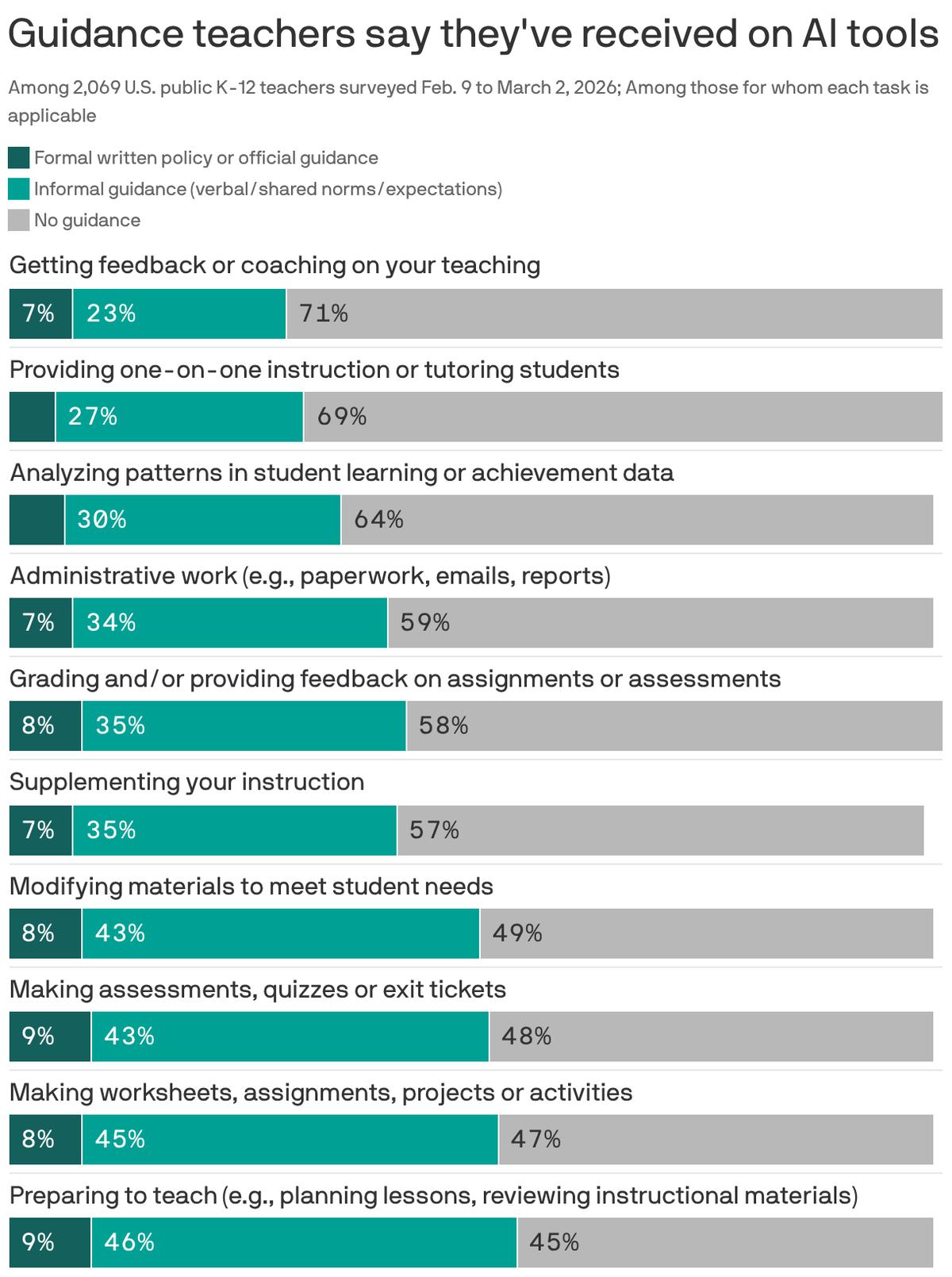
- •80% of K‑12 teachers lack formal AI guidance.
- •Guidance more common in affluent districts than high‑needs schools.
- •Teachers use AI informally, not via institutional policies.
- •AI can boost efficiency but also exacerbate teaching challenges.
- •Experts urge strategic AI use, not blanket adoption.
Pulse Analysis
The classroom AI surge reflects broader societal pressure for digital fluency, with Gallup data showing that a majority of K‑12 students anticipate needing AI skills in higher education. Companies such as Anthropic, Google and Microsoft are racing to embed generative tools into lesson plans, while educators grapple with balancing innovation against core pedagogical goals. This tension is amplified by the fact that many teachers are already experimenting with AI for grading, feedback and lesson design, often without a playbook.
Without formal guidance, teachers resort to ad‑hoc methods that can reinforce existing inequities. The Gallup‑Walton report highlights a stark disparity: affluent districts are more likely to receive any AI support, leaving high‑needs schools to navigate the technology alone. Informal, verbal advice cannot replace systematic professional development, and the absence of policy leaves educators vulnerable to misuse, data‑privacy concerns, and increased workload rather than the promised efficiencies.
Strategic integration is essential for AI to fulfill its promise in education. District leaders should develop tiered frameworks that align tools with grade‑level objectives, provide ongoing training, and establish clear evaluation metrics. Partnerships with ed‑tech firms can supply curated resources, while policy safeguards ensure ethical use. When implemented thoughtfully, AI can automate routine tasks, surface learning patterns, and free teachers to focus on high‑impact instruction, ultimately improving outcomes across diverse student populations.
AI's education explosion leaves teachers in the dark
Comments
Want to join the conversation?
Loading comments...