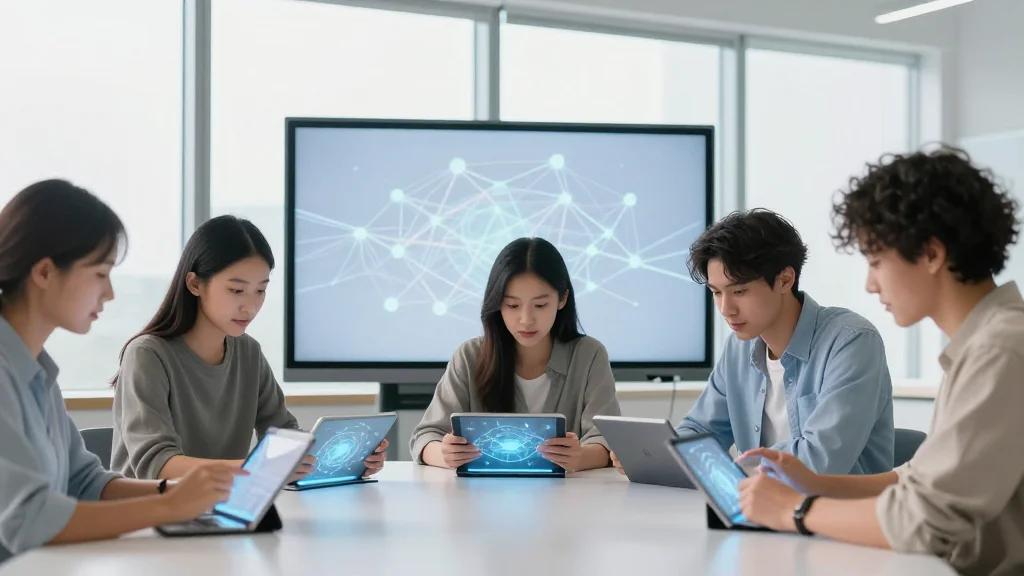
DeepMind CEO Demis Hassabis Calls for Overhaul of Classroom Model at London Launch

Companies Mentioned

Why It Matters
Hassabis’ vision places education at the centre of the AI debate, suggesting that the next wave of AI impact will be measured not just by commercial products but by how quickly schools can embed safe, personalized tools into everyday learning. A shift toward AI‑driven, collaborative classrooms could narrow the skills gap that many educators fear as automation threatens routine jobs, while also raising questions about data privacy, algorithmic bias, and the role of teachers in an increasingly automated environment. For EdTech investors, the commentary signals a market transition from standalone tutoring apps to integrated learning ecosystems that combine content, assessment and AI‑facilitated project work. Companies that can demonstrate measurable improvements in student outcomes while adhering to emerging safety standards are likely to win both public contracts and private capital, accelerating a re‑allocation of funding toward platforms that align with Hassabis’ “invert the classroom” blueprint.
Key Takeaways
- •DeepMind CEO Demis Hassabis urged a fundamental redesign of classrooms at a sold‑out London launch event.
- •He advocated inverting the classroom: AI handles rote learning outside class, while in‑class time focuses on collaboration and project‑based problem solving.
- •Hassabis warned that AI safety outweighs the commercial race, calling for global coordination and diverse AI leadership.
- •EdTech firms may see heightened demand for personalized learning platforms and AI‑augmented curricula as schools adopt his recommendations.
- •A pilot program with UK schools is slated for the next academic year to test AI‑driven collaborative learning models.
Pulse Analysis
Hassabis’ remarks arrive at a moment when the edtech sector is grappling with two opposing forces: the lure of rapid AI integration and the cautionary tale of unchecked model deployment. Historically, education technology has been driven by incremental improvements—learning management systems, video‑based instruction, and later, adaptive quizzes. The DeepMind chief’s call for a wholesale inversion of the classroom represents a paradigm shift akin to the transition from chalk‑and‑blackboard to personal computers in the 1990s. By positioning AI as a personal tutor that handles memorisation, the burden on teachers moves toward designing authentic, interdisciplinary projects—a move that could elevate student agency but also demand new teacher competencies.
From a market perspective, the statement is likely to catalyse a wave of venture capital into platforms that can seamlessly blend large‑language models with collaborative tools. Companies that merely offer chat‑based tutoring may find themselves sidelined unless they can demonstrate robust orchestration of multiple AI agents—a capability highlighted in recent AI‑native startups like Perplexity’s multi‑model “Computer” system. Moreover, Hassabis’ emphasis on global AI leadership and safety could presage stricter cross‑border data regulations, especially in Europe where GDPR already shapes edtech deployments. Firms that embed privacy‑by‑design and transparent model‑governance will have a competitive edge.
Finally, the educational policy implications cannot be ignored. If the UK pilot proves successful, it could become a template for other nations seeking to balance AI innovation with pedagogical integrity. Policymakers may be compelled to fund teacher‑upskilling programs, revise curriculum standards, and create oversight bodies that monitor AI’s impact on learning outcomes. In short, Hassabis’ vision is not just a philosophical stance; it is a catalyst that could reshape funding flows, regulatory frameworks, and the very architecture of classroom instruction over the next decade.
DeepMind CEO Demis Hassabis Calls for Overhaul of Classroom Model at London Launch
Comments
Want to join the conversation?
Loading comments...