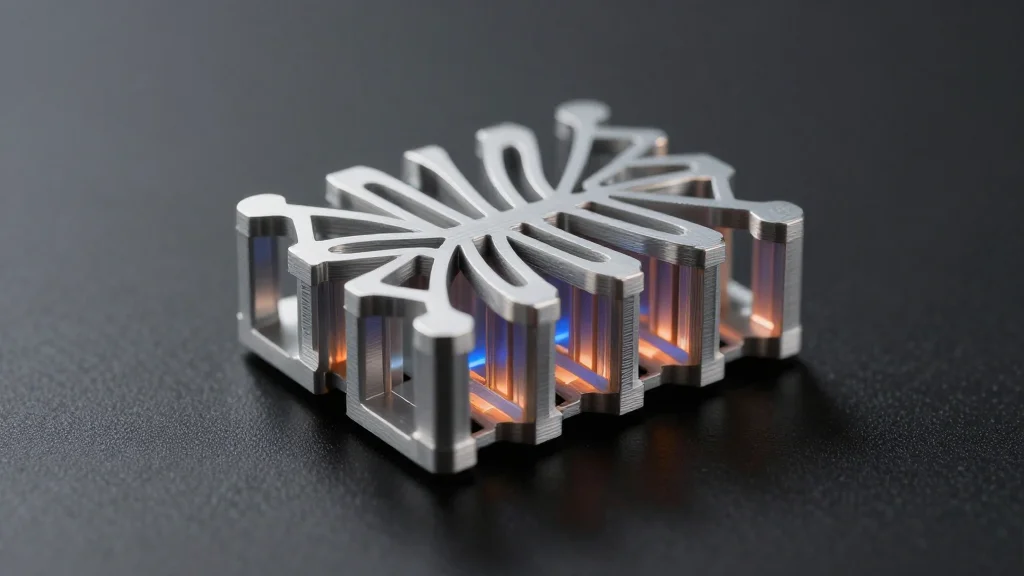
A Shape No Engineer Would Dream up Makes Thermoelectric Generators 8 Times Better
Key Takeaways
- •Topology optimization yields 8.2× efficiency boost over rectangular TEGs
- •AI-driven design replaces intuition, creating I‑shaped and hourglass geometries
- •3D‑printed prototypes validate computational predictions in real tests
- •Approach focuses on device architecture, not just material improvements
- •Potential to harvest waste heat from cars, factories, and wearables
Pulse Analysis
Thermoelectric generators (TEGs) have long promised to turn otherwise lost heat into electricity, but real‑world efficiencies have lagged behind laboratory material breakthroughs. Traditional designs rely on simple rectangular blocks that are easy to manufacture but fail to manage heat and electrical pathways optimally. As a result, the conversion rates in automotive exhausts, steel mills, or even body‑heat harvesters remain too low for commercial adoption, keeping the technology on the periphery of the clean‑energy portfolio.
The recent study published in Nature Communications demonstrates how topology optimization—a computational technique that lets algorithms sculpt three‑dimensional structures without human bias—can overturn that limitation. By feeding realistic thermal environments, material properties, contact resistance and load conditions into the optimizer, the team generated non‑intuitive geometries such as I‑shaped and asymmetric hourglass forms. When fabricated with high‑resolution 3D printing, these designs delivered up to 8.2 times higher power‑generation efficiency than a standard rectangular TEG, and experimental data closely mirrored the simulation forecasts, confirming the robustness of the design pipeline.
The implications extend far beyond a single prototype. An eight‑fold efficiency gain could make waste‑heat recovery financially attractive for car manufacturers seeking to improve fuel economy, for factories aiming to lower energy bills, and for wearable tech developers looking to power sensors from body heat. Moreover, integrating this topology‑driven approach with broader AI frameworks could automate device design across diverse thermal scenarios, shortening development cycles and fostering rapid scaling. As the industry pivots from material‑centric research to architecture‑centric innovation, the pathway to widespread, low‑cost clean power generation becomes markedly clearer.
A shape no engineer would dream up makes thermoelectric generators 8 times better
Comments
Want to join the conversation?