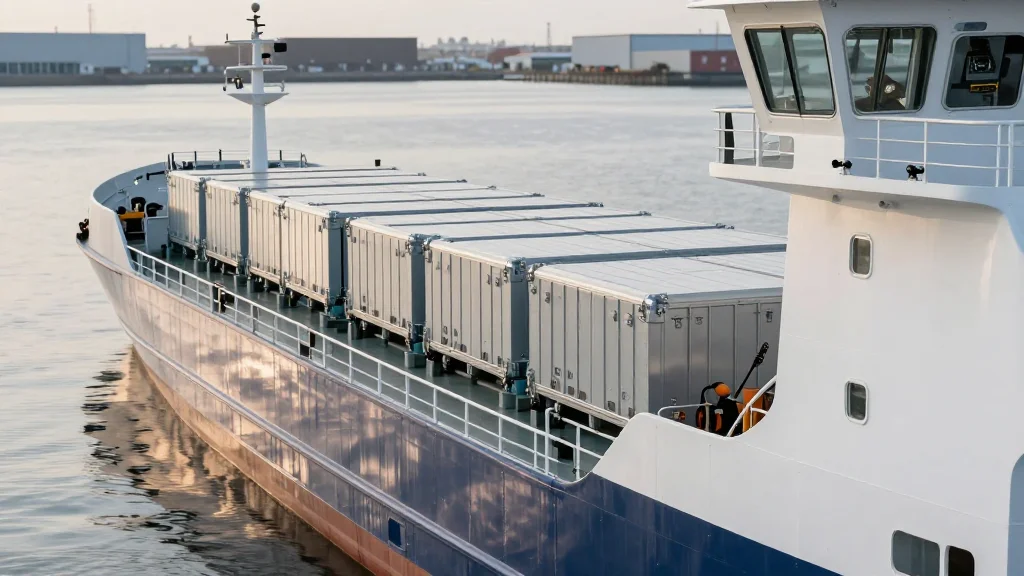
Batteries Don’t Need To Electrify Every Ship To Reshape Shipping Fuels
Key Takeaways
- •30% of maritime energy use is electrifiable by 2030
- •90% of that electrifiable fleet is already cost‑advantageous
- •Batteries cut demand for expensive low‑emission fuels on short‑sea routes
- •Port power infrastructure becomes critical as ship electrification grows
- •Fuel producers risk overestimating market if they ignore the battery wedge
Pulse Analysis
The maritime sector has long been portrayed as the toughest frontier for decarbonisation, with most attention on ultra‑large container ships that cross oceans. Recent research flips that narrative by quantifying a "battery wedge" in short‑sea, inland and port‑adjacent vessels—segments that already operate on predictable routes, short distances and frequent dockings. By 2030, the study estimates that roughly one‑third of total maritime energy consumption and a fifth of emissions sit in this electrifiable niche, offering a clear, near‑term lever for emissions reductions.
Economic modelling in the paper reveals that, under current marine gas oil prices, about 90% of the technically feasible fleet would be cheaper to run on batteries than on conventional fuel. This advantage widens dramatically when the comparison shifts to low‑emission alternatives such as biomethanol, HVO, ammonia or synthetic fuels, which are projected to carry premium price tags and complex supply chains. Consequently, batteries emerge not just as an environmental option but as a cost‑saving technology that can blunt exposure to volatile fuel markets and upcoming carbon pricing regimes.
For shipowners, ports and policymakers, the implication is clear: investment must move beyond a binary all‑electric versus fossil debate toward a hybrid strategy that prioritises electrification where it is technically and economically strongest. Upgrading shore power, managing grid loads and scheduling charging become as vital as fuel procurement decisions. Fuel producers, meanwhile, should recalibrate demand forecasts to account for a shrinking market share in short‑sea segments, focusing on long‑haul vessels where alternative fuels remain indispensable. The battery wedge thus reshapes the maritime fuel landscape, making infrastructure and hybrid solutions the new frontier of sustainable shipping.
Batteries Don’t Need To Electrify Every Ship To Reshape Shipping Fuels
Comments
Want to join the conversation?