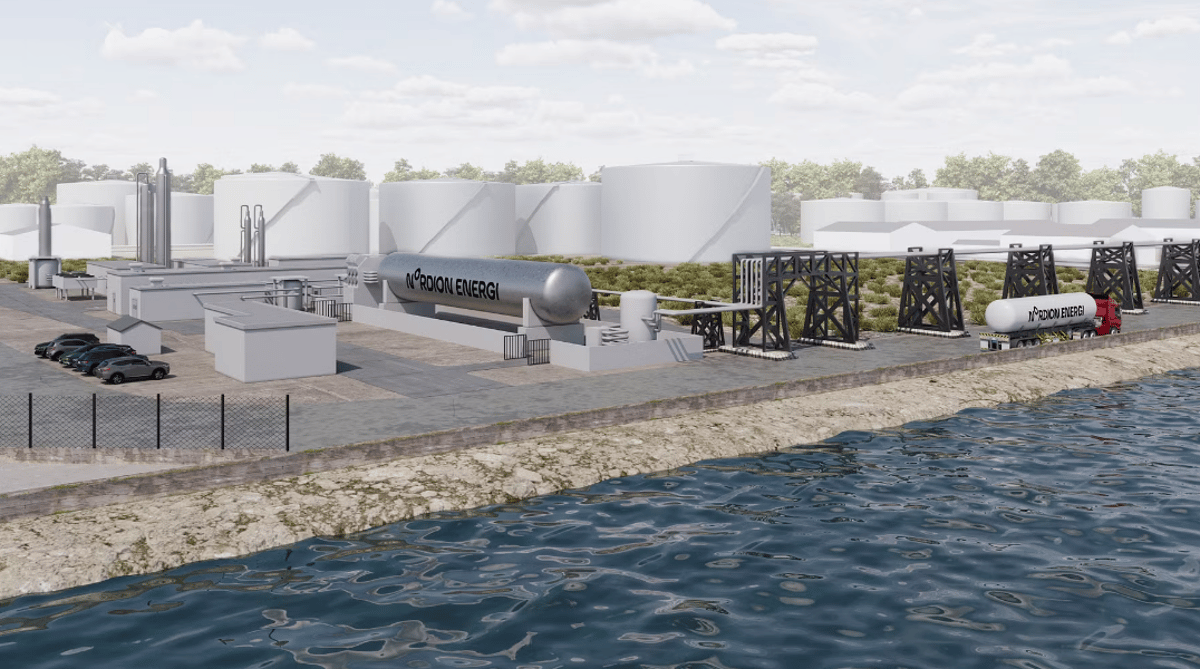
Construction Begins on Liquefied Biogas Facility at Port of Gothenburg
Key Takeaways
- •Facility will produce ~50 tonnes of liquefied biogas daily
- •Completion targeted for early 2027, operation by year‑end
- •St1 Biokraft secured part of capacity, ensuring early demand
- •Liquefied biogas enables marine bunkering similar to LNG
- •Port of Gothenburg strengthens renewable bunker fuel hub
Pulse Analysis
The push for decarbonised marine transport has accelerated interest in alternative fuels that can be handled like traditional liquefied natural gas (LNG). Liquefied biogas (LBG) offers a renewable counterpart, retaining the high energy density of LNG while delivering near‑zero lifecycle CO₂ emissions when sourced from organic waste or anaerobic digestion. However, the lack of a scalable liquefaction infrastructure has limited its adoption, especially for vessels operating beyond fixed pipeline networks. By converting biogas into a transportable liquid, LBG can be bunkered at ports worldwide, unlocking new routes for green shipping.
Gothenburg’s new LBG facility, developed by Nordion Energi, addresses this bottleneck with a planned output of roughly 50 tonnes per day. The plant’s construction, slated for completion in early 2027, aligns with the port’s broader renewable energy strategy and leverages existing connections to the Swedish gas grid. Early commercial traction comes from St1 Biokraft, which has contracted a portion of the capacity, providing the project with revenue certainty. The facility will enable local biogas producers to reach maritime customers, allowing ships calling at Gothenburg to refuel with a carbon‑neutral alternative that mirrors LNG handling procedures.
Regionally, the project reinforces Europe’s ambition to decarbonise 40 % of maritime fuel consumption by 2030, as outlined in the EU’s Fit for 55 package. Competitors in the LBG space are emerging in the Netherlands and Denmark, but Gothenburg’s strategic location and established logistics network give it a competitive edge. As more shipping lines commit to zero‑emission targets, demand for scalable LBG supply will rise, prompting further investments in liquefaction capacity across the continent. The Gothenburg plant thus serves as both a catalyst for renewable bunker fuel adoption and a benchmark for future projects aiming to bridge the gap between biogas production and marine fuel markets.
Construction begins on liquefied biogas facility at port of Gothenburg
Comments
Want to join the conversation?