Crude Oil Extends Lower and Stalls the Fall at a Trend Line Target
Key Takeaways
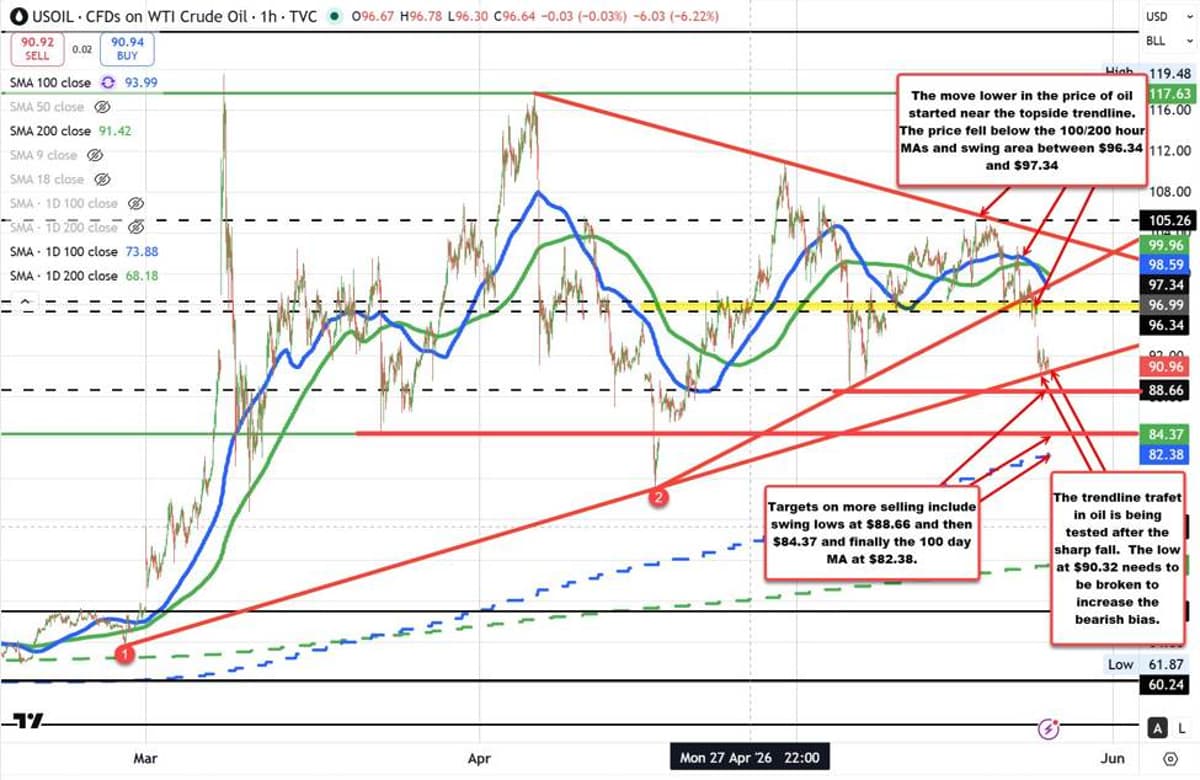
- •Crude fell to $90.32, lowest since early February
- •Upward‑sloping trend line between late‑Feb low and April low acted as support
- •Break below $90.32 could expose price to $88.66 May low
- •Holding above $92.71 may push price toward $94.73 resistance
Pulse Analysis
The recent dip in crude oil to $90.32 reflects how geopolitical developments, especially the prospect of a diplomatic framework with Iran, can quickly reshape market dynamics. Traders interpret any movement toward a peace agreement as a potential reduction in supply risk, prompting a swift sell‑off as investors price in lower future demand. This reaction underscores the sensitivity of the energy market to diplomatic cues, a pattern that has repeated throughout past Middle‑East tensions.
From a technical perspective, the price found a foothold on an upward‑sloping trend line that bridges the late‑February trough and the April low. This line now serves as a risk‑defining support zone, limiting downside momentum and creating a tight $90.32‑$92.71 range. Should the market break beneath $90.32, the next logical target is the May low at $88.66, opening the door to a deeper correction. Conversely, a decisive move above $92.71 would likely trigger a push toward the Friday low of $94.73, signaling renewed bullish sentiment.
For the broader economy, sustained oil price fluctuations influence everything from transportation costs to consumer price indices. Energy‑heavy sectors such as airlines, chemicals, and utilities monitor these thresholds closely, adjusting hedging strategies and capital allocation accordingly. Investors should therefore blend geopolitical analysis with technical price action to gauge the likelihood of further moves, as the interplay between diplomatic progress and market psychology will continue to drive crude’s short‑term trajectory.
Crude oil extends lower and stalls the fall at a trend line target
Comments
Want to join the conversation?