Key Takeaways
- •2025 average profit $0.21 per gallon
- •Cellulosic ethanol added $0.06 per gallon
- •Nominal profit $23.2 million, sixth year above $20 M
- •D3 RINs averaged $2.34 per gallon
- •Corn price spread remained favorable
Summary
U.S. ethanol producers posted a sixth consecutive year of profitability in 2025, with a representative Iowa dry‑mill plant earning an average of $0.21 per gallon. Net nominal profit reached $23.2 million, well above the long‑run average. The rise was driven by higher ethanol prices, lower corn costs, and a new cellulosic ethanol stream that added roughly $0.06 per gallon. D3 RIN premiums and CKF technology were pivotal in boosting margins.
Pulse Analysis
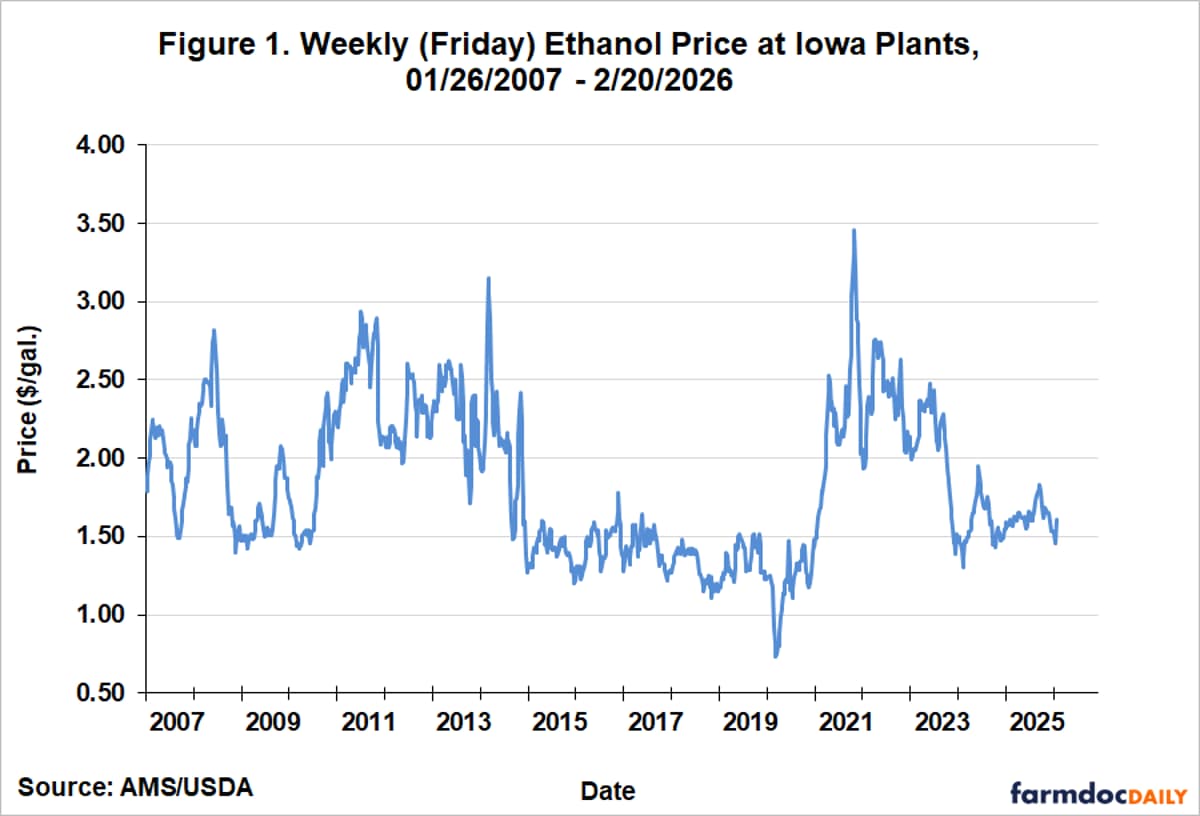
The 2025 ethanol profit surge reflects a confluence of market and technological factors. While corn prices hovered between $4.00 and $5.00 per bushel, ethanol spot prices consistently stayed above $1.50 per gallon, expanding the corn‑to‑ethanol spread. Coupled with reduced fixed costs after loan repayment and modest natural‑gas expenses, these dynamics lifted the average plant margin to $0.21 per gallon, outpacing the historical $0.13 benchmark.
A decisive catalyst was the commercial rollout of corn‑kernel‑fiber (CKF) technology, which enabled co‑production of cellulosic ethanol at a 0.10‑gallon per bushel conversion rate. The associated D3 Renewable Identification Numbers (RINs) fetched $2.34 per gallon, translating into an extra $0.06 per gallon of revenue after accounting for enzyme and marketing costs. This supplemental stream not only boosted profitability but also demonstrated how regulatory incentives can accelerate adoption of higher‑efficiency processes within traditional dry‑mill operations.
Looking ahead, the industry’s earnings trajectory will hinge on three variables: the corn‑ethanol price differential, the stability of RIN markets under the Renewable Fuel Standard, and the pace of further efficiency upgrades such as broader CKF deployment. Additionally, the 45Z Clean Fuel Production Credit, recently modified by the “Big Beautiful Bill,” could introduce a substantial tax‑based revenue source. Stakeholders should monitor these policy shifts closely, as they may redefine the cost structure and competitive landscape for U.S. ethanol producers in 2026 and beyond.
Comments
Want to join the conversation?