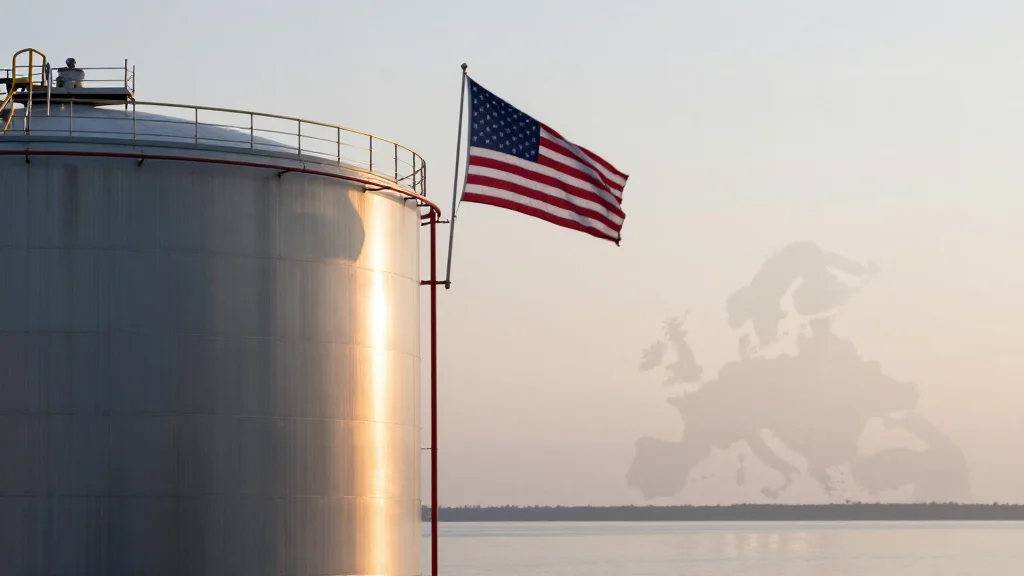
Europe's Dependence On US LNG Set To Surge
Key Takeaways
- •EU's US LNG share could hit 80% by 2028
- •Current US LNG accounts for 58% of EU imports
- •$750 billion EU‑US energy deal spans three years
- •Analysts warn of over‑reliance on a single supplier
Pulse Analysis
Europe’s energy landscape is undergoing a rapid transformation as the bloc pivots away from Russian gas toward U.S. liquefied natural gas (LNG). In 2024, U.S. LNG already supplied 58% of the EU’s total LNG imports, and the Institute for Energy Economics and Financial Analysis projects that share will rise to 80% by 2026. This surge is driven by the EU’s 2027 ban on Russian energy, the need to fill a looming supply gap, and a 2023 trade agreement that commits the EU to purchase $750 billion of American energy commodities over three years. The result is a near‑monopoly for U.S. exporters in a market historically diversified across multiple sources.
While the influx of U.S. LNG bolsters short‑term supply security, it also concentrates risk. Dependence on a single supplier can lead to price volatility if U.S. production falters or geopolitical tensions arise, giving Washington significant leverage over European energy policy. Moreover, the physical logistics of transporting and regasifying massive LNG volumes strain both infrastructure and financing, potentially inflating costs for utilities and end‑users. Analysts warn that the EU’s current trajectory mirrors the very single‑source vulnerability it sought to avoid with the Russian ban.
Policymakers are therefore weighing diversification strategies that include accelerated deployment of wind, solar, and heat‑pump technologies, as well as investments in domestic gas storage and alternative import routes. The EU’s long‑term energy security plan now emphasizes a balanced mix of renewables, hydrogen, and limited LNG imports from multiple regions to mitigate over‑reliance. As the market adjusts, stakeholders should monitor contract negotiations, capacity expansions at European LNG terminals, and regulatory reforms that could reshape the cost and availability of trans‑Atlantic gas supplies.
Europe's Dependence On US LNG Set To Surge
Comments
Want to join the conversation?