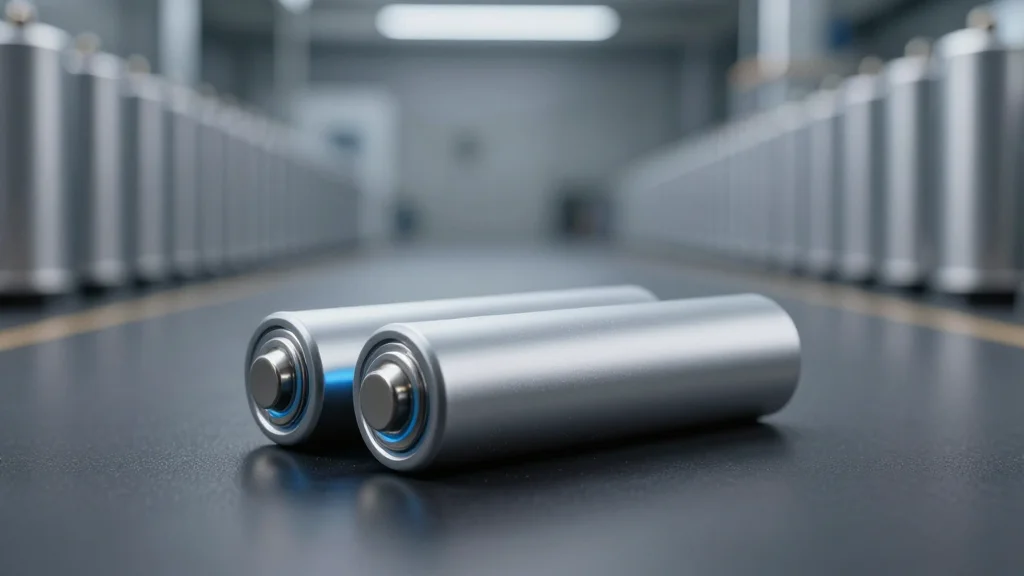
GAC-Backed Greater Bay Claims Breakthrough in Solid-State Batteries with New Prototype Roll-Out
Key Takeaways
- •Greater Bay's A‑sample cells hit 260‑500 Wh/kg energy density.
- •Composite electrolyte eliminates fire risk in nail, crush, thermal tests.
- •Fast‑charging capability reaches 2C‑3C, addressing solid‑state speed limits.
- •Production ready for GWh scale in 2026, targeting automotive market.
- •Over 50 patents filed, positioning Greater Bay in composite electrolyte race.
Pulse Analysis
The solid‑state battery market is at a pivotal juncture, with manufacturers racing to overcome low ionic conductivity, high cost and manufacturing complexity. While sulfide and oxide chemistries dominate research labs, Greater Bay’s deep eutectic‑based composite electrolyte offers a pragmatic path to industrialization. By marrying high ionic conductivity with structural stability, the approach sidesteps the safety pitfalls of liquid electrolytes and the scalability hurdles of semi‑solid designs, positioning it as a viable alternative for mass‑market electric vehicles.
Greater Bay’s A‑sample cells deliver a striking 260‑500 Wh/kg, a range that eclipses most current lithium‑ion packs and narrows the gap to the 400‑500 Wh/kg target set by industry analysts. Equally notable is the 2C‑3C fast‑charging capability, a long‑standing barrier for solid‑state technology that has limited its appeal to OEMs. The cells also passed rigorous nail‑penetration, crush and thermal‑shock tests, confirming the “no fire, no explosion” claim that could allay safety concerns for regulators and consumers alike. With over 50 patents covering electrolyte formulations and cell manufacturing, Greater Bay is building a defensible IP moat while scaling its Nansha facility toward GWh‑level output by 2026.
From a business perspective, the timing aligns with automakers’ push for next‑generation EV powertrains, as the sector anticipates a $14 billion cost‑saving opportunity from standardized battery cells—a figure highlighted by Nio’s William Li, who cited over 100 billion yuan (≈$14 billion) in potential savings. Greater Bay’s projected GWh production capacity could secure a foothold in the automotive supply chain, challenging incumbents and accelerating the transition to safer, higher‑energy EVs. As the industry converges on 2026‑27 for commercial roll‑out, Greater Bay’s composite electrolyte strategy may prove a decisive differentiator in the global battery arena.
GAC-backed Greater Bay claims breakthrough in solid-state batteries with new prototype roll-out
Comments
Want to join the conversation?