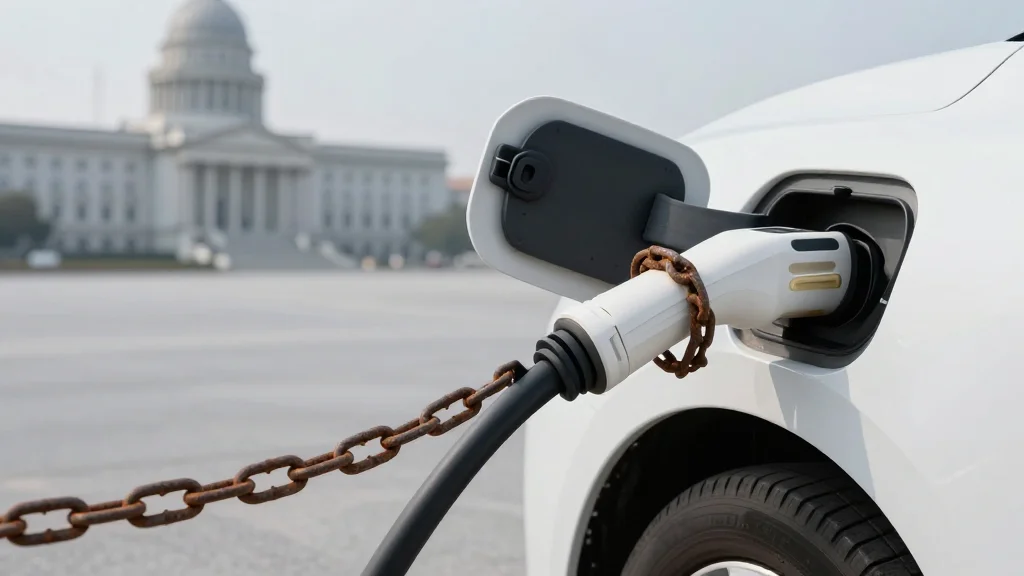
How, Exactly, Has Trump Gone After EVs?
Key Takeaways
- •Trump administration eliminated $7,500 new EV tax credit
- •Federal GHG endangerment finding rescinded, undermining vehicle emissions rules
- •EPA zeroed fuel economy penalties, effectively repealing standards
- •Congress nullified California waivers, threatening state ZEV targets
- •Legal challenges could keep EV transition stalled for years
Pulse Analysis
Before the Trump administration’s interventions, the United States was on a modest upward trajectory toward electric‑vehicle adoption, buoyed by the Inflation Reduction Act’s generous tax credits and a clear federal emissions roadmap. Those incentives helped spur a surge in consumer demand and gave automakers a predictable policy horizon to invest in battery technology and new model rollouts. The market’s momentum, however, was fragile, relying heavily on the continuity of federal support to offset high upfront costs and to justify the expansion of charging infrastructure.
The 2025 tax and spending bill abruptly removed the core financial levers that made EVs competitive with gasoline cars, eliminating up to $7,500 for new purchases and $4,000 for used models. At the same time, EPA’s rescission of the greenhouse‑gas endangerment finding stripped the legal basis for national GHG standards, while the zero‑penalty approach to Corporate Average Fuel Economy effectively nullified compliance pressure on manufacturers. These policy reversals not only reduce immediate consumer incentives but also erode the long‑term certainty that automakers need to scale production, potentially delaying the projected 68% EV share of new vehicle sales by 2032.
Beyond the federal level, the administration’s attacks on California’s waiver authority threaten the state’s aggressive zero‑emission vehicle targets for 2035 and 2045. If the waivers are upheld, California may be barred from setting its own standards, weakening a key laboratory for climate‑forward policies. Ongoing litigation creates a cloud of uncertainty that could stall both private investment and state‑level innovation. The cumulative effect is a likely slowdown in EV market growth, higher emissions, and a prolonged timeline for the United States to achieve its climate and energy‑security objectives.
How, Exactly, Has Trump Gone After EVs?
Comments
Want to join the conversation?